

Coconut bowl wholesale supplier from Viet Nam experts often get asked a fundamental question by eco-conscious entrepreneurs: “Exactly what coconut to use to make a bowl?” This is not merely a matter of picking a fruit off a tree; it is a complex intersection of agricultural science, artisan heritage, and sustainable manufacturing.
As a veteran with over 20 years in the handicraft export industry, I have seen many businesses fail because they overlooked the technical specifications of the raw material. Consequently, understanding the anatomy of the perfect coconut shell is the first step toward building a successful plastic-free brand that stands the test of time and temperature.
Specifically, in this deep dive, we will explore the rigorous R&D protocols at Thanhcongcraft, the specialized selection of “aged” shells, and why the geographical origin of the coconut dictates the durability of the final product. Moreover, we will address the common pitfalls in the manufacturing process that separate a premium export-grade bowl from a low-quality souvenir.
Contents
- 1. The Anatomy of the Perfect Shell: Age Matters
- 2. Geographical Superiority: Why Ben Tre, Viet Nam?
- 3. The R&D Process: From Waste to Wealth
- 4. Technical Comparison: Why Material Selection Dictates Success
- 5. QC Protocols: The Thanhcongcraft Standard
- 6. Solving Common Problems for Wholesale Buyers
- 7. The Ethical and Environmental Impact
- 8. Navigating the Export Market in 2026
- 9. Transitioning to a Plastic-Free Future: Next Steps
- 10. Conclusion: The Craft of Perfection
1. The Anatomy of the Perfect Shell: Age Matters
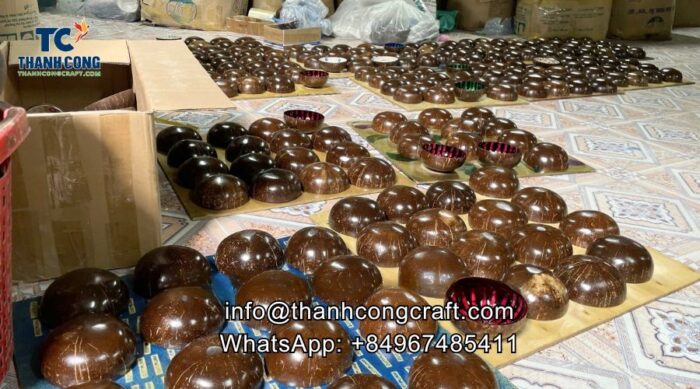
To answer “what coconut to use to make a bowl,” we must first talk about maturity. In the world of coconut bowl wholesale, age is the primary indicator of quality. Specifically, we do not use young coconuts (the green ones you drink from) because their shells are thin, soft, and highly prone to warping or rotting.
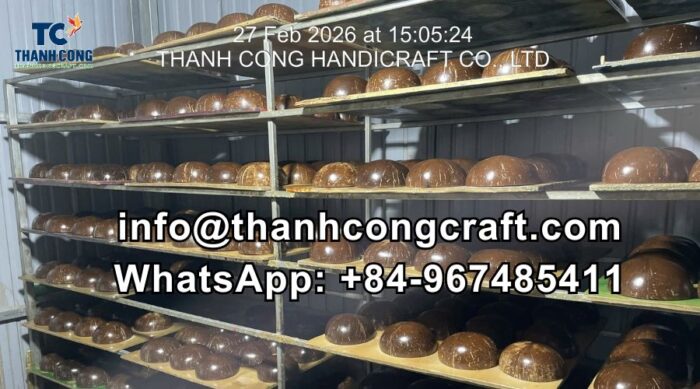
Instead, we exclusively source “old” coconuts, known in Viet Nam as dừa khô. These coconuts have spent 10 to 12 months on the tree. Furthermore, as the coconut matures, the water inside is absorbed, and the shell hardens into a dense, stony material. This lignification process is what gives the bowl its structural integrity.
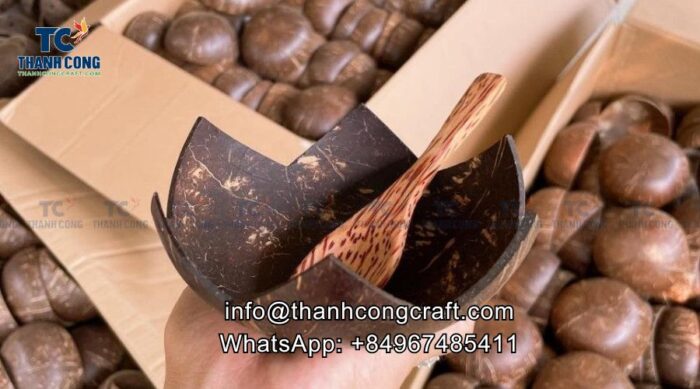
In addition, the shell must be thick enough to withstand the sanding process without becoming brittle. Specifically, Thanhcongcraft artisans look for a thickness of at least 3mm to 5mm to ensure the bowl is “shatter-resistant” for global shipping.
Read more: How To Verify Premium Bamboo Quality For Export In 4 Steps
2. Geographical Superiority: Why Ben Tre, Viet Nam?
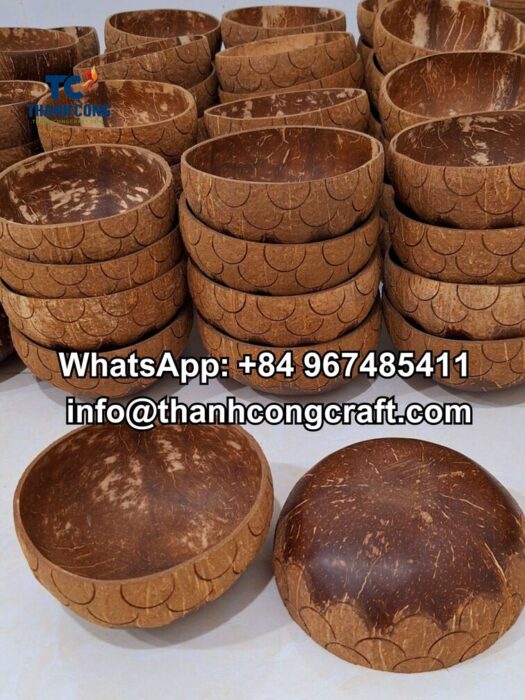
Specifically, when looking for a supplier from Viet Nam, the location of the groves is paramount. Ben Tre province is famously known as the “Kingdom of Coconuts.” But why does this matter for your plastic-free inventory?
The soil in Ben Tre is enriched by the silt of the Mekong Delta, which produces coconuts with significantly higher oil content and denser fibers. Consequently, these shells are naturally more resistant to moisture and mold. Moreover, because these trees have survived decades of tropical storms, the shells they produce are incredibly resilient. Specifically, a bowl made from a Ben Tre coconut is less likely to crack when moved from a humid climate to a dry, air-conditioned home in Europe or North America.
Therefore, as an experienced coconut bowl wholesale professional, I always advise clients to verify the regional origin of the raw material to ensure long-term ROI.
3. The R&D Process: From Waste to Wealth
At Thanhcongcraft, our R&D team has spent decades perfecting the transition from an agricultural byproduct to a luxury eco-item. Specifically, our process is designed to be entirely plastic-free. In addition, we have developed a proprietary heat-treatment method that stabilizes the shell’s fibers.
Furthermore, we address the “what coconut to use to make a bowl” question by sorting shells by shape and diameter. Specifically, for wholesale orders, uniformity is key. We categorize shells into “Jumbo,” “Standard,” and “Mini” based on their natural growth patterns.
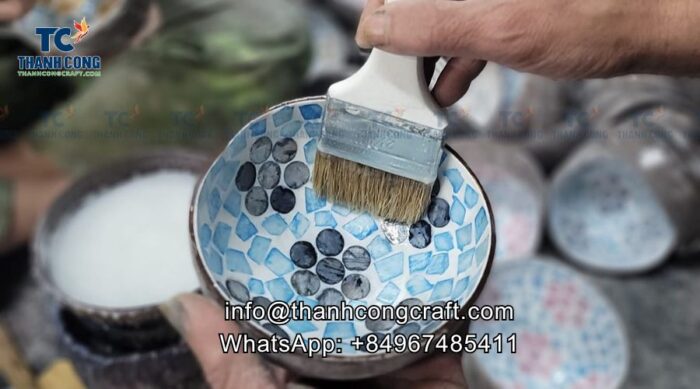
Consequently, when you order from a specialized supplier from Viet Nam, you receive a consistent product that fits standard retail packaging. Moreover, our R&D has led us to develop natural polishing compounds made from coconut oil and beeswax, ensuring the bowl remains food-safe and chemically inert.
4. Technical Comparison: Why Material Selection Dictates Success
To help you understand the impact of material selection, let’s look at the data. Choosing the wrong coconut leads to a high defect rate and unhappy customers.
| Feature | Young Coconut (Green) | Mature Coconut (Brown) | Aged “Stony” Coconut (Export Grade) |
| Shell Hardness | Very Low (Soft) | Medium | Very High (Dense) |
| Durability | Cracks easily | Moderate | High (Shatter-resistant) |
| Moisture Content | High (Prone to mold) | Medium | Low (Stabilized) |
| Suitability for SEO | Not Recommended | Average | Focus of Coconut bowl wholesale |
| Lifespan | < 1 month | 6 – 12 months | 2 – 5 years (with care) |
In addition to hardness, the aged shell provides a much darker, richer aesthetic after polishing. Specifically, the natural grain becomes more prominent, which is a major selling point for the plastic-free market. Consequently, sourcing from an expert supplier from Viet Nam ensures you are getting the “Aged Stony” grade consistently.
Read more: The Hidden Language of Shapes in Luxury Serving Pieces
5. QC Protocols: The Thanhcongcraft Standard
As a coconut bowl wholesale leader, our Quality Control (QC) process is where the real work happens. Once we have selected “what coconut to use to make a bowl,” each unit must pass through three distinct checkpoints.
- Checkpoint 1 involves a “Tap Test.” Our artisans tap the raw shell to listen for a clear, metallic ring. If the sound is dull, it indicates a hidden crack or a weak fiber structure. Consequently, those shells are rejected.
- Checkpoint 2 focuses on the base. We ensure each bowl is sanded flat so it sits perfectly on a table without wobbling.
- Checkpoint 3 is the “Hydration Test.” We soak a sample from each batch to ensure the natural oil finish is properly absorbing and repelling water. Specifically, if a supplier from Viet Nam skips these steps, your customers will experience “leaking” bowls—a disaster for any brand.
6. Solving Common Problems for Wholesale Buyers
Many buyers worry about the longevity of natural products. Specifically, they ask: “How do we prevent cracking?” The answer lies in the initial selection of “what coconut to use to make a bowl” and the subsequent seasoning.
Furthermore, a professional coconut bowl wholesale partner will provide you with care instructions to pass on to the end-user. Specifically, the bowl should be rubbed with coconut oil every 10-15 uses. Moreover, it should never be placed in the microwave or dishwasher.
In addition, because we use aged shells from a reliable supplier from Viet Nam, our bowls have a much higher resistance to heat than the cheaper, younger alternatives found on mass-market platforms. Consequently, investing in quality raw materials reduces your customer return rate significantly.
7. The Ethical and Environmental Impact
Beyond the technicalities, choosing a plastic-free gáo dừa (coconut bowl) is a powerful environmental statement. Specifically, by using old coconut shells, we are upcycling a material that would otherwise be burned as waste, contributing to CO2 emissions.
Furthermore, partnering with a coconut bowl wholesale expert in Viet Nam supports rural artisan communities. Specifically, at Thanhcongcraft, we employ local craftsmen who have passed down their skills for generations. Consequently, when you ask “what coconut to use to make a bowl,” the answer also includes a social dimension.
Moreover, because our entire supply chain is localized in Ben Tre, the carbon footprint of production is kept to an absolute minimum. In addition, our supplier from Viet Nam status ensures that we follow ethical labor practices, providing a product that you can market with a clear conscience.
Read more: How Long Do Rattan Baskets Last?
As we move through 2026, the global demand for plastic-free alternatives is reaching an all-time high. Consequently, the competition among brands is fierce. To stand out, you must offer a product that feels “premium.”
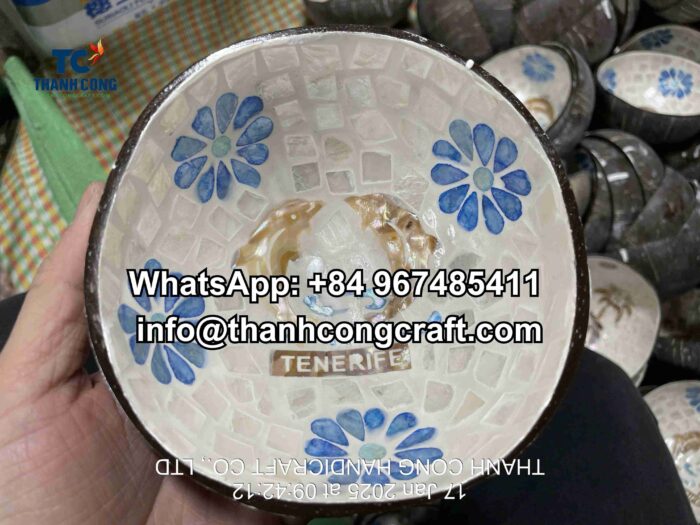
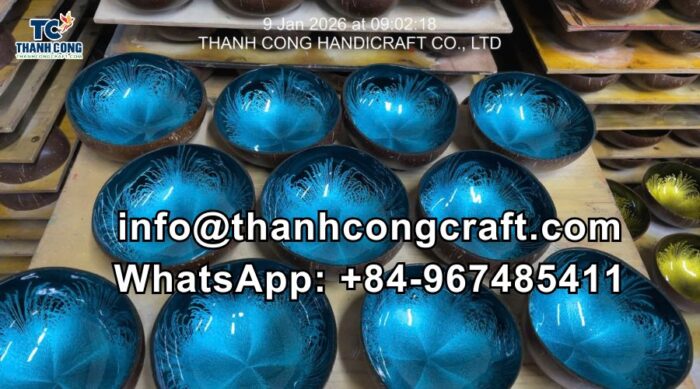
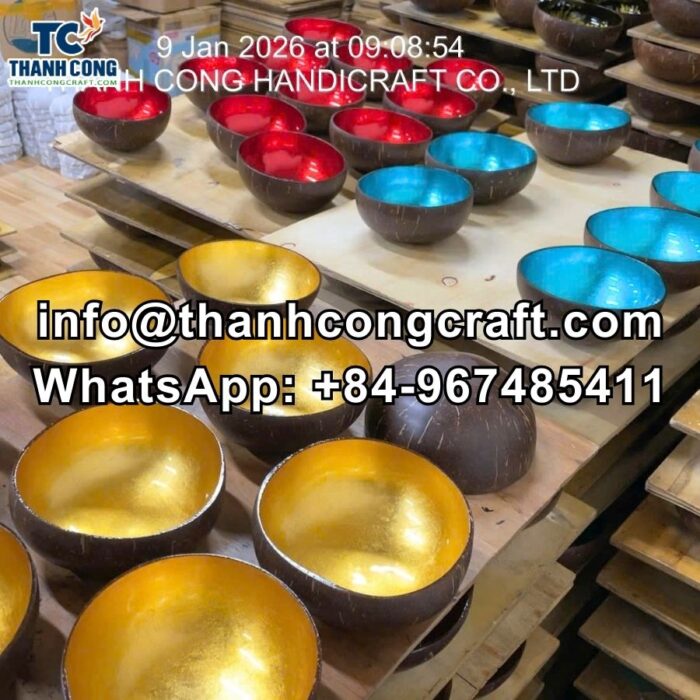
Specifically, this means focusing on the finish and the customizability. As a premier coconut bowl wholesale provider, we offer laser engraving and custom lacquer finishes. Furthermore, because we know “what coconut to use to make a bowl,” we can select specific shell shapes that are better suited for lacquer inlay or mosaic designs.
Moreover, our logistics team ensures that your order is packed in plastic-free honeycomb paper and recycled cardboard. In addition, being a direct supplier from Viet Nam allows us to offer competitive pricing by cutting out middleman markups, directly benefiting your bottom line.
9. Transitioning to a Plastic-Free Future: Next Steps
If you are ready to scale your business, the journey starts with the right partner. Specifically, you need a coconut bowl wholesale expert who understands the nuances of raw material selection. Furthermore, you should look for a supplier from Viet Nam that offers transparency in their R&D and QC processes.
In addition, consider starting with a sample order to test the quality of our aged shells. Specifically, examine the thickness, the polish, and the stability of the base. Moreover, ask your account manager for the specific harvest dates of the shells to ensure they are at peak maturity.
Consequently, once you have experienced the difference that an aged stony shell makes, you will understand why “what coconut to use to make a bowl” is the most important question in this industry. Furthermore, at Thanhcongcraft, we are committed to helping you build a legacy brand that celebrates the beauty of nature without compromising on quality.
10. Conclusion: The Craft of Perfection
In conclusion, understanding what coconut to use to make a bowl is the foundation of any premium plastic-free brand. Specifically, by prioritizing aged, thick-walled shells from Ben Tre, you ensure a product that is both durable and beautiful. Furthermore, partnering with a dedicated coconut bowl wholesale expert like Thanhcongcraft gives you access to 20 years of export experience and world-class QC.
Consequently, as the market for sustainable goods continues to expand, the quality of your raw materials will be your greatest competitive advantage. In addition, choosing a direct supplier from Viet Nam ensures you are getting the best value and supporting authentic craftsmanship.
Moreover, we invite you to join us in our mission to replace plastic with the natural elegance of the coconut. Specifically, your journey to a more sustainable and profitable business starts with the right shell. Furthermore, let’s work together to make the world a bit greener, one bowl at a time.
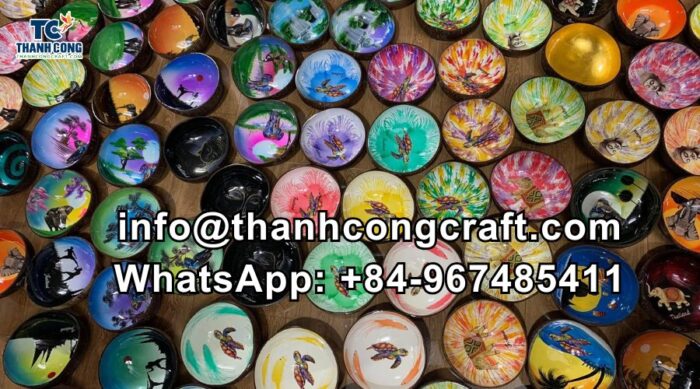
Reach out to us today to learn more about our products or to place a wholesale order. We look forward to connecting with you!
- Thanh Cong Handicraft Co., Ltd
- Email: [email protected]
- Tel/WhatsApp: +84967485411
Explore our Products Collection for more choices! Contact Us!


