

Mother of Pearl Trays are primarily handmade, particularly in export-quality and premium B2B production. While machines may assist with basic base preparation, the shell inlay, pattern composition, and finishing processes depend heavily on skilled artisans and cannot be fully automated without quality loss.
Contents
1. Why Production Method Matters to B2B Buyers?
Mother of Pearl Trays are often positioned as premium décor, hospitality accessories, or high-value gift items. For B2B buyers, understanding whether a tray is handmade or machine-made directly impacts pricing strategy, margin expectations, and brand credibility.
In wholesale and contract supply chains, buyers frequently compare visually similar trays from different suppliers. Without clarity on production method, it becomes difficult to explain price gaps or justify higher minimum order values to internal stakeholders or retail partners.
From an industry perspective, production method also affects supply reliability. Handmade processes introduce human dependency and longer lead times, while machine-heavy production emphasizes speed and uniformity. Buyers must balance these factors based on their market needs.
Related reading: Are Mother of Pearl Rattan Trays Eco-Friendly?
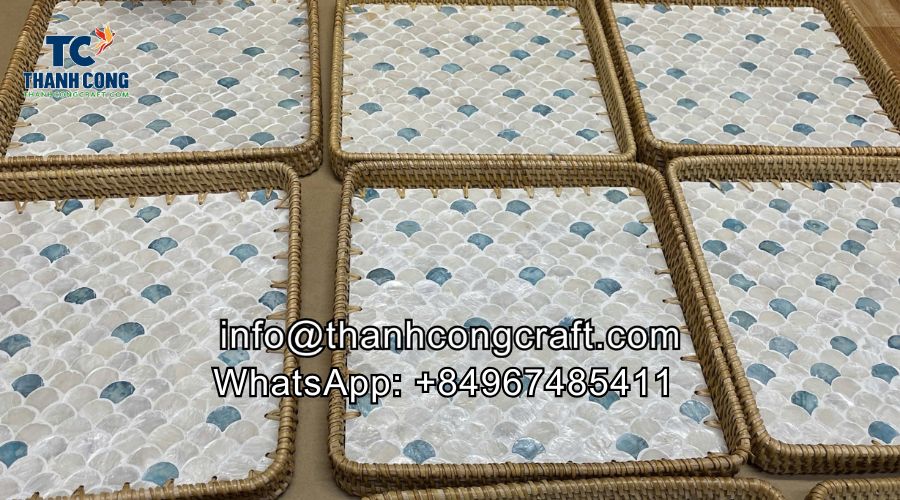
2. Which Parts of Mother of Pearl Trays Are Genuinely Handmade?
Mother of Pearl Trays involve several production stages, but the most value-critical steps remain manual. Shell sourcing and selection are entirely human-driven because natural mother of pearl varies significantly in thickness, translucency, and color tone.
Shell cutting is sometimes assisted by simple tools, yet it cannot be fully automated. Natural shell fractures unpredictably, requiring artisans to adjust pressure, angle, and cutting sequence in real time. Automated cutting would dramatically increase waste and reduce usable yield.
The inlay process is the core handmade element. Each shell piece is placed individually, aligned by eye rather than template. Artisans adjust spacing and orientation to balance light reflection, pattern flow, and surface smoothness—decisions no machine can replicate accurately.
Final leveling, polishing, and surface inspection are also manual. These steps ensure the shell surface is flush with the base and visually consistent. Poor hand-finishing at this stage leads to uneven wear and reduced product lifespan.
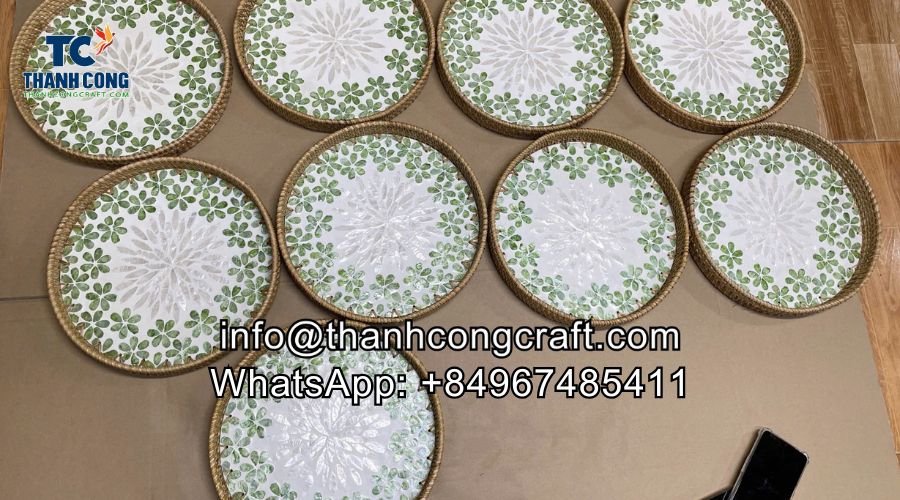
3. Where Machines Are Used—and Why This Creates Confusion
Mother of Pearl Trays are not produced in purely traditional environments without machinery. Machines are used strategically in non-decorative stages to support scalability and consistency, which often leads to misunderstanding among buyers.
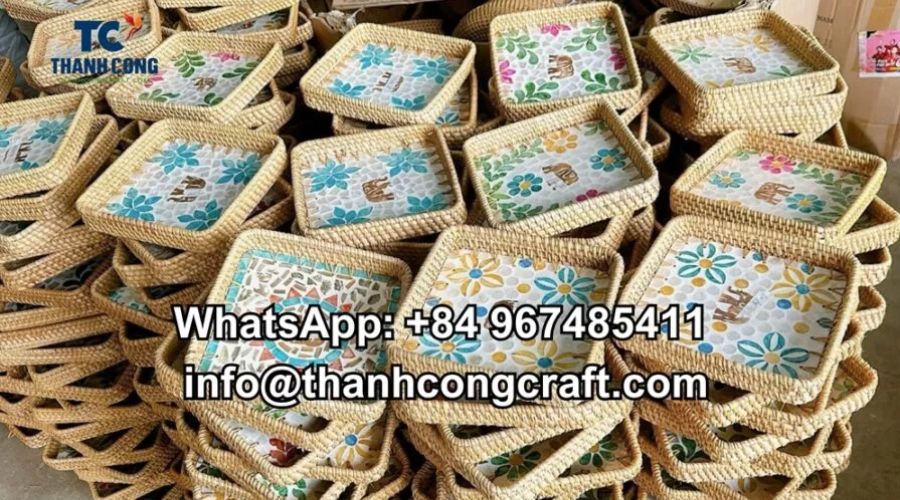
Base materials such as wood or MDF are cut using woodworking machines to ensure dimensional accuracy. This does not reduce craftsmanship value but ensures trays meet export tolerance standards required by B2B buyers.
Some suppliers also use machines for initial sanding, priming, or undercoating. These steps prepare the surface for shell inlay but do not replace artisan skill. Confusion arises when buyers equate any machine use with mass production.
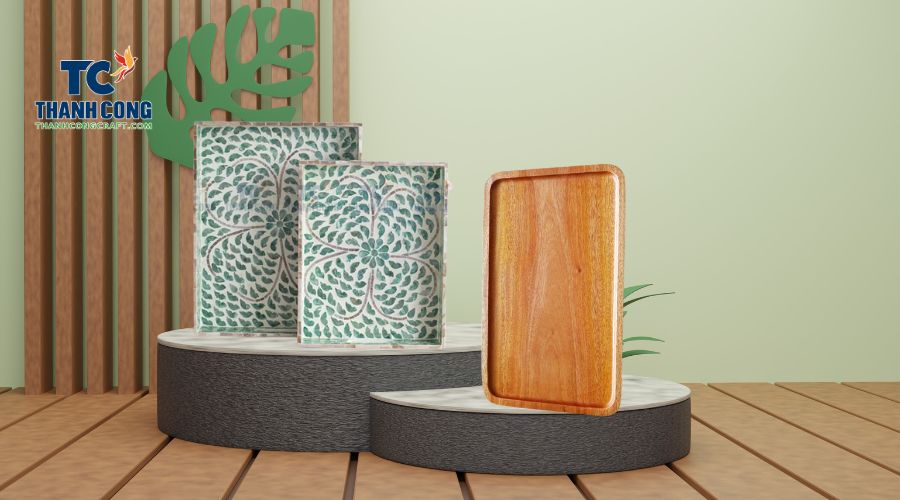
Truly machine-made alternatives often rely on composite shell sheets or imitation nacre materials. These products prioritize uniformity and cost reduction but lack the depth, durability, and visual complexity of genuine Mother of Pearl Trays.
Learn more about: Mother of Pearl Colors: Explore Nature’s Stunning Shades
| Production Aspect | Handmade Trays | Machine-Dominant Products |
|---|---|---|
| Shell material | Natural shell pieces | Composite or imitation |
| Pattern creation | Manual placement | Pre-formed sheets |
| Visual variation | Natural, expected | Highly uniform |
| Longevity | Long-term durability | Material-dependent |
4. How Handmade Expectations Differ by Market (US, EU, Middle East)
Mother of Pearl Trays are evaluated through different lenses depending on regional buyer priorities. In the US and UK, transparency is increasingly important. Buyers expect suppliers to clearly explain which steps are handmade and which are machine-assisted.
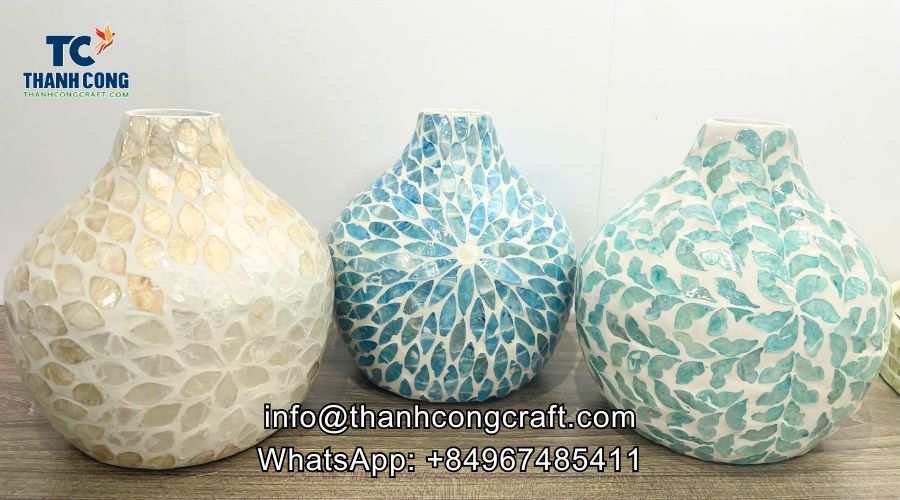
Overstating “fully handmade” can create trust issues if buyers later discover machine involvement. As a result, hybrid production models are acceptable as long as they are communicated honestly.
In the EU, especially in design-oriented and hospitality segments, handcrafted shell inlay is associated with artisan heritage. Buyers accept minor visual variation as proof of authenticity, provided overall construction quality is controlled.
In the Middle East, craftsmanship is strongly linked to luxury perception. Handmade Mother of Pearl Trays are favored for gifting and high-end hospitality use. Rich shell quality and visual depth often outweigh concerns about absolute uniformity.
| Market | Primary Buyer Concern | Handmade Perception |
|---|---|---|
| US / UK | Transparency & consistency | Process clarity valued |
| EU | Authentic craftsmanship | Variation accepted |
| Middle East | Luxury & exclusivity | Craftsmanship prioritized |
5. What “Handmade” Should Mean for Buyers
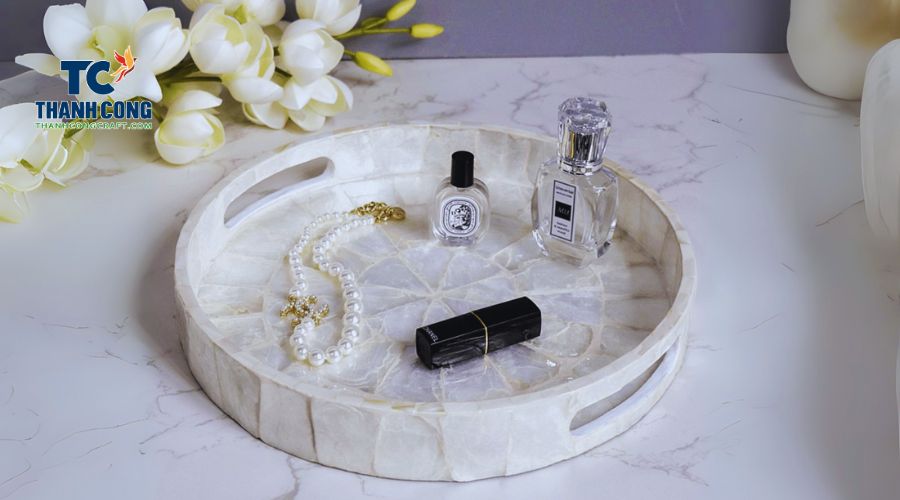
Mother of Pearl Trays are best classified as artisan-made with machine support, rather than purely handmade or industrially mass-produced. This definition reflects the realities of exporting handcrafted products at scale.
From over two decades of manufacturing experience, the main limitation of handmade production is capacity. Skilled shell inlay artisans require years of training, and output cannot be scaled rapidly without quality compromise.
Cost sensitivity is another factor. Handmade shell work is labor-intensive, and price increases often reflect labor availability rather than raw material cost. Aggressive price pressure typically results in thinner shell, lower-grade base materials, or reduced finishing quality.
For B2B buyers, alignment is critical. When production method, pricing, and market positioning are aligned, Mother of Pearl Trays perform reliably as premium decorative products across global markets.
Visit our post on: How to Choose a High-Quality Mother of Pearl Cake Stand
Reach out to us today to learn more about our products or to place a wholesale order. We look forward to connecting with you!
- Thanh Cong Handicraft Co., Ltd
- Email: [email protected]
- Tel/WhatsApp: +84967485411
Explore our Products Collection for more choices! Contact Us!


