

Bamboo mold prevention is one of the most important challenges for importers, wholesalers, and retailers who work with natural products. Bamboo has become a global favorite for furniture, baskets, trays, and eco-friendly décor. Its strength, lightweight nature, and sustainability make it attractive to buyers in the U.S., Europe, and the Middle East. However, bamboo’s porous structure makes it vulnerable to one serious enemy: mold.
This article examines whether bamboo products can survive humidity without mold, explores the science behind mold growth, and provides practical prevention strategies. Importers, distributors, and wholesalers will learn not only how to protect their products but also how to build long-term reliability in their supply chains.
Contents
1. Understanding Bamboo Mold Prevention in Humid Environments
Bamboo mold prevention begins with a clear understanding of how bamboo interacts with its environment. Unlike synthetic materials, bamboo is an organic plant-based material with a cellular structure that naturally absorbs water. Its high starch and sugar content makes it even more attractive to mold spores.
When bamboo is exposed to humidity, moisture enters the fibers. If this moisture remains trapped, conditions become ideal for fungi to thrive. Mold spores exist everywhere in the air and need only three things to grow: warmth, food, and moisture. Bamboo provides all three.
In Vietnam, where much bamboo is produced, the tropical climate adds to the challenge. Humidity levels can reach 80–90%, creating perfect conditions for mold growth even before products leave the factory. By the time shipments reach Europe or the U.S., weeks of sea freight may have intensified the problem through container condensation.
Therefore, preventing mold is not just a matter of one quick treatment. It requires a system of steps that cover production, packaging, transport, and storage.
1.1 Factory Price vs. Total Landed Cost Impact
When importers negotiate prices with suppliers, they often focus only on the factory price. Yet mold prevention adds costs that contribute to the total landed cost. Kiln drying, protective coatings, packaging, and container desiccants all increase the price per unit. However, skipping these measures is far more expensive when entire shipments are lost.
Smart importers recognize that mold prevention is not an optional add-on but an essential investment in maintaining product value.
1.2 Why Bamboo Mold Risks Vary
Not every bamboo product faces the same risk. Factors include:
-
Product type: Thick bamboo furniture absorbs moisture differently from thin woven baskets.
-
Season: Monsoon months in Asia increase mold risk significantly.
-
Transit time: A two-week shipment to Japan has lower risk than a six-week shipment to the U.S.
-
Packaging methods: Poorly ventilated cartons encourage condensation and mold.
By understanding these variables, importers can adjust prevention strategies accordingly.
Explore more: Are Bamboo Products Waterproof ?
2. Why Bamboo Mold Prevention Is Critical for Importers
Bamboo mold prevention is not just about keeping products clean. For businesses, it influences brand reputation, profit margins, and market access. A single moldy shipment can cause financial damage and reputational harm that takes years to repair.
2.1 Protecting Shipment Value
Ocean freight containers are sealed for weeks, traveling through varying climates. Warm days and cool nights create condensation inside containers, often called “container rain.” When droplets form and drip onto bamboo, the moisture cannot evaporate, causing mold to spread.
Losing even one container to mold can mean tens of thousands of dollars in wasted inventory. Insurance may cover some costs, but claims take time and rarely cover reputational damage. Prevention is always cheaper than replacement.
2.2 Meeting Retail Standards
Retailers in the U.S. and EU enforce strict quality standards. Even small mold stains or musty smells result in rejection. For major chains, returning a shipment can also mean canceling future orders. Bamboo exporters who invest in prevention are more attractive to serious buyers, since they guarantee fewer quality issues. This advantage often leads to long-term contracts and higher trust.
2.3 Preserving Consumer Trust
Customers choose bamboo for its eco-friendly reputation. If they open packaging and discover mold, their perception of bamboo changes immediately. Instead of seeing it as sustainable, they see it as unreliable. Preventing mold therefore protects not just a shipment but the entire market image of bamboo.
Learn how: Vietnam Bamboo Crafts Leading the Global Export Market
3. Effective Bamboo Mold Prevention Techniques
Bamboo mold prevention requires action at four critical stages: production, packaging, shipping, and storage. Each step adds a layer of protection.
3.1 Production Stage
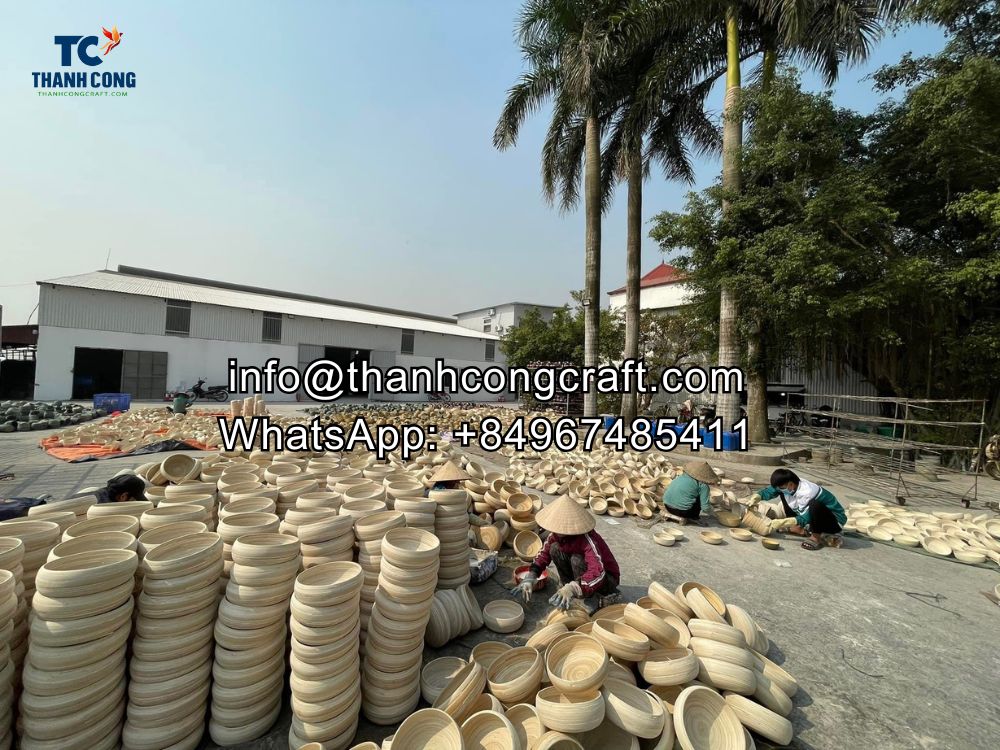
At the factory, the first step is proper drying. Bamboo must be kiln-dried to reduce moisture content below 12%. Traditional sun drying is insufficient for export goods, as humidity quickly returns.
Producers can also apply natural or eco-friendly fungicides that create an invisible barrier against mold spores. For high-value products, finishes like oils or varnishes add extra resistance.
Some exporters invest in pre-treatment with borax or boric acid, which penetrates bamboo fibers and lowers sugar levels, making bamboo less attractive to fungi.
3.2 Packaging Stage
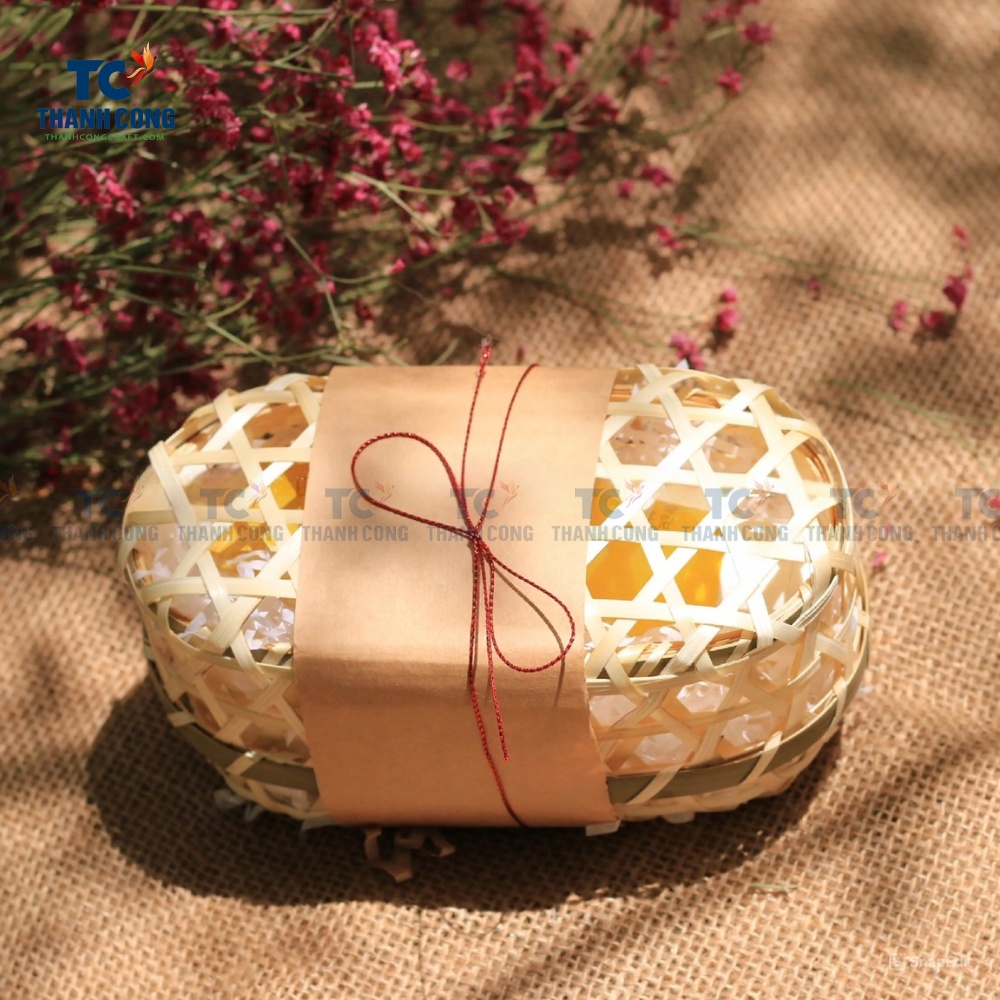
Many importers overlook packaging, yet it plays a key role. Bamboo products should never be sealed in plastic film, as it traps moisture. Instead, breathable cartons with air holes allow ventilation.
Adding silica gel packets or larger desiccant packs inside cartons absorbs moisture during transit. Retail-ready packaging should also be designed with air circulation in mind, rather than prioritizing only aesthetics.
3.3 Shipping Stage
Container choice matters. Ventilated containers reduce condensation, while insulated containers maintain a more stable temperature.
Installing container desiccant bags—sometimes weighing 2–3 kg each—helps absorb moisture over weeks at sea. These must be replaced for every shipment but prevent thousands of dollars in losses.
3.4 Storage Stage
Warehouses in destination countries must continue prevention. Climate-controlled storage with dehumidifiers ensures that bamboo does not reabsorb moisture. Importers should use the “first-in, first-out” system to reduce storage time.
See more: Bamboo Product List for Interior Design: From Basket to Furniture
4. Bamboo Mold Prevention in Action
Bamboo mold prevention is best understood through real-world examples where importers successfully controlled risks.
4.1 Vietnamese Bamboo Baskets in Europe
A German importer once faced repeated mold issues with bamboo baskets. By requiring kiln drying, silica gel packs, and container desiccants, mold complaints dropped by 90%. Their brand reputation recovered, and sales increased steadily.
4.2 Bamboo Furniture for the U.S. Market
A California-based company shipping bamboo furniture introduced eco-friendly fungicides during production. They passed all Walmart and Target inspections, and within two years, their volume doubled.
4.3 Hotel Suppliers in the Middle East
Hotels in Dubai faced mold issues with bamboo trays stored in humid kitchens. By switching to breathable packaging and air-conditioned storage, suppliers delivered consistent quality. Their reputation as reliable exporters grew, leading to new contracts with luxury hotels.
5. Long-Term Strategies for Sustainable Bamboo Mold Prevention
Bamboo mold prevention is not just a one-time fix. For long-term success, importers and exporters must embed it into supply chain management.
5.1 Supplier Collaboration
Strong partnerships with suppliers allow better control of production standards. Importers can request regular moisture testing and third-party inspections.
5.2 Investment in Logistics
Although ventilated containers and large desiccants add costs, they prevent shipment losses worth far more. Importers who plan logistics carefully save money in the long run.

5.3 Certification & Branding
Some exporters promote “mold-free certified bamboo.” This creates brand differentiation and reassures retailers who might otherwise avoid natural products.
5.4 Training & Regular Inspections
Suppliers need ongoing training to maintain standards. Third-party inspections at random stages prevent shortcuts that lead to mold problems.
You might also like: Top Mistakes to Avoid When Buying Bamboo Product in Bulk
Reach out to us today to learn more about our products or to place a wholesale order. We look forward to connecting with you!
- Thanh Cong Handicraft Co., Ltd
- Email: [email protected]
- Tel/WhatsApp: +84967485411
Explore our Products Collection for more choices! Contact Us!


