

Water Hyacinth Products are widely used in home décor, storage baskets, furniture, and eco-friendly packaging. This article explains why water hyacinth changes color, how UV exposure accelerates fading, and which care methods help extend its lifespan. Additionally, it provides insights from artisans, exporters, and practical examples from real wholesale orders.
Contents
- 1. Why Water Hyacinth Changes Color Over Time
- 2. Understanding Fiber Structure and What Influences Color Change
- 3. UV Exposure, Humidity, and Indoor Conditions: How They Impact Color
- 4. How to Maintain, Protect, and Restore Water Hyacinth Color
- 5. Why Supplier Quality Matters for Long-Term Color Stability
1. Why Water Hyacinth Changes Color Over Time
Water Hyacinth Products naturally experience color changes because the fiber is organic, porous, and sensitive to environmental conditions. Although the material is durable, flexible, and popular in handmade décor, it still behaves like most natural fibers—meaning it slowly shifts in tone as it ages. Because the plant contains cellulose, lignin, and natural oils, exposure to sunlight, heat, moisture, and room temperature triggers gradual reactions.
The most noticeable change occurs when raw, uncoated baskets slowly turn from light beige to honey brown. Although this transformation is natural, it varies based on weaving tightness, drying conditions, and fiber treatment. Since water hyacinth is harvested fresh and then sun-dried, no two fibers behave exactly the same. Additionally, baskets produced in humid regions often absorb moisture during transit, making their color temporarily darker until they dry completely.
Learn more about: What Happens When You Wash a Water Hyacinth Basket?
2. Understanding Fiber Structure and What Influences Color Change
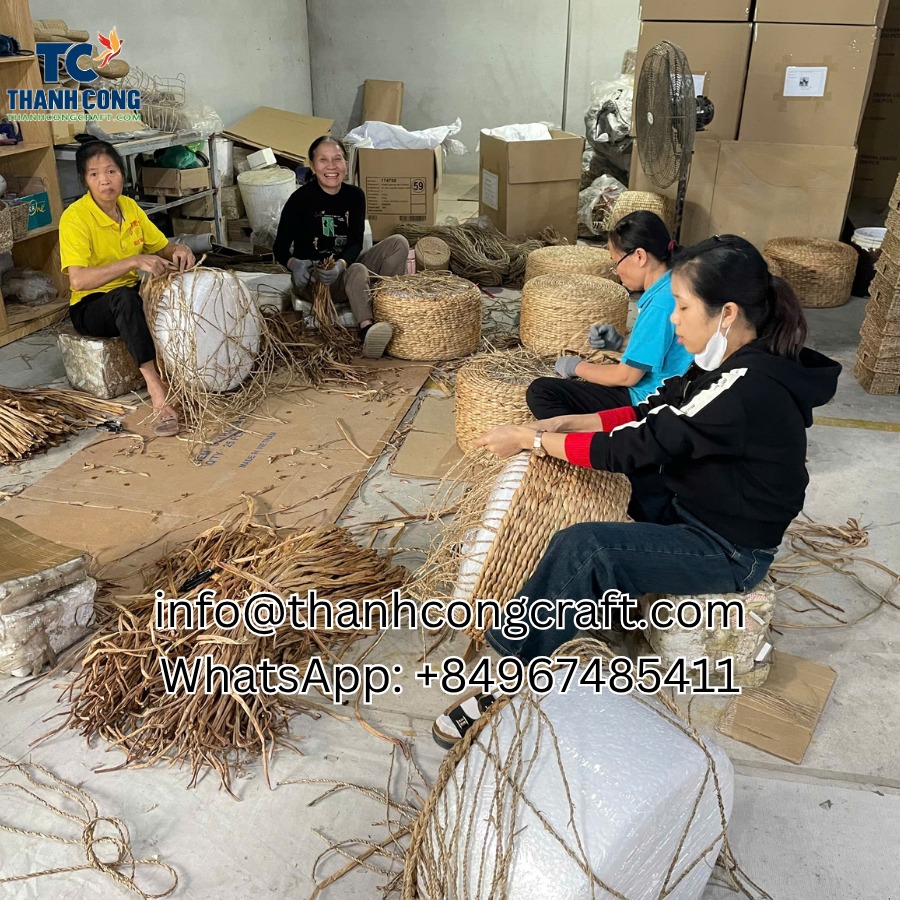
Water Hyacinth Products age according to how the fiber was processed. Not all artisans treat the plant the same way. Some dry the stems in full sunlight, while others prefer shade drying to maintain a lighter color. After drying, the fiber may be soaked again for weaving flexibility, which can alter tone slightly.
2.1 Sun-Dried vs. Shade-Dried Fiber
Sun-dried fiber tends to be warmer, deeper in tone, and slightly more golden. Shade-dried fiber remains pale and soft but is more sensitive to future light exposure. Because of this, export-quality baskets often combine both methods to achieve balanced color and durability.
2.2 Fiber Age and Storage Conditions
Although fresh fibers produce a consistent color, older fibers—stored too long before weaving—darken due to oxidation. Therefore, exporters with strong quality control cycles rotate materials quickly to avoid inconsistencies.
Comparison With Other Materials
-
Rattan: less color change, more resilient to UV
-
Seagrass: darkens faster than water hyacinth
-
Bamboo: lightens more noticeably in direct sunlight
See more here: The Secret Story of Water Hyacinth Placemats Big Brands Won’t Reveal
3. UV Exposure, Humidity, and Indoor Conditions: How They Impact Color
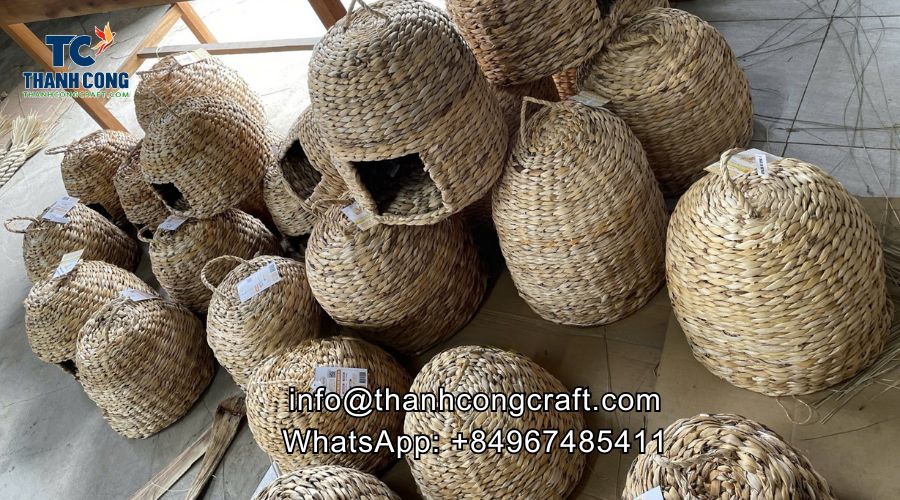
Water Hyacinth Products respond differently depending on climate and use. Although some color change is expected, understanding the causes helps homeowners and wholesale buyers anticipate how baskets will age.
3.1 UV Exposure
Sunlight remains the strongest factor. Even indirect sunlight fades natural fibers over time. UV rays break down lignin within the plant, causing the fiber to lighten gradually. Although this process does not weaken structural integrity immediately, long-term exposure may contribute to dryness.
3.2 Humidity and Moisture
Moisture makes the fiber appear darker, softer, and slightly swollen. In tropical climates, baskets may darken temporarily, but once fully dried in a ventilated space, they return to their natural tone. However, excessive humidity creates risks such as mold spots, discoloration, and — in extreme cases — fiber weakening.
3.3 Temperature Fluctuation
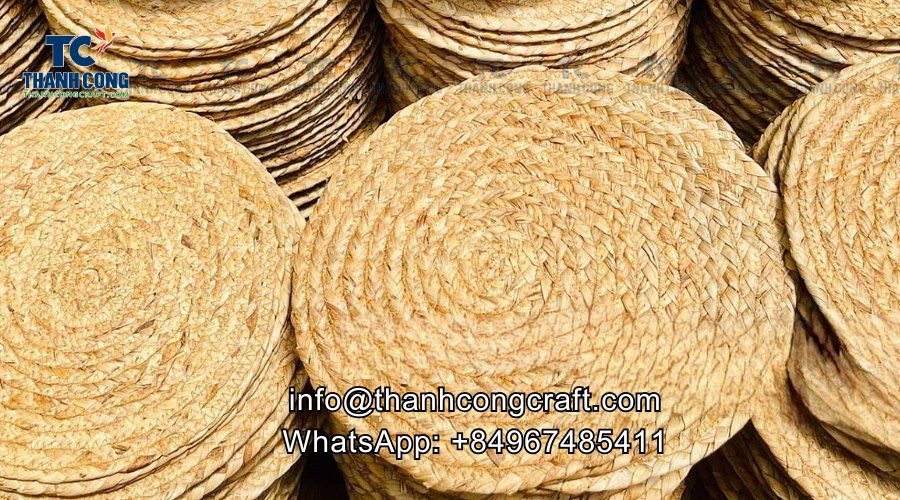
High heat accelerates color change, while cooler rooms preserve the original tone longer. Sudden shifts in humidity and temperature can cause uneven color patches because the fiber absorbs and releases moisture at varying speeds.
3.4 Real Artisan Observations
Vietnamese artisans report that baskets dried too quickly in intense sunlight often show streaks or slight burn marks. On the other hand, baskets dried under shade can appear lighter but may darken later during shipping, especially when packed inside sealed containers.
4. How to Maintain, Protect, and Restore Water Hyacinth Color
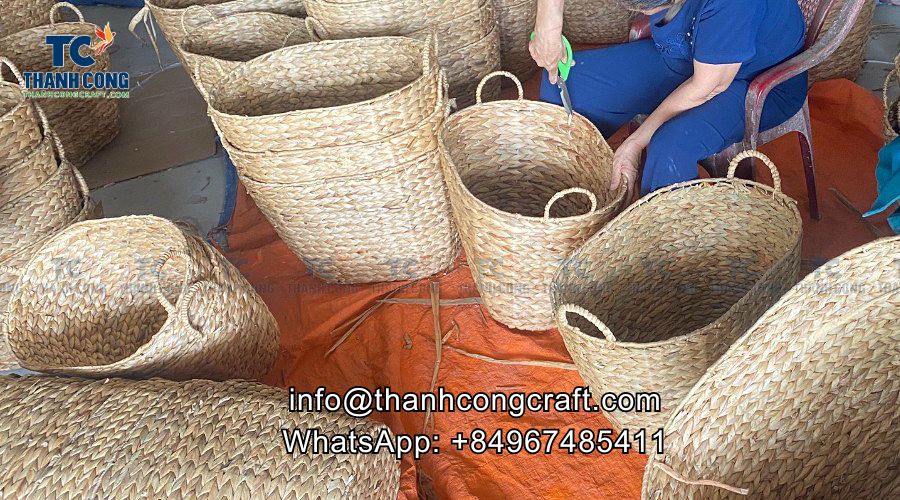
Water Hyacinth Products require simple but consistent care to maintain color stability. Although impossible to freeze the original color forever, proper handling prevents uneven fading and extends basket lifespan significantly.
4.1 Keep Away From Direct Sunlight
Because sunlight accelerates fading, baskets should be placed in areas with indirect or diffused light. Retailers should avoid displaying them near storefront windows, as UV exposure accumulates throughout the day.
4.2 Regular Dusting and Cleaning
Dust particles can dull fiber color. Using a soft brush or dry cloth keeps the fibers clean without damaging the surface. For deeper cleaning, use a slightly damp cloth — never soak the basket.
4.3 Humidity Control
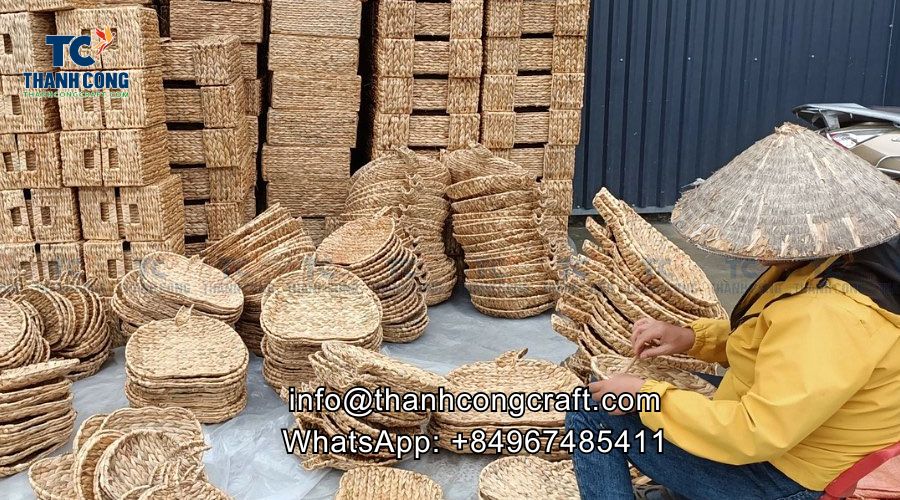
Placing baskets in dry, well-ventilated spaces prevents color darkening caused by moisture absorption. In humid environments, silica gel packets help maintain optimal dryness.
4.4 Re-Coating Options
Lacquer, water-based sealants, or natural oil finishes help stabilize color and slow oxidation. Export-grade baskets often receive two coats of clear protection to prevent moisture stains during transit.
4.5 Restoring a Darkened Basket
If a basket darkened due to moisture, it can be restored by placing it in a cool, shaded, ventilated area for 24–48 hours. Sunlight is not recommended for restoration because it causes uneven fading.
Learn more: How to Grow Water Hyacinth at Home
5. Why Supplier Quality Matters for Long-Term Color Stability
Water Hyacinth Products age differently depending on how materials are treated before weaving. Therefore, choosing the right supplier is essential for wholesalers, retailers, and importers.
5.1 Material Treatment Before Weaving
Reliable suppliers wash, boil, and sun-dry fibers under controlled conditions. This step removes impurities that could lead to discoloration, mold, or dark patches after shipment.
5.2 Export-Level Moisture Control
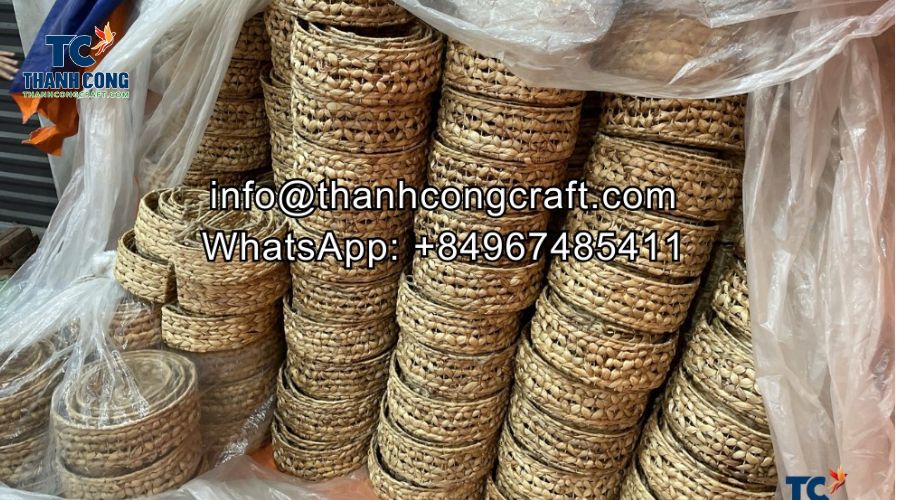
Humidity inside shipping containers can reach 90%, especially during monsoon seasons. Professional exporters measure moisture levels of each batch and use desiccants, container liners, and anti-mold stickers to preserve product color.
5.3 Quality Control During Production
Proper QC includes:
-
rejecting fibers with uneven drying patterns
-
ensuring consistent color across batches
-
adjusting shade drying vs. sun drying for balanced tone
-
checking moisture content before packaging
5.4 Certifications and Standards
Reputable suppliers follow international export standards, including:
-
moisture content limits
-
chemical-free finishing
-
eco-certification for sustainable harvesting
-
mold prevention processes
Read more:
5.5 Why Bulk Buyers Benefit From Skilled Exporters
Because large-volume orders require consistency, wholesalers depend on suppliers capable of controlling fiber color. This includes matching tones across thousands of baskets, reducing shade variation, and ensuring long-term durability.
See more on: Top 5 Countries Importing Water Hyacinth Products from Vietnam
Reach out to us today to learn more about our products or to place a wholesale order. We look forward to connecting with you!
- Thanh Cong Handicraft Co., Ltd
- Email: [email protected]
- Tel/WhatsApp: +84967485411
Explore our Products Collection for more choices! Contact Us!


