

Mother of pearl furniture is moderately durable for everyday use when it is applied as a decorative surface rather than a structural element. It tolerates normal handling and light daily interaction but remains sensitive to impact, moisture, and misuse. For B2B buyers, durability should always be assessed in relation to application type and market-specific usage habits.
Contents
1. What Does “Durable” Really Mean When Applied to Mother of Pearl Furniture?
When international buyers ask whether mother of pearl furniture is durable, the term “durable” is often interpreted through an industrial lens. Many buyers equate durability with the ability to withstand heavy loads, repeated impact, or rough handling. This assumption creates immediate confusion when applied to decorative materials.
In the context of mother of pearl furniture, durability refers to surface stability and long-term visual performance. It describes how well the inlay maintains adhesion, finish integrity, and appearance under normal, intended use. It does not imply that the material is suitable for structural or high-impact applications.
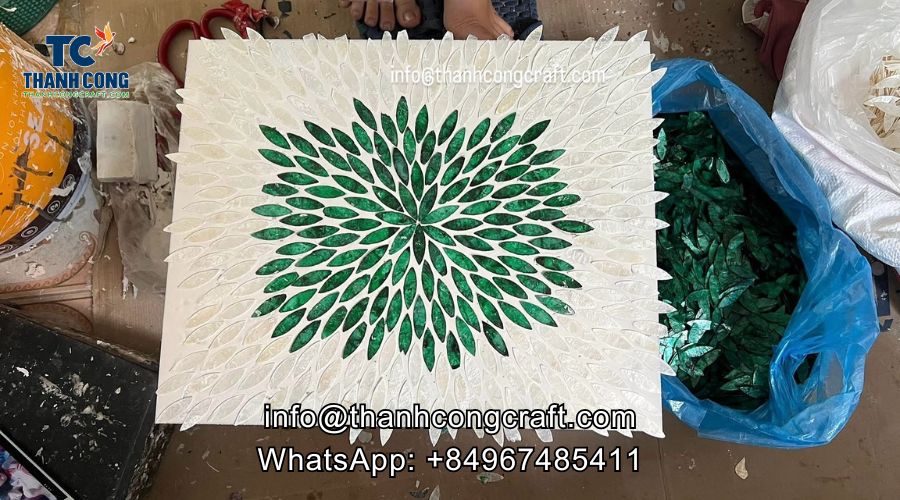
Mother of pearl is a natural nacre layer formed inside certain shells, composed mainly of calcium carbonate bonded by organic proteins. This structure creates a hard, lustrous surface but does not provide flexibility or shock absorption. As a result, the material behaves very differently from solid wood, metal, or engineered composites.
From a manufacturer’s perspective, durable mother of pearl furniture is furniture that does not crack, lift, or delaminate over time. Minor surface aging, such as reduced gloss, is not considered a durability failure. This distinction is important when aligning expectations between suppliers and buyers.
Durability should also be understood as predictability. When mother of pearl furniture is produced using stable substrates and proper finishing systems, its performance is consistent across markets. Most durability complaints arise when buyers apply the material outside its intended decorative role.
See our article on: Luxury Mother of Pearl Table – Top 5 Designs for Hotels & Villas
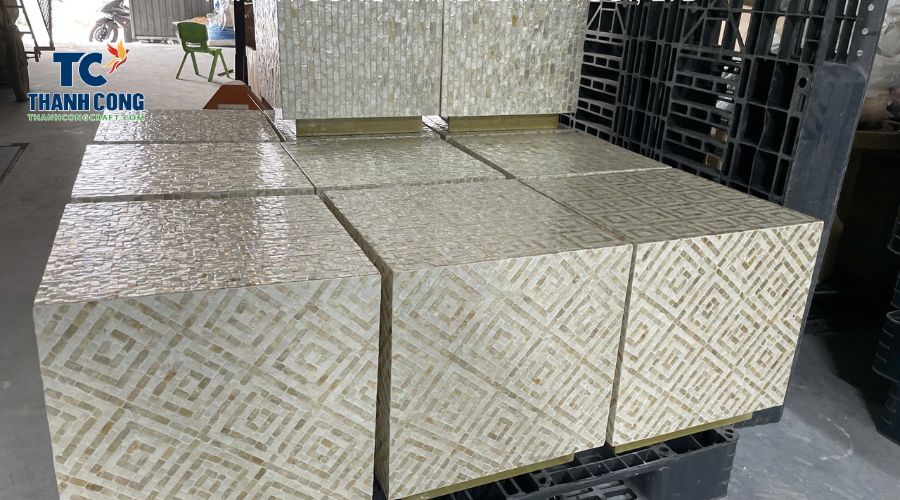
2. How Mother of Pearl Durability Compares to Other Furniture Surface Materials
Mother of pearl behaves differently from other common furniture surface materials because it combines mineral hardness with organic structure. Its surface resists light abrasion better than painted wood or printed finishes. However, it lacks the elasticity needed to absorb sudden impact.
Compared to solid wood furniture, mother of pearl surfaces are less likely to show superficial scratches from normal handling. At the same time, wood tolerates impact better and is easier to repair if damaged. This difference explains why mother of pearl is favored for visual surfaces rather than functional ones.
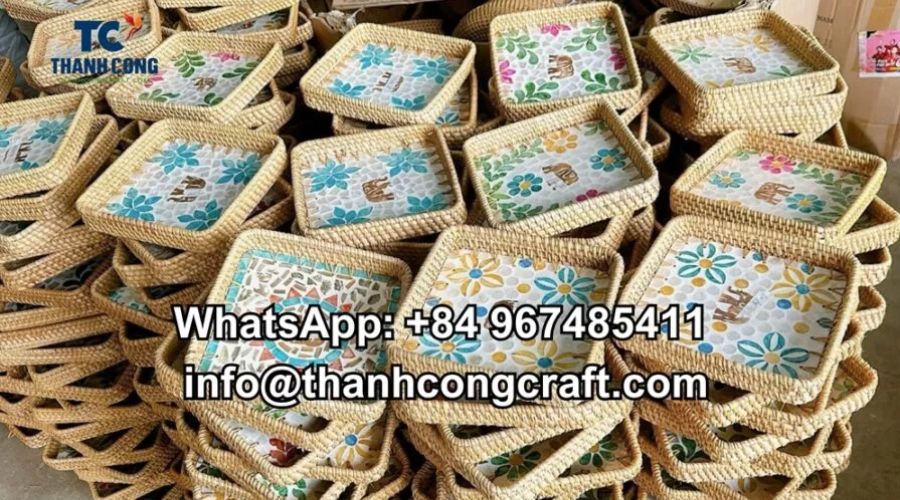
When compared to resin or composite surfaces, mother of pearl shows lower tolerance to prolonged stress. Engineers design resin materials to distribute heat, pressure, and movement evenly.. Natural shell, by contrast, reacts more gradually and unevenly to external stress.
Stone and marble surfaces outperform mother of pearl in high-impact or heavy-use environments. However, they introduce their own limitations, including weight, brittleness under thermal shock, and reduced design flexibility. Mother of pearl remains competitive because of its handcrafted appearance and visual depth.
3. How Mother of Pearl Furniture Performs in Real Everyday Use
In typical residential interiors, mother of pearl furniture performs reliably under light to moderate daily interaction. Activities such as opening drawers, placing decorative items, or occasional surface contact do not usually affect durability. The surface remains visually stable when basic care is followed.
In hospitality settings, placement largely determines furniture performance. Accent pieces placed in low-traffic areas maintain their appearance well. Furniture exposed to frequent contact or uncontrolled use faces higher risk, regardless of material quality.
Impact remains the most significant everyday risk. Dropping heavy objects or striking exposed edges can cause chipping or cracking. These issues may not appear immediately but can accumulate with repeated stress over time.
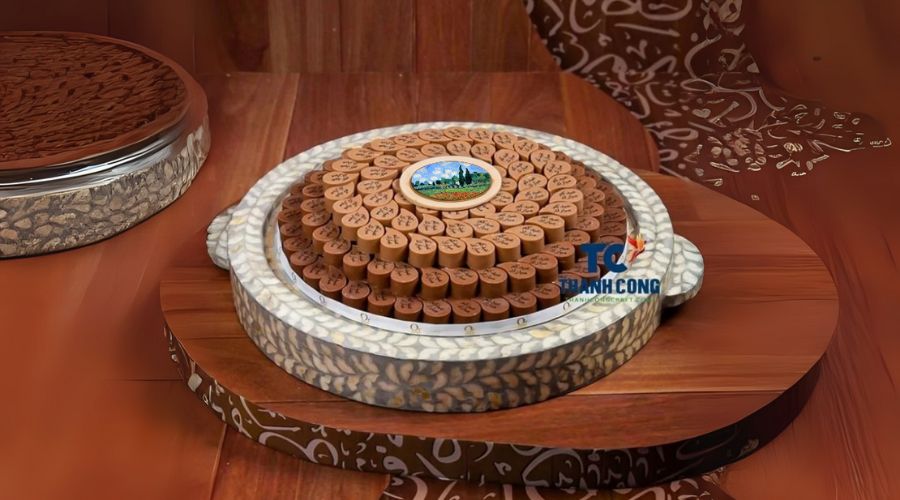
Surface finishes play a major role in everyday durability. Protective coatings shield the shell from moisture, cleaning agents, and minor abrasion. When these finishes wear down, the underlying inlay becomes more vulnerable, even if the shell itself remains intact.
Over time, mother of pearl naturally develops visual aging. The surface may lose some gloss or feel slightly softer as the finish wears, not because the material fails. Many markets view this gradual change as a natural patina rather than damage.
From a production perspective, manufacturers can reliably predict everyday durability when they understand usage patterns. Providing clear guidance on handling and placement helps B2B buyers significantly reduce post-sale issues.
See more:Mother of Pearl Trays Import Duty – Customs & Tax Guide for Oman
4. How Usage Patterns in the US, EU, and Middle East Affect Durability
Durability performance of mother of pearl furniture varies by market because usage habits differ significantly. Understanding these differences helps buyers determine whether the material suits their target customers.
In the United States, consumers often place mother of pearl furniture in casual living spaces and use decorative pieces as multi-purpose surfaces. Mother of pearl tolerates light daily use, but problems occur when users treat it as utility furniture.
To reduce this risk, retailers in the US actively provide care instructions and position products clearly. When retailers market mother of pearl furniture as decorative, consumers perceive its durability more positively.
In the European Union, particularly in Western Europe, consumers use mother of pearl furniture more selectively. Buyers typically position these pieces as accents or statement furniture rather than for daily use. By limiting frequent interaction, they achieve stronger long-term durability.
European buyers prioritize craftsmanship and material authenticity over multi-purpose functionality. This preference naturally supports the decorative strengths of mother of pearl furniture.
In the Middle East, designers and homeowners place mother of pearl furniture in climate-controlled interiors. Controlled temperature and humidity minimize material stress. Thanks to these stable indoor conditions, mother of pearl furniture performs exceptionally well in this region.
However, dining and hospitality practices in the Middle East may involve extended use of furniture during gatherings. Clear specification of intended use remains important to prevent misuse, even in favorable environments.
5. How B2B Buyers Can Assess and Improve Durability Outcomes
When designers align design intent, production quality, and usage context, mother of pearl furniture delivers lasting visual value. Selecting appropriate applications is the most effective way to minimize risk. Decorative furniture categories consistently deliver the best results.
Supplier evaluation is equally important. Buyers should assess substrate quality, adhesive systems, finishing processes, and curing time. Shell appearance alone does not predict durability performance.
Clear communication across the supply chain reduces problems. When retailers and end users understand that mother of pearl furniture is decorative rather than utilitarian, misuse decreases substantially. Transparency protects brand reputation in the long term.
Manufacturers often recommend combining mother of pearl furniture with complementary protective practices. Controlled placement, limited exposure to impact, and proper maintenance extend product lifespan. These measures are simple but effective.
From an industry perspective, durability is a system outcome rather than a single material property. When designers align intent, manufacturers ensure quality, and users apply the furniture correctly, mother of pearl furniture delivers lasting visual value.
For everyday decorative use, mother of pearl remains a dependable and commercially viable choice for international B2B markets.
Learn more about: Why Use Mother of Pearl Spoon for Caviar ?

Reach out to us today to learn more about our products or to place a wholesale order. We look forward to connecting with you!
- Thanh Cong Handicraft Co., Ltd
- Email: [email protected]
- Tel/WhatsApp: +84967485411
Explore our Products Collection for more choices! Contact Us!


