

Mother of pearl coasters are exquisite handcrafted items, often found in elegant spaces or chosen as meaningful gifts. However, without proper cleaning methods, their intricate inlaid designs can easily become scratched or peeled over time. In this article, ThanhCongCraft will guide you through simple at-home cleaning techniques that preserve both the delicate beauty and durability of your mother of pearl coasters.
Contents
1. Why Proper Cleaning of Mother of Pearl Coasters Is Essential
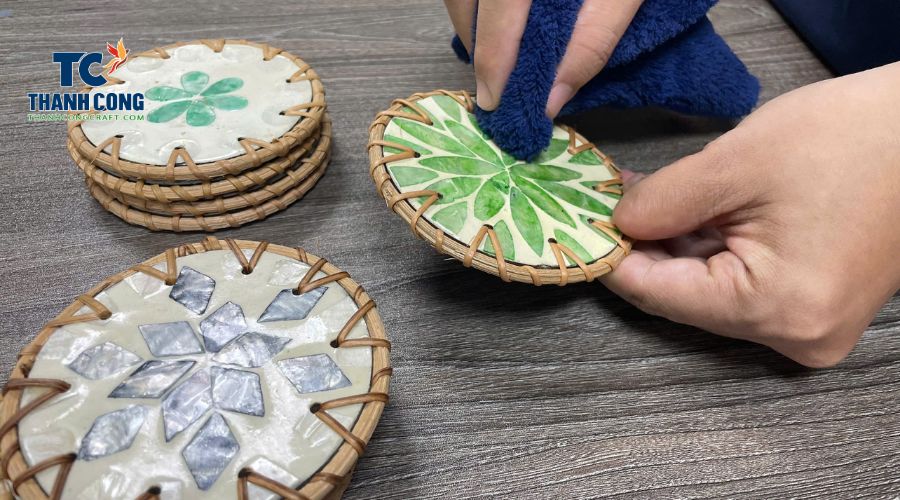
Unlike other products on the market, mother of pearl coasters are handcrafted items that hold both aesthetic and cultural value. With surfaces inlaid from natural shell pieces, these coasters are not only visually stunning but also intricately made, requiring gentle care during use and cleaning. Improper cleaning methods can lead to scratched, peeling, or faded inlays, diminishing the product’s beauty and shortening its lifespan. Proper cleaning not only keeps the coasters shiny and spotless but also helps preserve the exquisite craftsmanship embedded in every detail. Therefore, regular and careful cleaning is key to maintaining their original elegance.
2. Common Mistakes When Cleaning Mother of Pearl Coasters
Improper cleaning is often the main reason why delicate mother of pearl coasters deteriorate quickly and lose their original charm. Here are some common mistakes to avoid:
2.1. Using Harsh Chemical Cleaners
One of the most damaging mistakes is using strong chemical cleaners on mother of pearl coasters. These coasters are typically coated with a glossy protective layer that enhances the natural beauty of the shell and prevents moisture from penetrating. Harsh acidic or alkaline cleaners can erode this protective layer, exposing the shell to air and humidity, which leads to oxidation and dullness. Furthermore, these chemicals may seep into the adhesive layer, weakening the bond between the inlays and the base, causing peeling or blistering.
2.2. Soaking in Water or Scrubbing Aggressively
Mother of pearl is not water-resistant, especially when combined with natural materials like rattan or bamboo in the coaster’s edge. Soaking the coaster in water for too long can soften the adhesive, promote mold growth on the natural fiber, and cause the inlays to detach. Aggressive scrubbing, especially with stiff brushes or abrasive pads, can lead to similar damage, much like sanding the surface.
2.3. Using Rough Cloths That Scratch the Surface
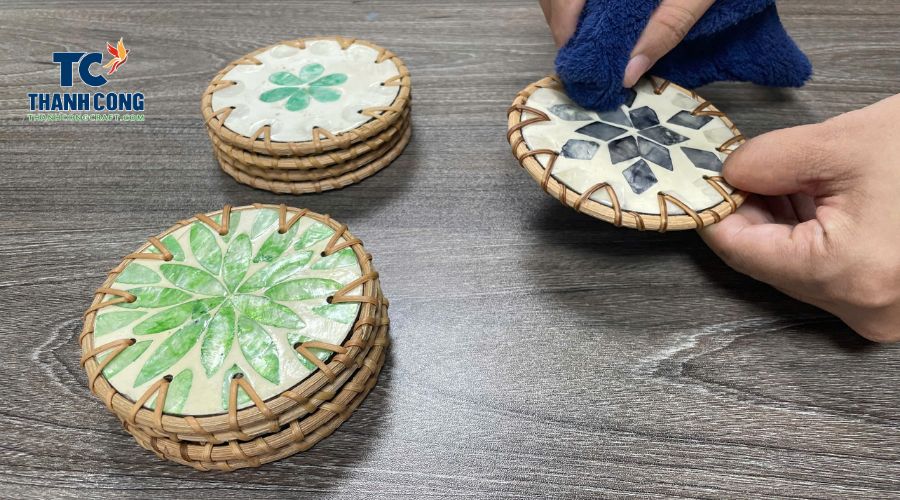
Many people use whatever cloth is available to wipe their coasters, including rough fabrics or paper towels. However, these materials can act like fine sandpaper, dragging dirt particles across the surface and causing micro-scratches. These scratches may be unnoticeable at first but will accumulate over time, dulling the finish. The best choice is a soft microfiber cloth, which effectively removes dust and moisture without harming the protective layer or shell surface.
2.4. Drying in Direct Sunlight
Leaving coasters to dry in direct sunlight is a common mistake that can lead to serious damage. Intense heat can dry out the adhesive too quickly, causing cracking or shrinking. It may also cause the vibrant shell colors to fade. Instead, allow the coasters to air dry in a shaded, well-ventilated area to maintain their durability and appearance.
3. Proper Steps to Clean Mother-of-Pearl Coasters Without Damaging Them
Previously, you’ve learned about what makes mother-of-pearl coasters special and the common mistakes to avoid when cleaning them. Now, let’s walk through the proper steps to clean these elegant pieces at home, helping preserve their brilliance and longevity.
3.1. Step 1: Prepare the Right Cleaning Tools
To start, gather a few simple cleaning supplies such as a soft cloth, warm water, and a small soft-bristled brush. Having the right tools ready will make the cleaning process more effective and gentle.
3.2. Step 2: Wipe the Surface with a Damp Cloth
Next, dip the soft cloth into a bowl of warm water and wring it out slightly. Gently wipe the surface of the coaster to remove dust, fingerprints, or stains. Be sure to clean using light, even strokes to avoid dulling the natural sheen of the shell inlay. Avoid scrubbing or pressing too hard, as this can wear down the protective finish over time.
3.3. Step 3: Clean Crevices with a Soft Brush
For hard-to-reach areas or detailed grooves in the design, use a soft-bristled brush. Over time, dirt can build up in these areas, dulling the intricate details and potentially weakening the adhesive underneath. Carefully brush away dirt with light pressure, taking care not to scratch the surface or dislodge any inlays.
3.4. Step 4: Dry Thoroughly with a Soft, Clean Cloth
After cleaning, drying is crucial—especially for coasters with rattan edges or wooden bases. Use a dry, soft cloth to absorb any remaining moisture. Then, leave the coaster in a well-ventilated, shaded area to air dry completely. Avoid direct sunlight, which can warp materials or fade colors. Never store the product while it’s still damp, as this may lead to mold, unpleasant odors, or damage to the adhesive.
4. Recommended Easy-to-Clean Coaster Designs from ThanhCongCraft
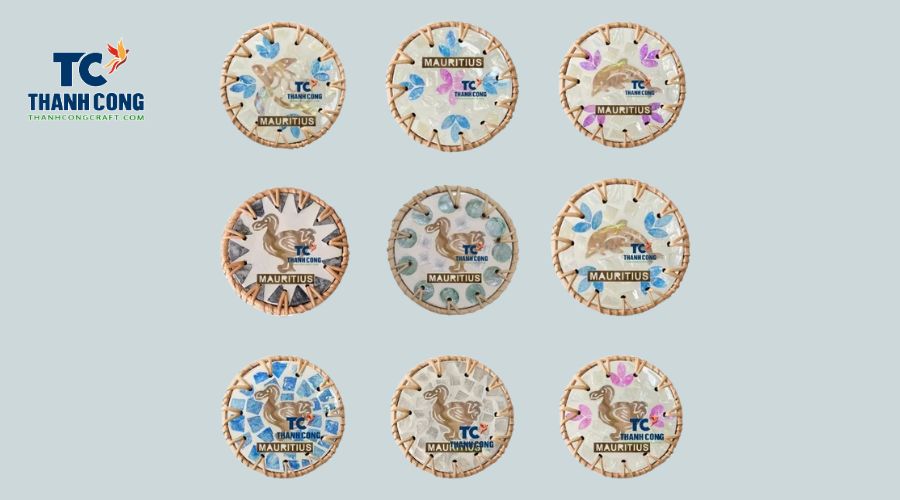
If you’re looking for beautiful, practical, and easy-to-clean mother-of-pearl coasters, ThanhCongCraft offers a range of designs that tick all the boxes. From handwoven rattan-edged coasters to those with intricate patterns, each item is carefully crafted and easy to maintain after use.
>See also: Top 5 Best-Selling Mother-of-Pearl Coaster Sets in 2025
We hope this simple guide helps you clean your mother-of-pearl coasters effectively while preserving their artistic beauty and functionality. Follow ThanhCongCraft for more useful tips and to explore our full range of unique, handcrafted gifts inspired by Vietnamese artistry.


