

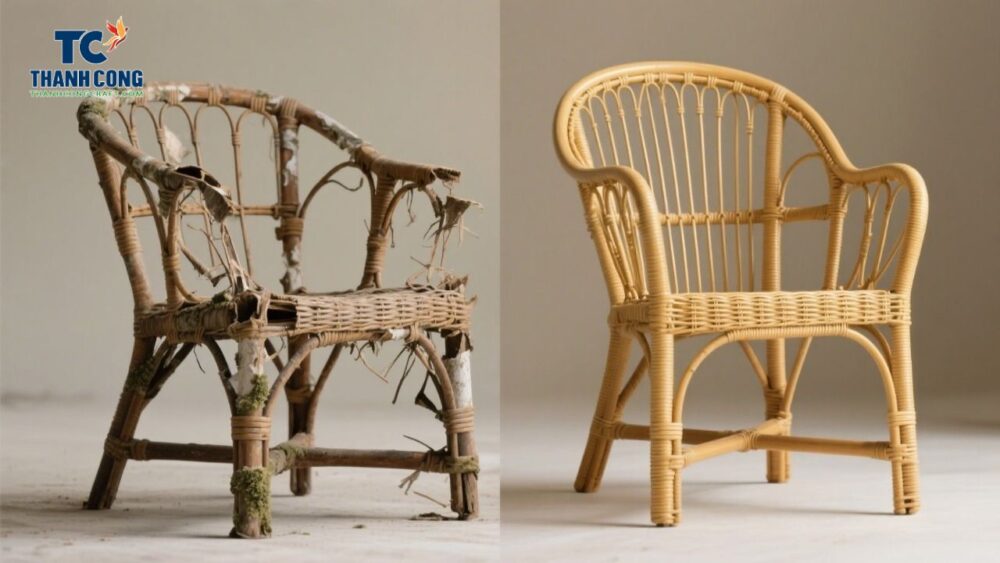
Rattan chairs are beautiful, timeless, and eco-friendly. Over the years, however, they can fade, crack, or develop mold due to constant use and exposure to moisture. The good news is that you don’t have to throw them away. Instead, with just a few basic tools, you can restore rattan chairs easily at home and make them look like new again.
In this guide, you’ll discover a simple, step-by-step method to bring your old rattan furniture back to life—starting with proper cleaning, followed by careful repairs, and ending with a fresh protective finish.
Contents
1. Tools You’ll Need to Restore Rattan Chairs
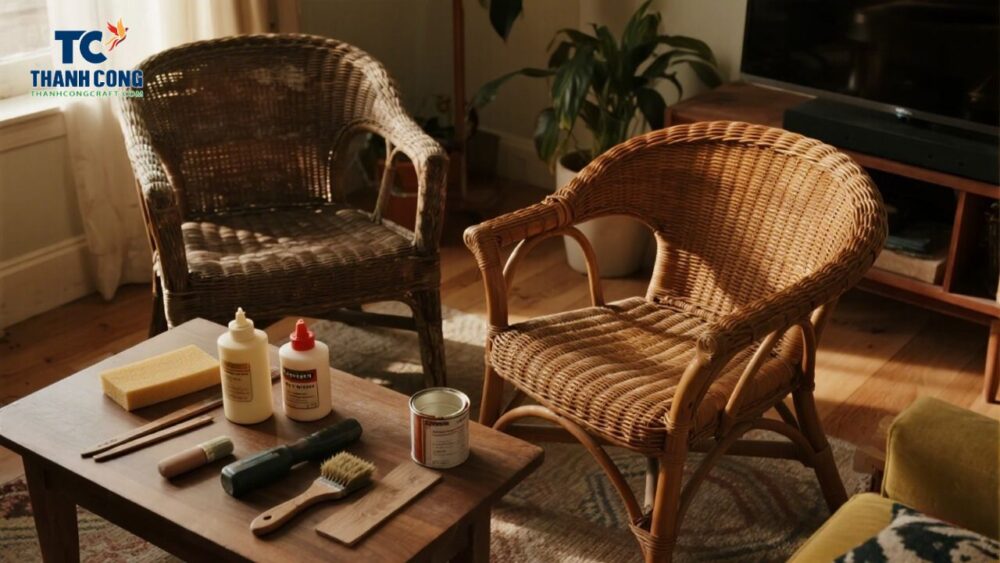
Before we dive into the process, gather all your tools. Having everything ready will save time and ensure better results.
Required Tools:
-
Soft-bristle brush
-
Clean cloth
-
Mild soap or vinegar
-
Fine-grit sandpaper (P180–P320)
-
Wood glue
-
Protective finish (PU spray, varnish, or oil-based paint)
-
Paintbrush
-
Pliers, knife, screwdriver
Related article: Should we use rattan hanging chair?

2. How to Restore Rattan Chairs – Step by Step
2.1. Clean the Surface First
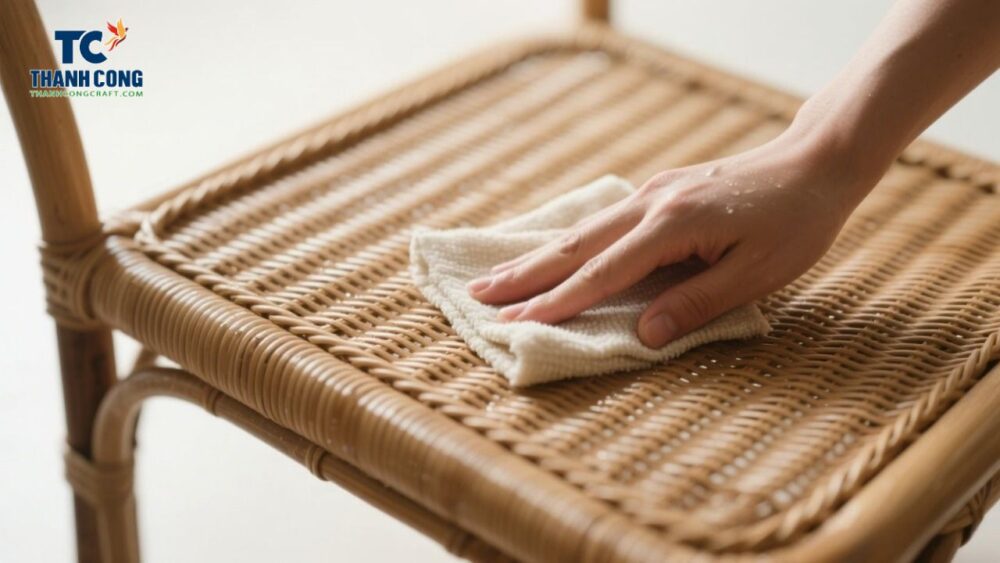
To begin, clean the entire chair with a soft brush to remove dust and debris. Then, wipe it with a damp cloth soaked in a mixture of mild soap or diluted vinegar. Let it dry completely before moving on.
Tip: Use a toothbrush to clean tight weaves and corners.
2.2. Remove Mold and Tough Stains
If your chair has mold or yellow stains, don’t panic. Instead, try these steps to remove them safely:
-
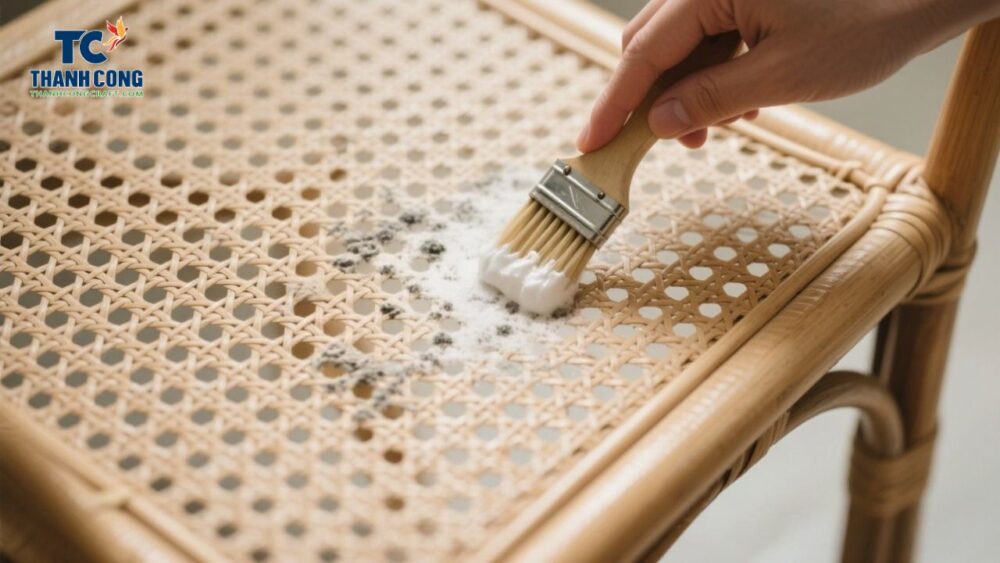
Mix baking soda and water into a paste and gently scrub the moldy areas.
-
For stubborn spots, apply 3% hydrogen peroxide.
-
After cleaning, leave the chair in sunlight for 2–3 hours to fully dry and disinfect.
Learn more: How to Clean an Egg Chair Cushion?
2.3. Repair Loose Weaves and Damage
Now it’s time to fix any broken parts:
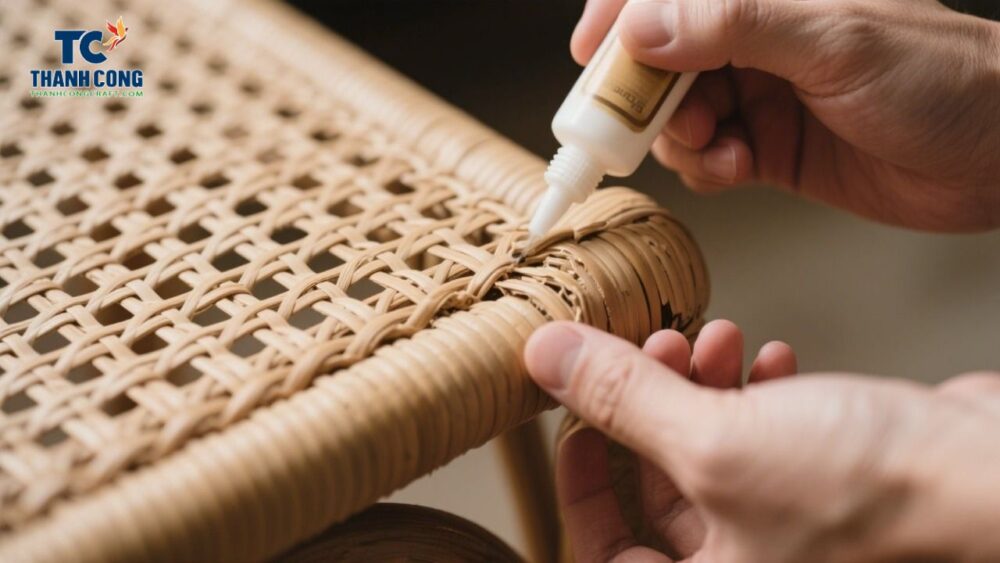
- First, apply wood glue to reattach loose strands of rattan.
- Next, if a cane strip is broken, remove and replace it using pliers.
- Then, tighten any loose joints with a screwdriver.
This step is crucial when restoring rattan chairs that feel wobbly or unsafe, as it strengthens the entire structure.
2.4. Sand the Surface Smoothly
After completing the repairs, gently sand the surface with fine-grit sandpaper. This step helps remove leftover grime, old varnish, and any splinters that may cause discomfort. Once sanding is done, wipe down the dust thoroughly using a clean, dry cloth. This ensures a smooth and clean surface before applying the finish.

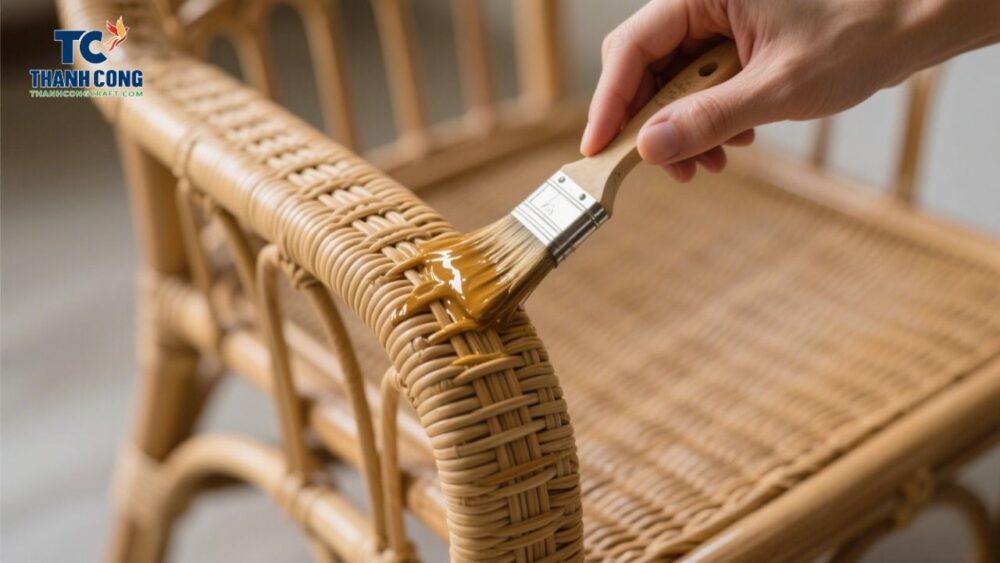
2.5. Apply Protective Finish
Finally, apply a protective coating. This will not only beautify the chair but also extend its life.
You can choose:
-
PU spray for a glossy look
-
Matte or satin varnish for a natural finish
-
Oil-based wood paint for full color restoration
Apply one thin coat and let it dry completely. If needed, apply a second coat evenly.
Now your restored rattan chair is ready to shine!
Related read: How to Protect and Care for Outdoor Wicker Furniture?
3. How to Maintain Restored Rattan Chairs
Once restored, regular maintenance keeps your chair looking fresh:
-
Keep it away from rain or direct sunlight.
-
Dust it weekly with a dry cloth or vacuum using a soft brush.
-
Add cushions to prevent sagging and wear.
Taking care of your rattan chair ensures it stays beautiful for years to come.

4. When Should You Replace Instead of Restore Rattan Chairs?
While restoring rattan chairs is often worth it, in some cases replacement is the better option:
-
The frame is cracked or warped.
-
Mold or rot has spread deep into the core.
-
The restoration cost exceeds the chair’s value.
In such situations, it’s more practical to invest in a new one.
Reach out to us today to learn more about our products or to place a wholesale order. We look forward to connecting with you!
- Thanh Cong Handicraft Co., Ltd
- Email: [email protected]
- Tel/WhatsApp: +84967485411
Explore our Products Collection for more choices! Contact Us!


