

Mother of pearl is a natural material formed biologically inside the shells of certain mollusks, rather than a synthetic or man-made substance. Although artificial materials are widely produced to imitate its appearance, genuine mother of pearl retains a biological structure that cannot be industrially replicated. For B2B buyers, distinguishing between natural nacre and synthetic substitutes is essential for accurate product specification and market positioning.
Contents
- 1. What Defines Mother of Pearl as a Natural Material in Material Science and Trade?
- 2. Why Mother of Pearl Is Commonly Mistaken for Synthetic Material in Global Sourcing
- 3. Structural and Functional Differences Between Natural Mother of Pearl and Synthetic Alternatives
- 4. How US, EU, and Middle East Markets Interpret Mother of Pearl as a Material
- 5. Practical Limitations of Mother of Pearl and When Synthetic Materials Are More Suitable
1. What Defines Mother of Pearl as a Natural Material in Material Science and Trade?
Mother of pearl, also known as nacre, is created by living mollusks such as oysters, abalones, and freshwater mussels as a natural protective mechanism. When irritants enter the shell, the organism secretes successive microscopic layers of calcium carbonate bound with organic proteins, gradually forming a hard, iridescent inner shell surface. This formation process occurs entirely within a biological system and often takes several years, which is why mother of pearl is classified as a natural material rather than an engineered one.
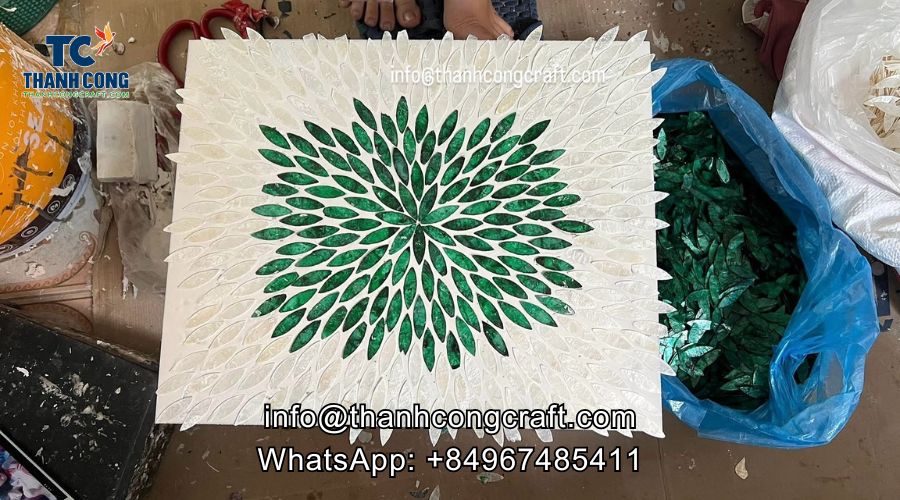
From a manufacturing and sourcing perspective, this natural origin is evident during raw shell processing. Each shell yields limited usable material with irregular thickness, non-uniform curvature, and unique color transitions influenced by species type, water conditions, and growth duration. These characteristics are not design features but inherent biological outcomes. Mechanical processing such as cutting, polishing, or inlay work does not alter the material’s natural classification, as these steps merely shape an already-formed substance rather than creating it. This distinction is critical when mother of pearl is compared with synthetic composites that are chemically or industrially produced from base materials.
Discover more about: Does Mother of Pearl Scratch Easily?
2. Why Mother of Pearl Is Commonly Mistaken for Synthetic Material in Global Sourcing
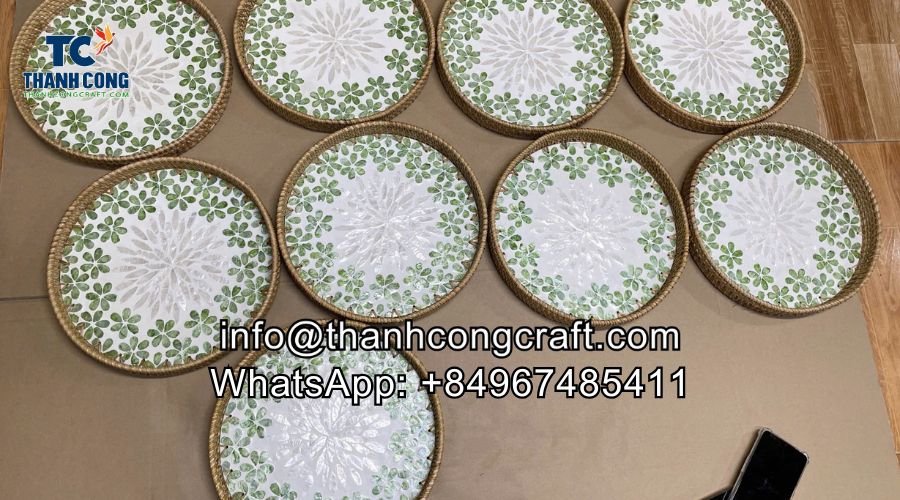
Confusion surrounding mother of pearl largely stems from market-driven imitation rather than material ambiguity. As demand for pearl-like aesthetics increased across home décor, furniture, and tabletop categories, manufacturers developed synthetic pearl-effect materials using resin, acrylic, plastic laminates, and composite sheets. These materials are designed to visually resemble nacre while offering lower cost, uniform thickness, and mass-production efficiency.
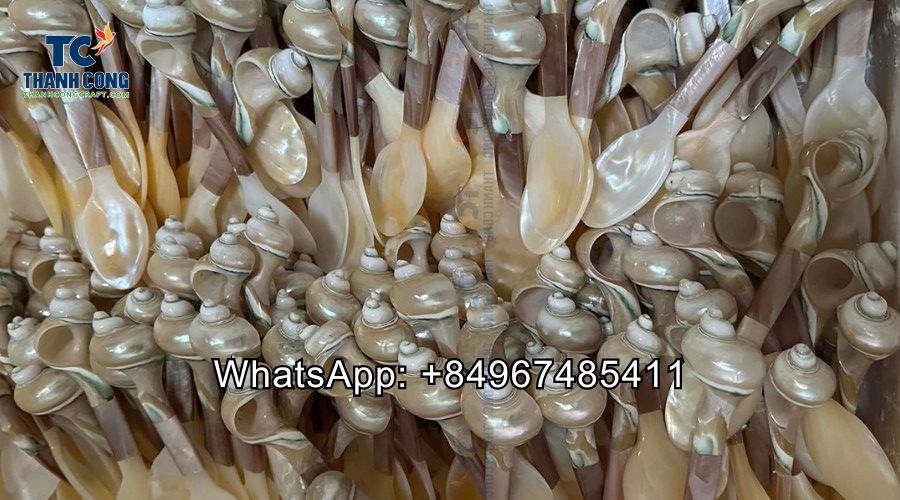
In international trade listings, especially online B2B platforms, imprecise terminology often worsens the issue. Descriptions such as “pearl finish,” “shell-look surface,” or “nacre-style panel” are frequently used without clarifying whether real shell material is involved. From exporter experience, the difference becomes apparent only after delivery, when buyers observe repeated patterns, uniform light reflection, lighter weight, or different behavior during cutting and installation. Genuine mother of pearl fractures differently, shows layered depth under angled light, and produces natural shell residue when processed.
Misidentifying synthetic materials as mother of pearl creates compliance and credibility risks. In regulated markets, incorrect material declarations can lead to customs disputes or rejected shipments. For premium brands, the reputational impact of material misrepresentation often outweighs any short-term sourcing advantage.
Explore our post: Are Mother of Pearl Rattan Trays Eco-Friendly?
3. Structural and Functional Differences Between Natural Mother of Pearl and Synthetic Alternatives
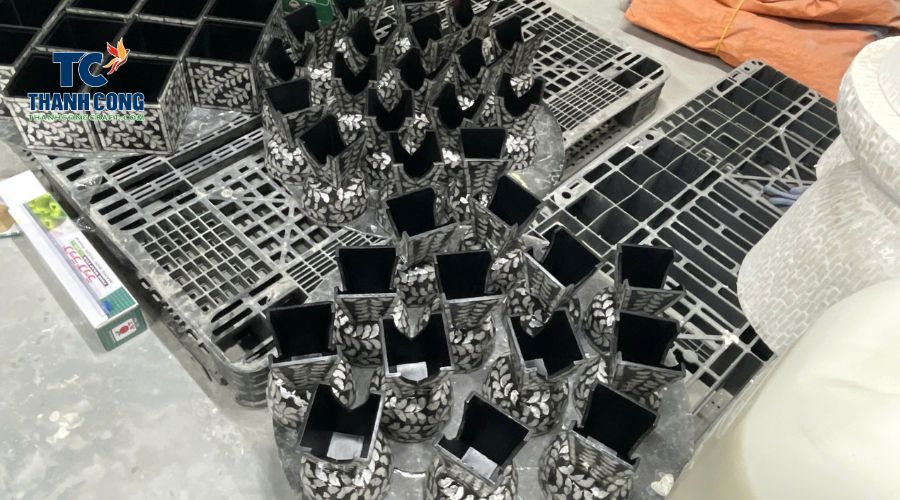
Natural mother of pearl and synthetic substitutes differ fundamentally in internal structure, not just surface appearance. Mother of pearl has a layered “brick-and-mortar” microstructure, where aragonite platelets are stacked with organic binding layers in between. This structure creates depth, iridescence, and light diffusion throughout the material, meaning visual quality remains even after surface polishing or minor wear.
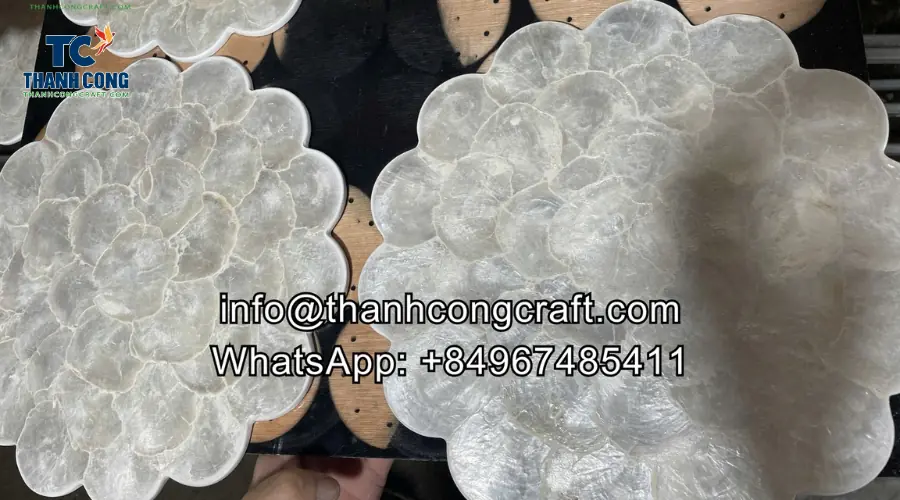
Synthetic alternatives rely on surface coatings, embedded pigments, or reflective films to simulate shine. Once scratched or worn, the underlying base material becomes visible, reducing perceived quality over time. Functionally, mother of pearl is hard but brittle, offering good abrasion resistance but limited impact tolerance. Synthetic materials are typically more flexible and impact-resistant, yet they tend to discolor, fade, or delaminate with long-term exposure to heat, UV light, or cleaning chemicals.
From a commercial standpoint, these differences affect production yield, labor input, and pricing. Mother of pearl requires skilled manual processing, generates higher waste ratios, and involves longer lead times. Synthetic sheets support automation and predictable output but lack authenticity in premium or heritage-driven product lines. For B2B buyers, the choice is less about appearance alone and more about long-term performance, brand positioning, and material honesty.
4. How US, EU, and Middle East Markets Interpret Mother of Pearl as a Material
Market interpretation of natural shell inlay varies significantly depending on regulatory priorities and cultural expectations. In the United States, this material is widely accepted as a natural shell product when labeling is accurate. Buyers tend to focus on durability, consistency, and transparent material disclosure, with disputes more often resolved through contracts than regulatory intervention.
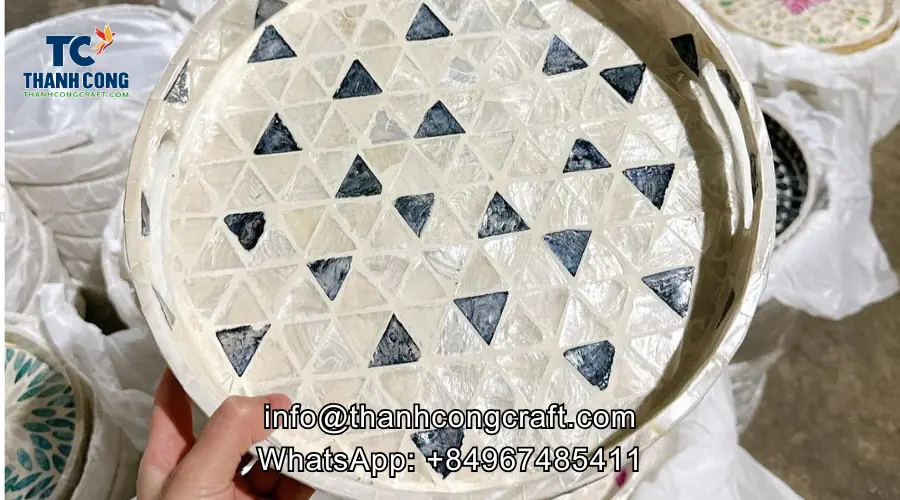
In the European Union, importers apply a higher level of scrutiny. Sustainability, traceability, and species protection strongly influence purchasing decisions. Buyers frequently request confirmation that shell inlay originates as a by-product of food-grade shellfish processing or pearl cultivation rather than from protected sources. As a result, documentation quality and supplier transparency are essential in this market.
In the Middle East, shell inlay is traditionally regarded as a luxury decorative material tied to craftsmanship and cultural heritage. Buyers prioritize visual richness, hand-applied techniques, and finishing precision over formal certification. Synthetic alternatives are generally unsuitable for premium or traditional interiors, even when the appearance is similar. These regional differences highlight why exporters must tailor material communication instead of relying on a single, universal product claim.
5. Practical Limitations of Mother of Pearl and When Synthetic Materials Are More Suitable
Despite its aesthetic and material value, mother of pearl has inherent limitations. Its brittleness makes it sensitive to impact, sudden temperature changes, and improper installation. Large, perfectly uniform surfaces are difficult to achieve due to shell size constraints and natural thickness variation. From production experience, maintaining color consistency across large orders can also be challenging.
Mother of pearl is best suited for decorative, low-impact applications and controlled environments. It is not ideal for high-impact use, tight tolerances, or cost-driven projects, where synthetic materials may be more appropriate if clearly disclosed.
See more: The Right Way to Use a Mother of Pearl Thermos for Tea Lovers
Reach out to us today to learn more about our products or to place a wholesale order. We look forward to connecting with you!
- Thanh Cong Handicraft Co., Ltd
- Email: [email protected]
- Tel/WhatsApp: +84967485411
Explore our Products Collection for more choices! Contact Us!


