

Mother of pearl coaster designs are increasingly recognized as essential luxury dining accessories that elevate table settings far beyond simple functionality. While traditional wooden coasters remain popular, mother of pearl versions offer unmatched elegance, artistry, and cultural symbolism. This article explores the history, materials, craftsmanship, and practical considerations behind both coaster types, ultimately guiding hospitality buyers, retailers, and interior designers toward the most suitable option for luxury dining spaces.
Contents
1. Cultural and Material Significance of Coasters
Coasters, often seen as minor dining accessories, have a surprisingly rich cultural background. Their evolution reflects how societies have treated dining not just as a practical necessity but also as an art form. The materials used—whether wood or mother of pearl—tell unique stories about craftsmanship, cultural heritage, and values placed on hospitality.
1.1 Mother of Pearl in Dining Traditions
Mother of pearl, derived from the inner shell layer of mollusks, has been treasured for centuries. It has adorned jewelry, religious artifacts, and household items across Asia, the Middle East, and Europe. When applied to coasters, this shimmering material communicates sophistication and luxury. The play of iridescent light makes each coaster a statement piece, symbolizing refinement and wealth. Because of this unique visual impact, mother of pearl coasters are often used in fine dining restaurants, five-star hotels, and high-end retail settings.
1.2 Wooden Coasters and Their Timeless Appeal
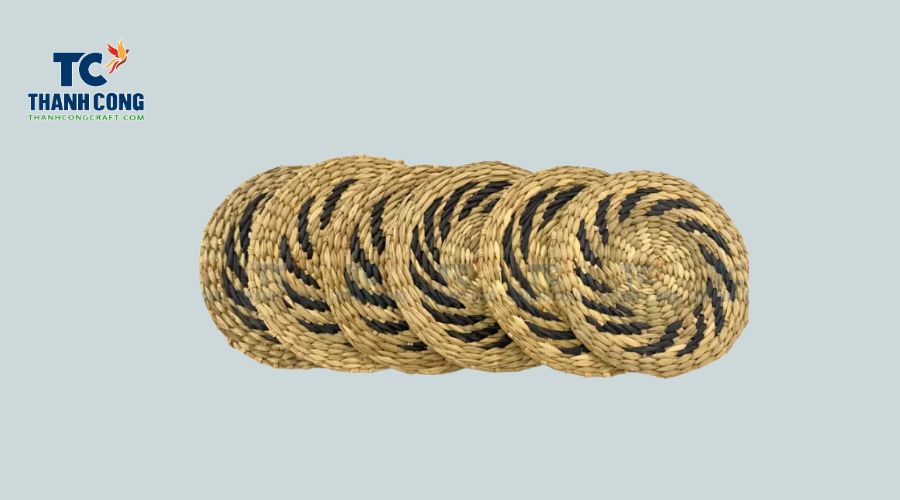
Wooden coasters, by contrast, represent warmth, simplicity, and natural living. For centuries, artisans have crafted wooden utensils, bowls, and coasters that embody harmony with nature. They remain popular today because wood blends effortlessly with rustic, minimalist, or Scandinavian interiors. Wooden coasters also carry cultural significance in many countries, from Japanese tea traditions to European farmhouse dining practices. Their tactile comfort and organic textures continue to attract eco-conscious consumers.
1.3 Symbolism in Material Choice
Choosing between mother of pearl and wooden coasters is about more than aesthetics. It reflects the values of a dining space. Mother of pearl signals luxury, formality, and artistry, while wood emphasizes simplicity, nature, and sustainability. Consequently, the choice directly influences how guests perceive hospitality brands or high-end retailers.
Explore our post: Eco-Friendly Mother of Pearl Thermos vs Stainless Steel

2. Aesthetic Comparison: Mother of Pearl vs. Wooden Coasters
The most striking difference between mother of pearl coasters and wooden ones lies in their visual and tactile appeal. Because dining today is not just about food but also about experience, aesthetics carry enormous weight.
2.1 Elegance and Shine of Mother of Pearl
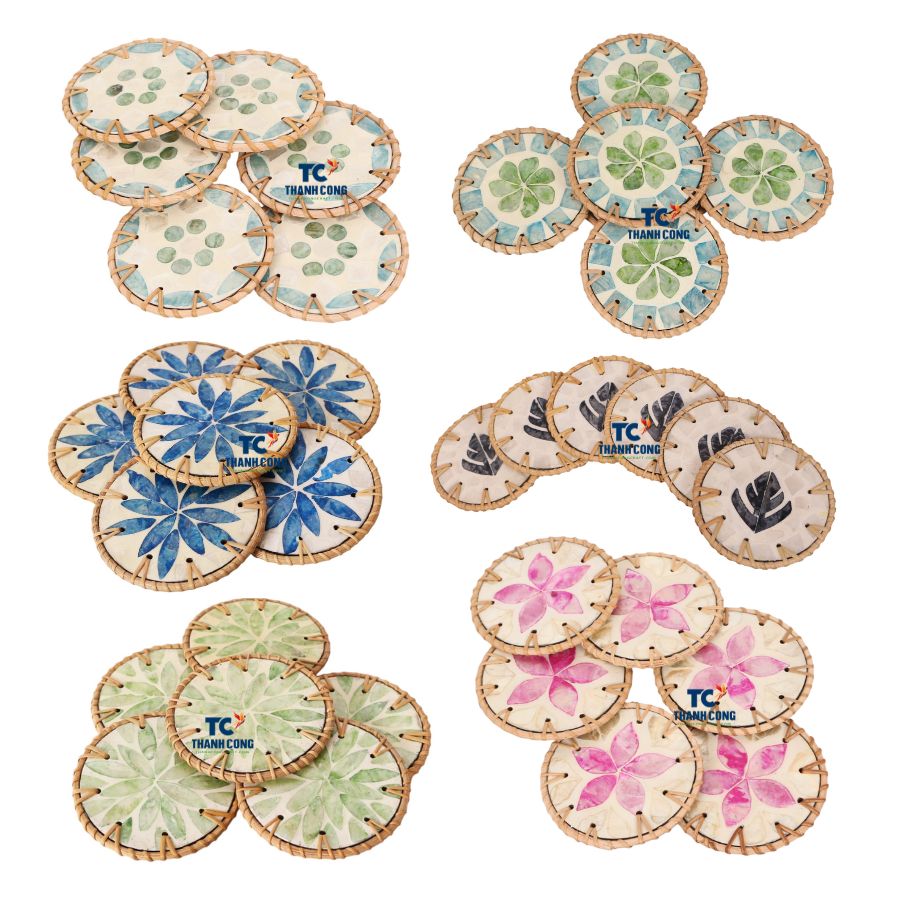
The iridescence of mother of pearl makes each coaster unique. Depending on the light, colors shift subtly from ivory to pink, green, or blue. This natural brilliance is impossible to replicate with synthetic materials. As a result, mother of pearl coasters function both as protective tableware and as jewelry for the dining table. They elevate simple glasses of water or cocktails into luxury presentations, creating memorable guest experiences.
2.2 Organic Beauty of Wooden Coasters
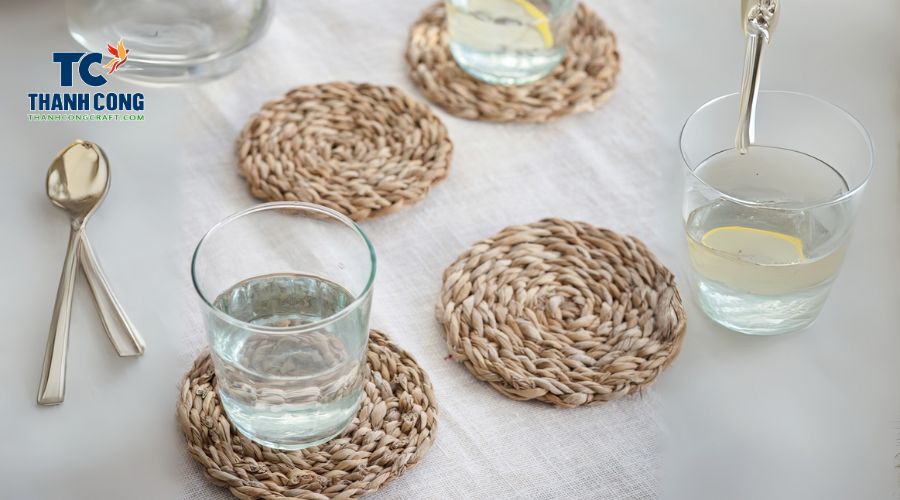
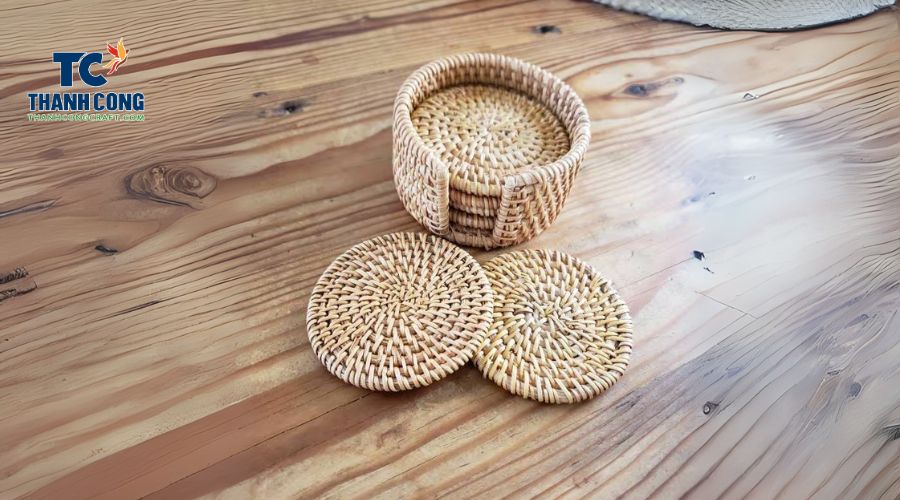
Wooden coasters, on the other hand, project a grounded charm. Their grain patterns, textures, and earthy tones bring warmth to any table. In minimalist dining spaces, wood softens sharp lines, while in rustic interiors, it complements other natural materials. Because wood can be stained, carved, or polished, coasters come in many variations—from sleek walnut discs to rough-hewn bamboo squares.
2.3 Matching Dining Styles with Materials
When choosing between the two, designers often match materials with interior themes. For instance, high-end seafood restaurants may prefer mother of pearl coasters for their oceanic symbolism, while boutique eco-resorts might opt for sustainable wooden coasters to reinforce their environmental values. Therefore, the decision depends not only on aesthetics but also on branding strategy.
See our article on: Top 5 Stunning Luxury Mother of Pearl Serving Trays for Parties.
3. Craftsmanship and Production Techniques
Another crucial distinction between the two types of coasters lies in how they are made. Craftsmanship influences both the price and the perception of value.
3.1 Handmade Mother of Pearl Coasters
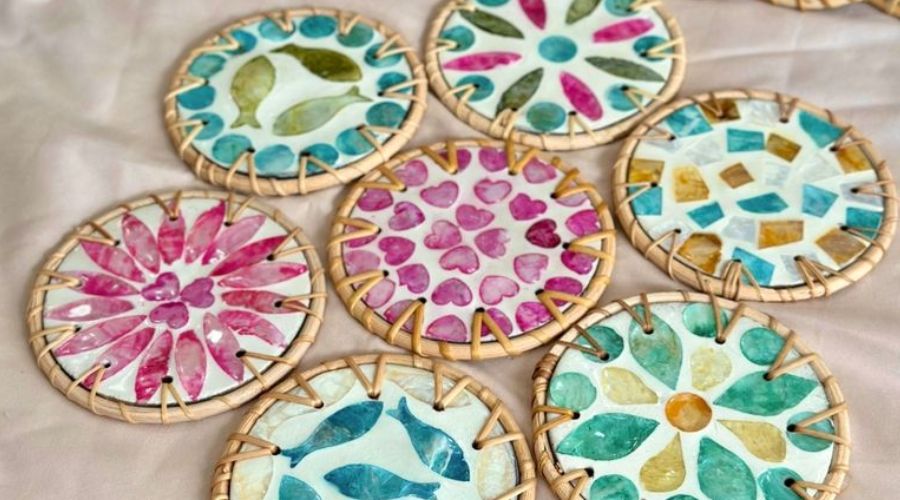
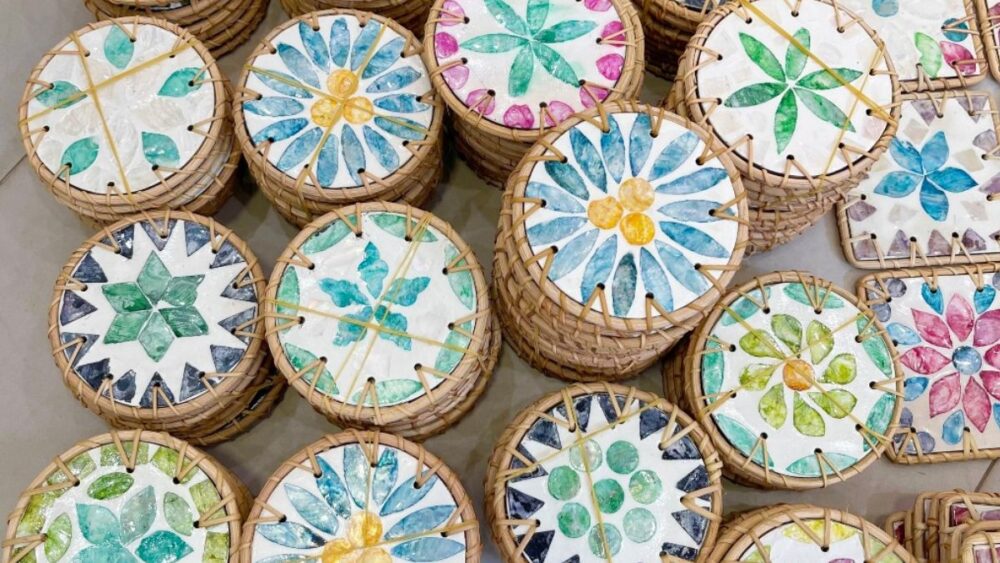
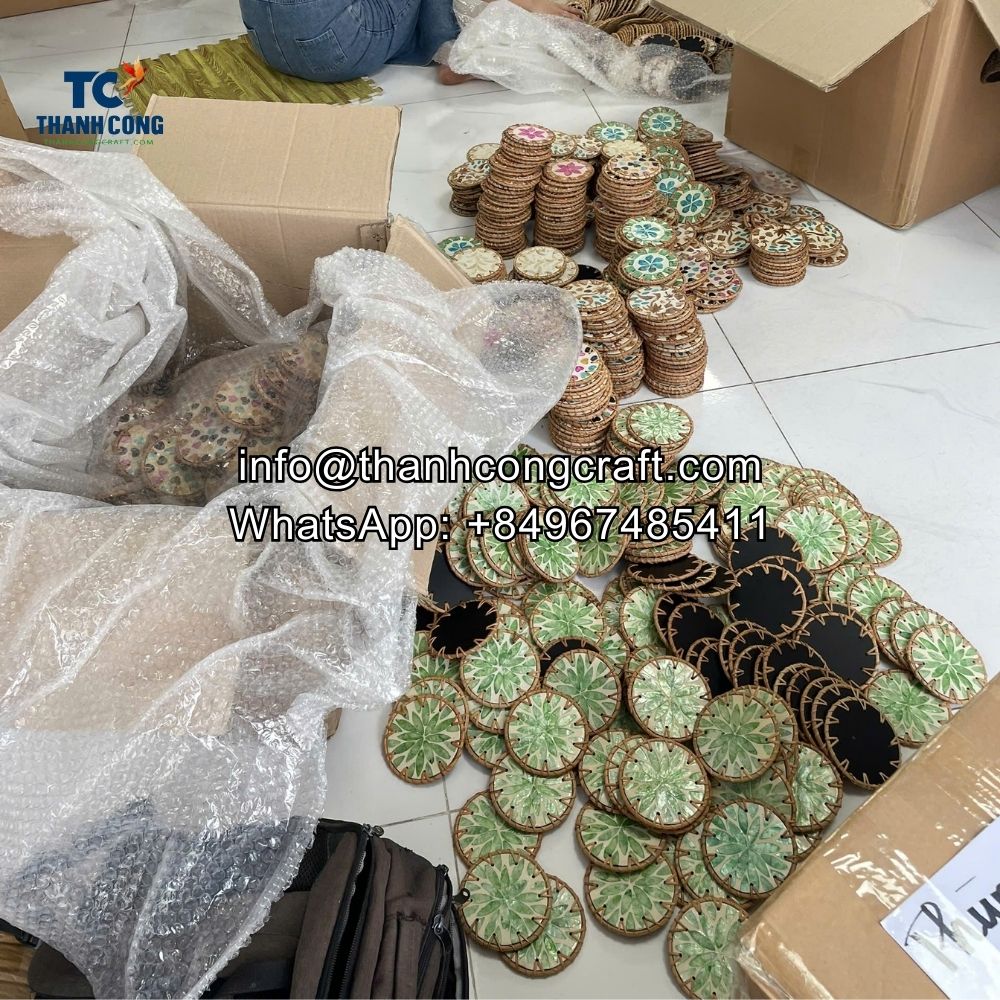
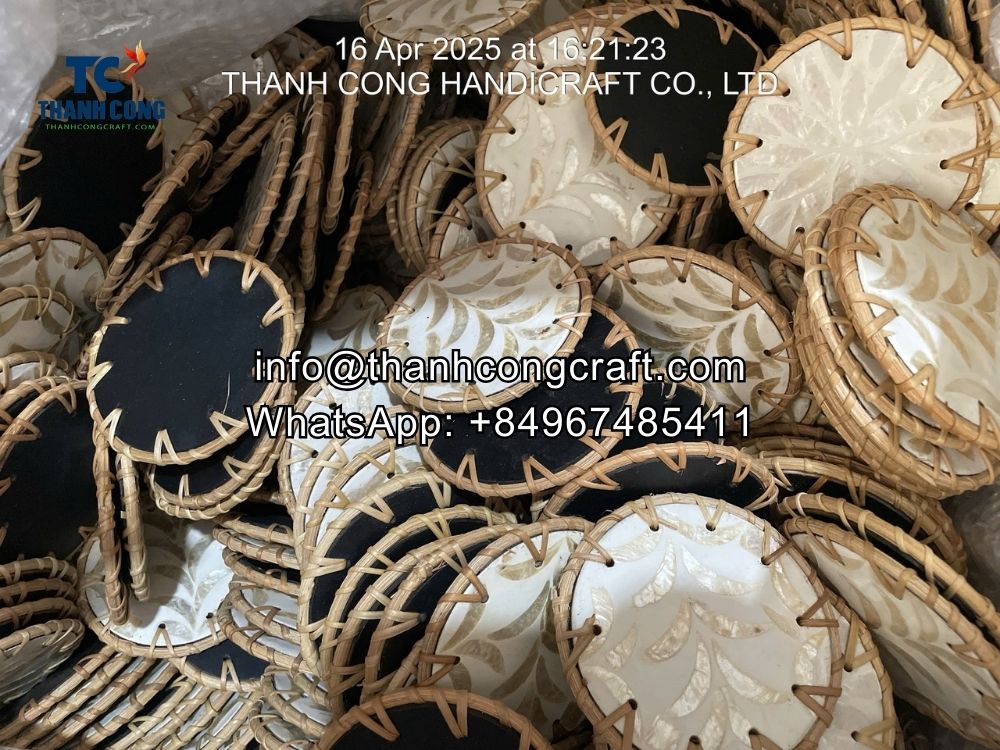
Creating mother of pearl coasters involves skilled artisans who carefully cut, polish, and inlay shell pieces into base materials. The process requires patience and expertise, as shells are fragile and must be handled precisely. Many coasters use wooden or resin bases, onto which the mother of pearl is inlaid to form mosaics, geometric patterns, or even floral designs. Because of the artisanal process, each piece carries unique patterns, ensuring no two coasters are identical.

3.2 Woodworking and Mass Production
Wooden coasters, by contrast, range from handcrafted artisan products to mass-produced factory items. Simple designs can be produced in bulk, making them more affordable. However, handcrafted wooden coasters—particularly those carved from rare or sustainably sourced woods—can also reach luxury markets. Their appeal lies in authenticity and natural imperfection, which contrast sharply with the polished luxury of mother of pearl.
3.3 Artisan Communities and Fair Trade
Supporting mother of pearl or wooden coaster artisans means investing in cultural preservation. In Vietnam, India, and the Philippines, mother of pearl inlay has been practiced for generations. Similarly, woodworking remains an essential craft in many rural areas. Importers who partner with fair-trade suppliers not only obtain quality products but also contribute to the livelihoods of artisans.
Discover more about: Mother of Pearl Real or Fake: Top 5 Tips from Vietnam’s Craft Experts
4. Practical Considerations: Functionality and Maintenance
While aesthetics and craftsmanship are important, buyers must also consider practicality. Coasters are used daily, meaning functionality and durability matter just as much as design.
4.1 Durability of Mother of Pearl Coasters
Mother of pearl is naturally strong but can be brittle if mishandled. High-quality coasters are usually reinforced with bases that provide strength and stability. With proper care, they last for years without losing their shine. However, they should not be exposed to harsh chemicals or extreme temperatures. For luxury dining establishments, staff training on proper cleaning ensures longevity.
4.2 Durability of Wooden Coasters
Wooden coasters are more resistant to accidental drops but vulnerable to water stains if not treated with protective coatings. Properly lacquered wooden coasters, however, perform well and can withstand daily use. Unlike mother of pearl, they may darken or change tone over time, which some buyers consider part of their charm.
4.3 Ease of Cleaning and Storage
Both coaster types require gentle cleaning. Wooden coasters should be wiped with a damp cloth and dried immediately, while mother of pearl coasters should be cleaned with mild soap and water. Storage also differs—wooden coasters tolerate stacking better, while mother of pearl versions should be stored carefully to avoid scratches.
Explore more: How to Import Mother of Pearl into the EU with Legal Origin Proof
5. Choosing the Right Coaster for Luxury Dining
Ultimately, the decision between mother of pearl and wooden coasters depends on context. Buyers must weigh aesthetics, durability, cultural symbolism, and branding.
5.1 For High-End Restaurants and Hotels
Luxury dining establishments often choose mother of pearl coasters because they align with fine dining’s emphasis on experience and detail. They make statements about exclusivity and refinement, qualities that wooden coasters cannot always match.
5.2 For Eco-Resorts and Boutique Cafés
By contrast, wooden coasters align better with eco-conscious branding. Their natural charm reinforces messages of sustainability and comfort. For casual yet stylish spaces, wood offers authenticity and warmth.
5.3 For Retail and Wholesale Buyers
Retailers and wholesalers must anticipate customer preferences. In markets focused on luxury gifting, mother of pearl sets packaged in elegant boxes are highly desirable. However, in markets emphasizing eco-friendly living, sustainably sourced wooden coasters appeal more strongly. Wholesalers who stock both gain flexibility to serve diverse client bases.
See more: Mother of Pearl Real or Fake: Top 5 Tips from Vietnam’s Craft Experts
Reach out to us today to learn more about our products or to place a wholesale order. We look forward to connecting with you!
- Thanh Cong Handicraft Co., Ltd
- Email: [email protected]
- Tel/WhatsApp: +84967485411
Explore our Products Collection for more choices! Contact Us!


