

Water Hyacinth Products require careful moisture management during international shipping, especially because the fiber absorbs water easily. This guide explains the essential steps to control humidity, prevent mold, and package products safely for long-distance export.
Contents
- 1. Understanding Moisture Behavior in Water Hyacinth Products
- 2. Why Moisture Control Matters Before Shipping
- 3. Moisture Challenges and How They Affect Water Hyacinth Products
- 4. Moisture Control and Packaging Techniques for Safe Export
- 5. Why Working With the Right Supplier Ensures Safe Global Shipping
1. Understanding Moisture Behavior in Water Hyacinth Products
Water Hyacinth Products respond naturally to humidity changes because their fibers remain slightly porous even after drying. Although the material is durable, it still absorbs moisture more quickly than rattan or seagrass. Consequently, exporters must understand how humidity exposure affects texture, firmness, and long-term durability. Additionally, temperature and ventilation influence how fast the fibers soften or re-harden.
Moreover, minor swelling can occur during unexpected moisture contact, yet this change is usually temporary if drying is handled correctly. While untreated products absorb moisture faster, coated or lacquered versions maintain better stability.
Explore our posts: Water Hyacinth Pet House: What Makes Pets Feel Safe and Calm

2. Why Moisture Control Matters Before Shipping
Water Hyacinth Products need proper moisture control before packing because trapped humidity can cause mold, odor, and discoloration during ocean freight. Since export shipments often travel for weeks inside sealed containers, humidity levels frequently rise above 70%. As a result, baskets that were packed even slightly damp may deteriorate mid-transit.
Therefore, moisture testing, pre-drying, and stable storage conditions become essential. Exporters in Vietnam, including Thanh Cong Handicraft and other leading manufacturers, typically conduct sun-drying, shade-drying, and humidity checks before packing. This protects large wholesale orders from potential damage while ensuring consistent product quality on arrival.
3. Moisture Challenges and How They Affect Water Hyacinth Products
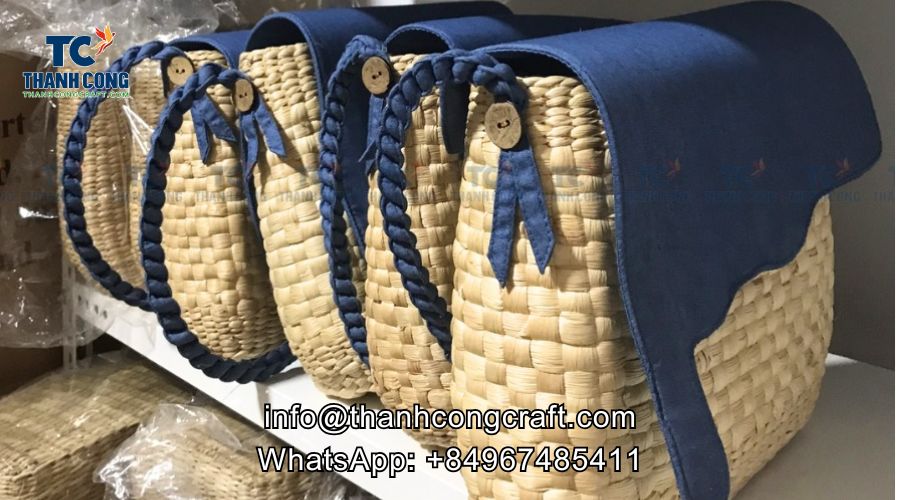
Water Hyacinth Products are particularly sensitive to moisture, and therefore importers need a complete understanding of the risks and their consequences. Moisture issues appear in several forms: humidity, condensation, accidental water exposure, or improper storage. Although artisans take careful steps during production, the shipping phase remains the most critical because of the unpredictable climate conditions that occur inside containers.
3.1. Humidity Levels and Fiber Swelling
Water Hyacinth Products start to absorb moisture when relative humidity exceeds 60–70%, which is extremely common in tropical manufacturing regions. When the fibers swell, the shape of baskets or trays may alter temporarily. Moreover, prolonged exposure can push fibers to expand unevenly, leading to twisted edges or reduced structural firmness. Although many of these issues can be reversed through proper drying, importers might face customer complaints if the products arrive misshaped.
3.2. Mold, Odor, and Surface Stains
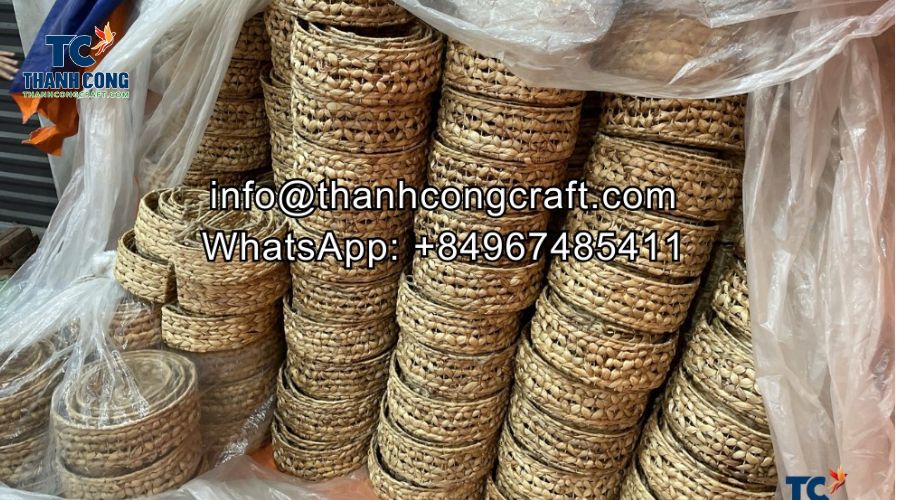
Water Hyacinth Products are especially vulnerable to mold growth because natural fibers retain organic nutrients that attract microorganisms. Mold thrives when humidity remains above 75% for more than 24 hours, particularly in enclosed packaging where little air circulation exists. The early signs include a musty odor, light yellow spots, or soft green patches on the fiber surface. If the basket interior contains lining fabric or wooden panels, mold may spread faster due to trapped moisture.
3.3. Color Changes and Fiber Hardening
Water Hyacinth Products might experience color-darkening or uneven discoloration when exposed to water or condensation. Although darkening can be reversible with proper sun-drying, uneven patches may remain. Additionally, once water evaporates, fibers often return to a harder state, especially if they dry too quickly under high heat or direct sunlight. Hardened fibers may appear brittle and can crack under pressure over time.
3.4. Container Sweat and Packaging Damage
Water Hyacinth Products frequently suffer from packaging deterioration caused by container sweat. When temperatures shift drastically, condensation forms inside the container and drips onto boxes or pallets. As a result, carton boxes can weaken, deform, or collapse. Furthermore, moisture-wicking through cardboard can transmit water directly to the products.
3.5. Long-term Damage From Poor Storage
Water Hyacinth Products stored in humid warehouses, unventilated storerooms, or basements are prone to long-term deterioration. Over time, fibers can become soft, sagging, or permanently deformed. Additionally, mold can develop deep inside twisted strands, making restoration impossible without damaging the material.
Learn more about:What Happens When Water Hyacinth Basket Gets Wet?
4. Moisture Control and Packaging Techniques for Safe Export
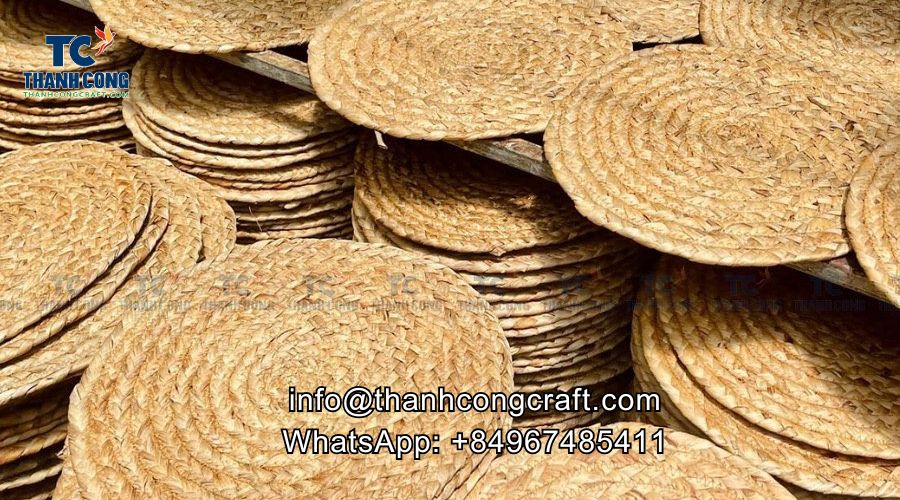
Water Hyacinth Products must be prepared carefully before being shipped, especially for long-distance export routes. Producers and importers must follow both traditional and modern methods to ensure that every piece arrives dry, clean, and structurally stable.
4.1. Pre-Drying and Moisture Testing Before Packing
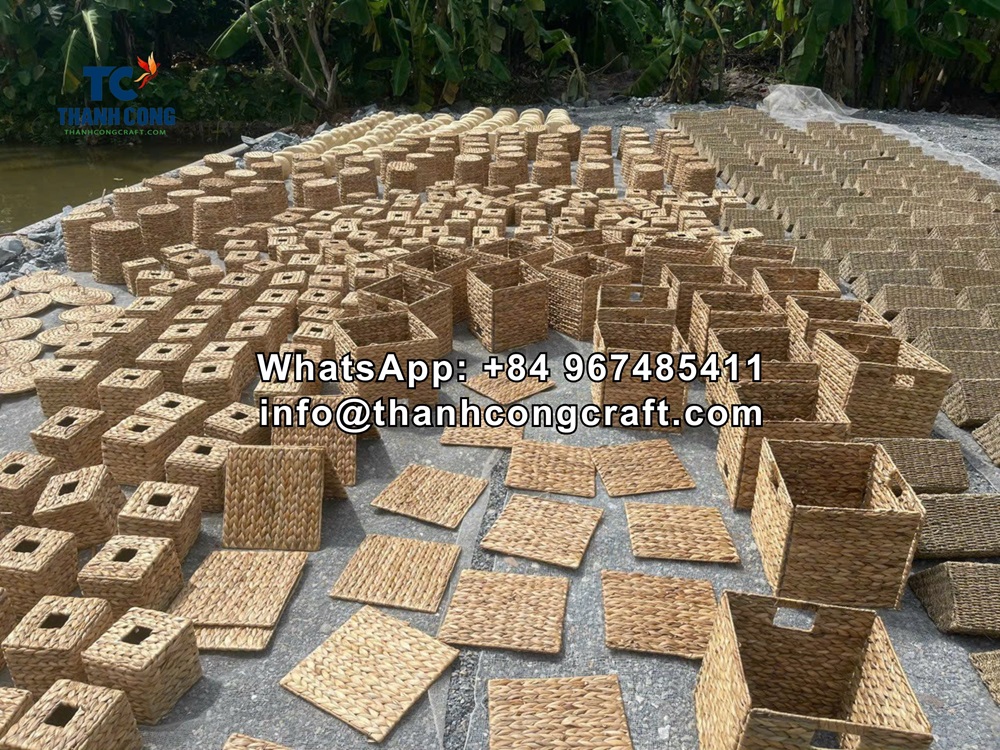
Water Hyacinth Products should undergo moisture testing using a digital meter to maintain internal moisture levels below 12% before packing. This step is essential because even a small amount of retained moisture can lead to mold once items are boxed.
4.2. Anti-Mold Treatment and Preventive Coating
Water Hyacinth Products benefit from safe anti-mold treatments such as natural essential oil sprays, water-based coatings, or internationally approved anti-fungal solutions. Although these treatments cannot eliminate moisture entirely, they significantly reduce the growth rate of mold during shipment.
4.3. Packaging Materials and Layering Techniques
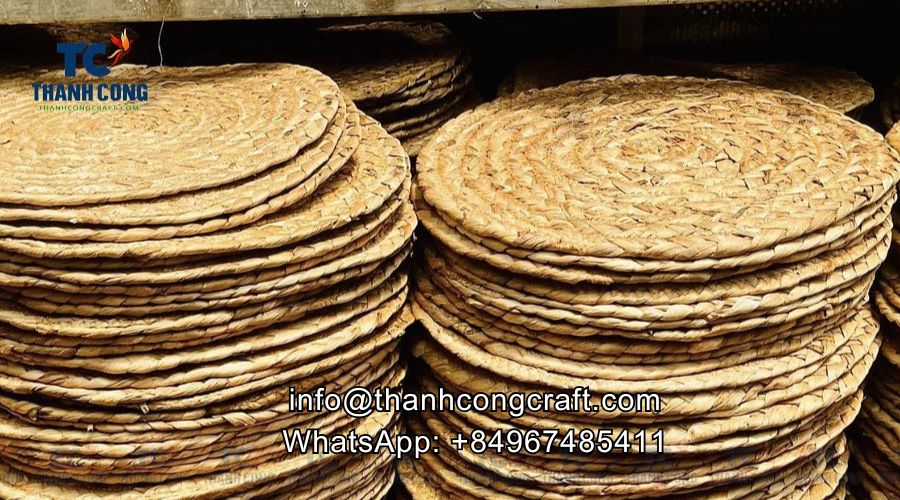
Water Hyacinth Products require breathable packaging. Instead of fully sealing items in plastic, factories use kraft paper wraps, micro-perforated polybags, or breathable woven sacks. These materials allow moisture to exit rather than trapping it inside.
Best practices include:
-
Wrapping each item in kraft paper
-
Adding moisture absorbers inside cartons
-
Using double-wall corrugated boxes
-
Keeping airflow gaps around product edges
-
Applying desiccants inside each carton and inside the container
4.4. Container Loading and Airflow Management
Water Hyacinth Products must be loaded into containers with proper ventilation patterns. Pallets should maintain a 5–10 cm gap from container walls to avoid direct condensation contact. Moreover, desiccant bags (20–25 kg per container) should be hung at regular intervals to manage humidity. Additionally, exporters often choose ventilated containers to minimize container sweat.
4.5. Storage After Arrival and Customer Handling
Water Hyacinth Products should be unpacked upon arrival and stored in well-ventilated areas. Importers must avoid leaving the cartons unopened for weeks, as humidity inside boxes can rise or fall dramatically depending on the new climate. By allowing products to “breathe” after transit, fibers stabilize naturally.
Learn more: What Happens When You Wash a Water Hyacinth Basket?
5. Why Working With the Right Supplier Ensures Safe Global Shipping
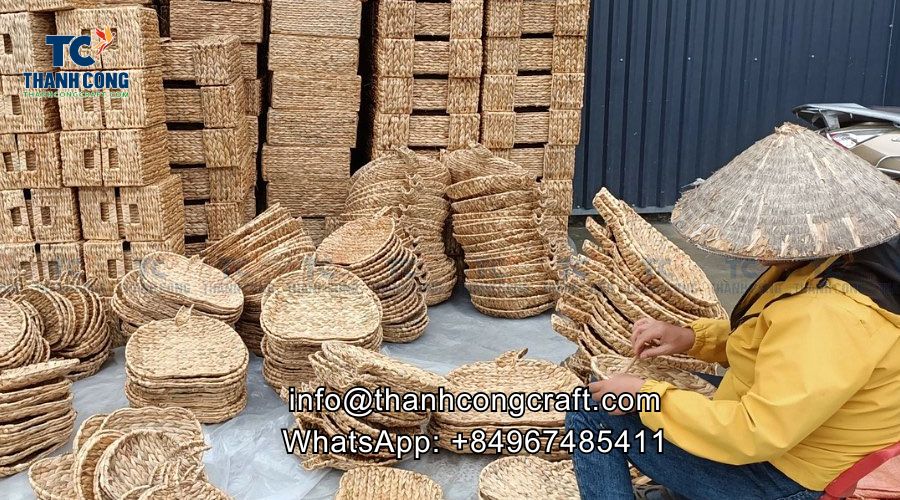
Water Hyacinth Products require expert handling from the beginning of production to the final moment of loading into a container. Working with an experienced supplier dramatically reduces risks because seasoned manufacturers understand the climate challenges faced by natural fibers. Skilled artisans know how to dry the material properly, braid it to maintain structural stability, and finish it with protective coating techniques that slow moisture absorption during transit.
5.1. Supplier Quality Control Systems
Water Hyacinth Products handled by suppliers with strict quality control protocols consistently achieve better performance during shipping. Inspection teams monitor moisture levels at every stage, from material preparation to weaving, finishing, storing, and packing. Furthermore, reputable factories use drying rooms, industrial dehumidifiers, and clean warehouses to minimize risk.
5.2. International Export Compliance and Certifications
Water Hyacinth Products produced by certified suppliers often meet international standards, including treatment compliance required by major import markets. Certifications such as fumigation clearance, moisture control records, and anti-mold audit reports play a significant role in establishing trust with wholesalers.
5.3. The Advantage for Wholesalers and Bulk Buyers
Water Hyacinth Products purchased from experienced exporters lead to fewer shipping claims, fewer quality returns, and stronger brand reputation. Because wholesalers depend on consistent quality, working with the right supplier ensures reliability across multiple shipments and product categories.
See our article on: How to Keep Water Hyacinth Furniture Mold-Free Naturally
Reach out to us today to learn more about our products or to place a wholesale order. We look forward to connecting with you!
- Thanh Cong Handicraft Co., Ltd
- Email: [email protected]
- Tel/WhatsApp: +84967485411
Explore our Products Collection for more choices! Contact Us!


