

Coconut Shell Spoon is no longer a niche product; it has become a global eco-friendly sensation. Importers, retailers, and hospitality businesses are embracing this handcrafted utensil as a stylish alternative to single-use plastics. Moreover, it reflects broader consumer values around sustainability, cultural authenticity, and artisanal design. This article explores why coconut shell spoons are in high demand, how wholesalers can benefit, and which long-term strategies ensure success in global markets.
Contents
1. Coconut Shell Spoon as the Eco-Friendly Game Changer
1.1 Natural Materials That Resonate With Buyers
Coconut Shell Spoon appeals strongly because it is made from discarded coconut shells, a renewable resource that would otherwise be wasted. Consequently, each spoon demonstrates how waste can be transformed into beauty. Retailers find that highlighting this “upcycling” story increases buyer engagement, since today’s customers demand eco-friendly narratives. Unlike bamboo or seagrass products, coconut shells add both strength and a unique organic pattern, making every piece one of a kind.
1.2 Why Plastic Utensils Are Losing Ground
Coconut Shell Spoon outperforms plastic cutlery in both perception and performance. While plastics are increasingly banned in cities and countries worldwide, coconut utensils are welcome in eco-conscious households, zero-waste stores, and boutique cafés. Therefore, the transition to coconut shell cutlery is not simply a trend—it is an inevitable shift. Importers investing now secure a competitive edge before mass adoption pushes supply chains to their limits.
Explore our post: Coconut Shell Candles Wholesale Dealers Don’t Want You to Know
2. Coconut Shell Spoon in Global Wholesale Markets
2.1 Price Advantage With Premium Appeal
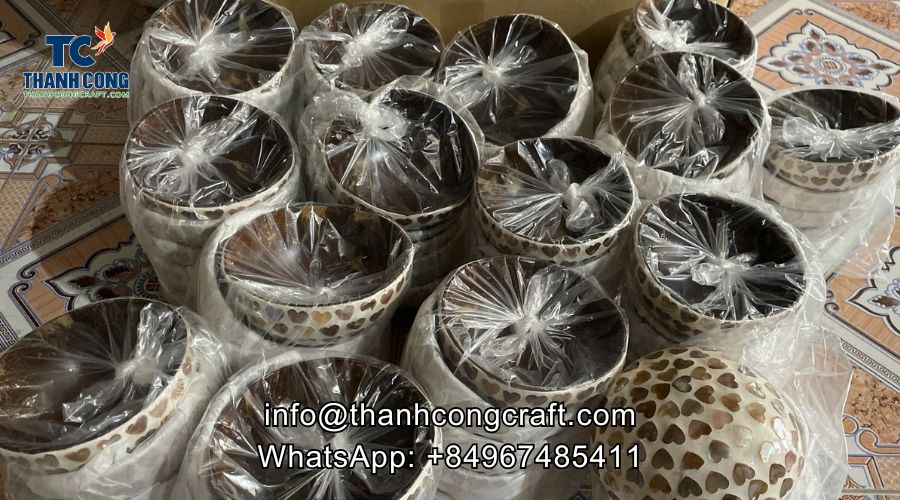
Coconut Shell Spoon offers wholesalers a rare combination: affordable sourcing and upscale branding. Because coconut shells are byproducts, raw material costs are low. However, the handcrafted process and natural patterns elevate perceived value, enabling retailers to mark up prices significantly. Consequently, wholesalers enjoy excellent margins while still appealing to value-driven buyers.
2.2 Vietnam and Southeast Asia as Supply Hubs
Coconut Shell Spoon production thrives in Vietnam, Indonesia, and the Philippines, where coconuts are abundant. Among these, Vietnam stands out thanks to highly organized craft villages and export-ready logistics. Many factories already comply with international certifications, easing customs clearance. For wholesale buyers, sourcing from Vietnam ensures both reliability and scalability.
Learn why: Coconut Bowl Benefits: Why Smoothie Lovers Prefer It at Home
3. Coconut Shell Spoon Design Innovations
3.1 Blending Tradition With Modern Taste
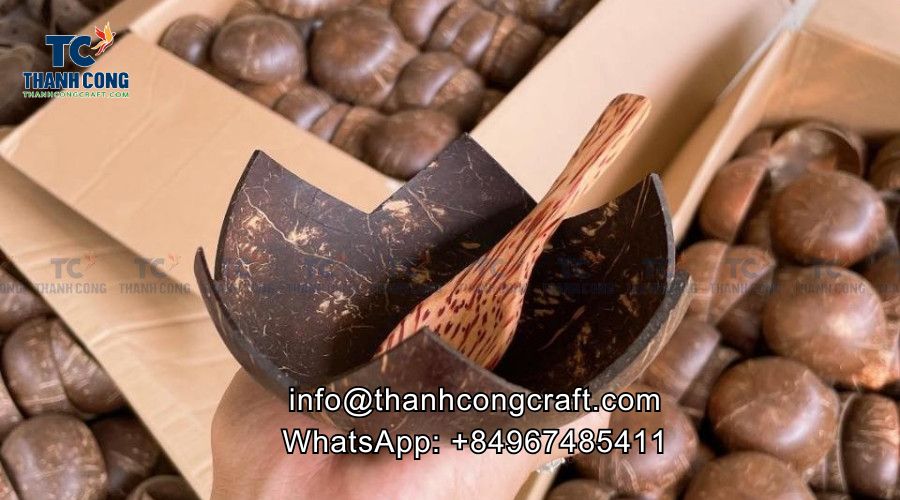
Coconut Shell Spoon design is evolving quickly. Traditionally, spoons had simple, rounded forms with polished shells. Now, artisans experiment with ergonomic handles, polished finishes, and even carved motifs. Buyers in the U.S. and Europe request customization such as inlays or branding logos. Thus, coconut spoons are no longer rustic souvenirs; they are refined lifestyle products.
3.2 Pairing With Matching Coconut Bowls and Sets
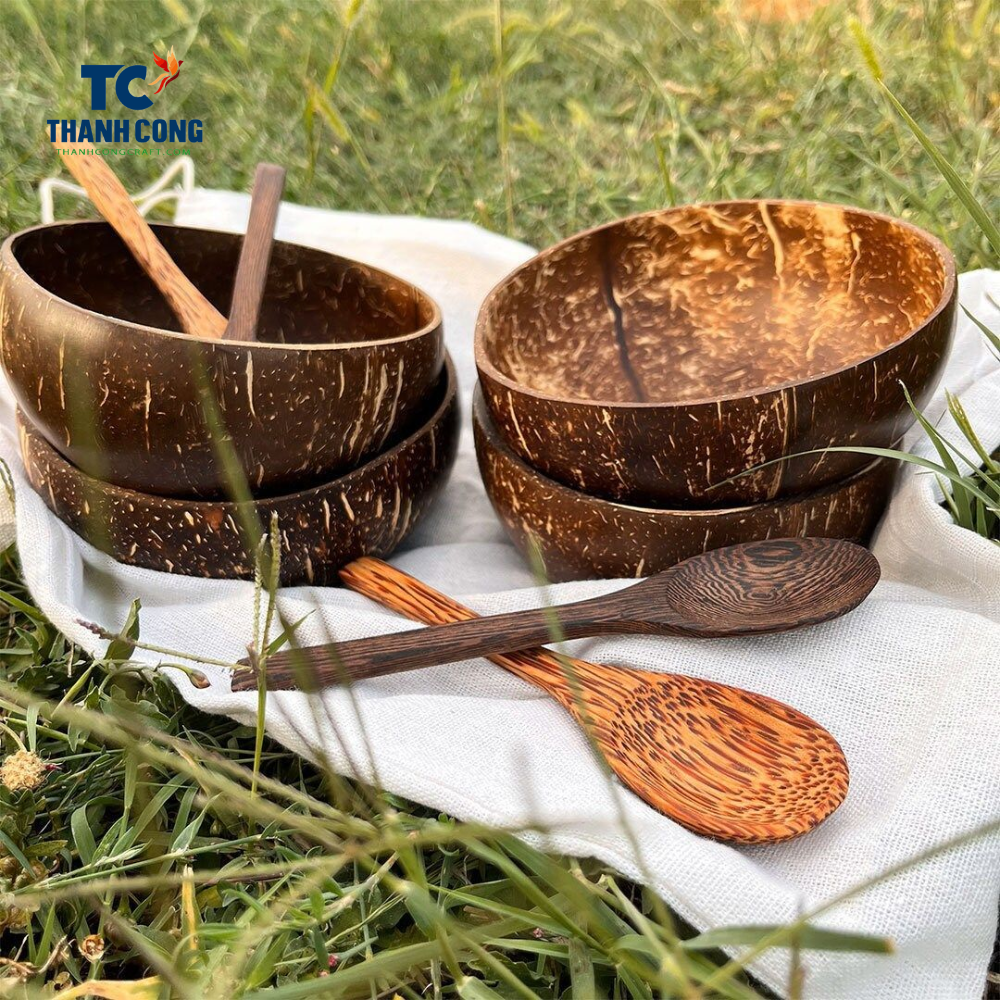
Coconut Shell Spoon becomes even more profitable when paired with coconut bowls, chopsticks, or serving trays. Wholesalers who promote full eco-dining sets capture more market share, especially in the hospitality industry. Resorts and eco-cafés want cohesive aesthetics, so bundled sets are attractive for bulk orders. This cross-selling strategy increases average order value while keeping production costs manageable.
3.3 Meeting Global Standards With Finishing Techniques
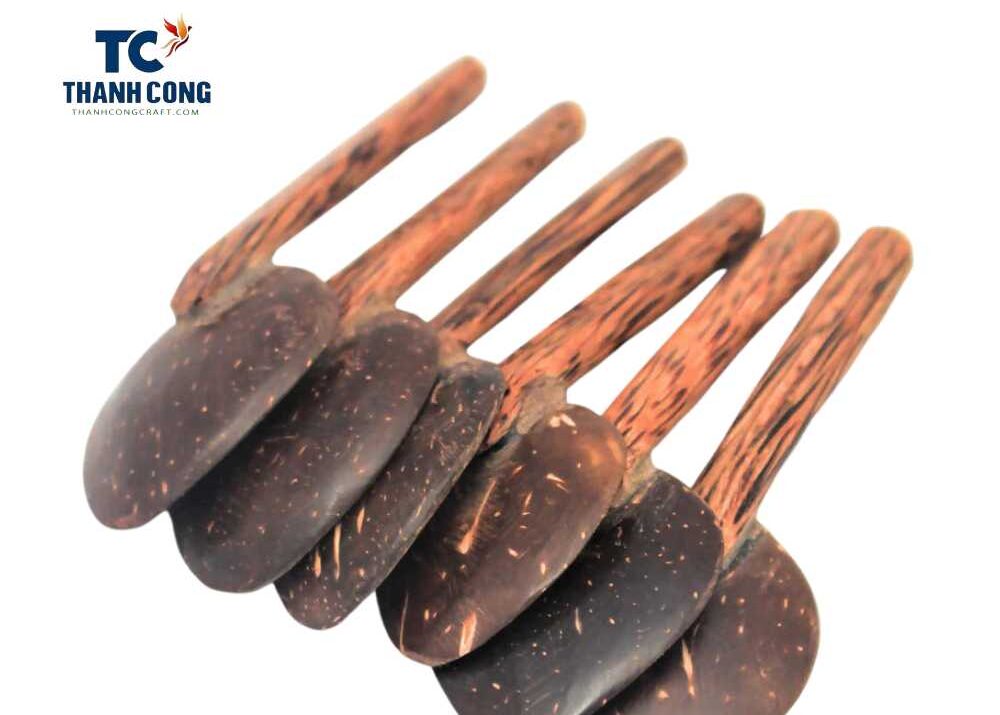
Coconut Shell Spoon must meet hygiene and durability standards to succeed abroad. Therefore, exporters invest in food-safe coatings, smooth edges, and consistent sizing. Such improvements not only satisfy strict import regulations in the EU and U.S. but also reassure buyers about safety. Consistency is critical, and workshops have adapted by using semi-mechanical polishing methods while keeping handmade authenticity intact.
Check our guide on: How to Make a Coconut Bowl: A Natural Craft in 6 Steps
4. Coconut Shell Spoon in Lifestyle & Hospitality
4.1 Luxury Resorts and Eco-Restaurants
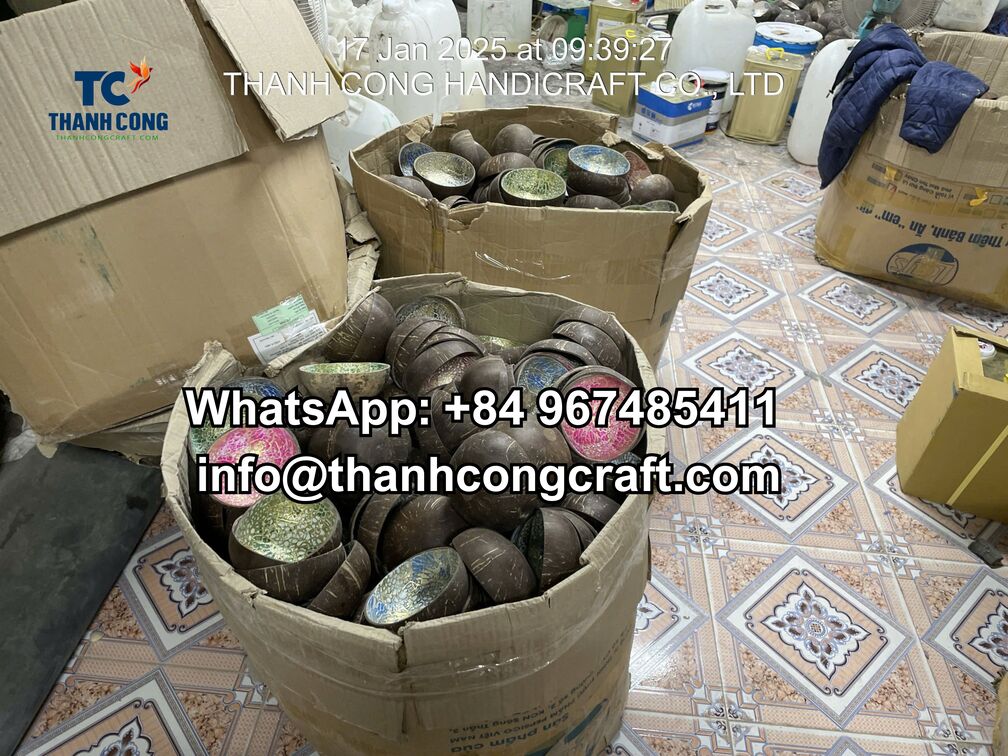
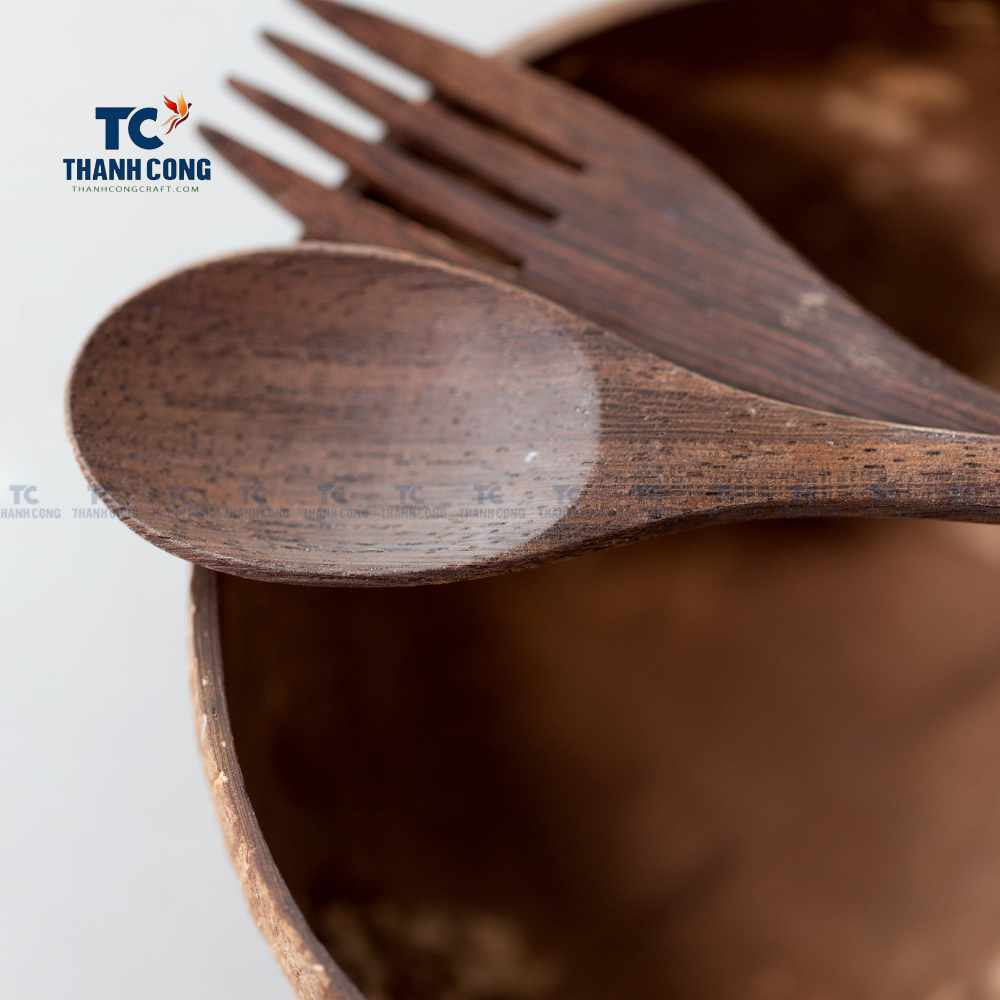
Coconut Shell Spoon fits seamlessly into high-end hospitality concepts. Luxury resorts, particularly in Bali, Phuket, and Vietnam, showcase coconut shell cutlery as part of their eco-aesthetic. As sustainability becomes a selling point for hotels, coconut utensils provide not just functionality but storytelling power. Guests remember the tactile experience of dining with handcrafted spoons, which enhances brand image.
4.2 Social Media and Consumer Awareness
Coconut Shell Spoon thrives in the Instagram era. Influencers promote eco-tablescapes with coconut cutlery, bamboo straws, and rattan décor. Because of this visibility, consumers demand similar products in retail stores. Wholesalers who provide eco-styled photo assets to their buyers help them sell more effectively. Visual marketing, therefore, is not optional; it is a growth driver.
4.3 Gift Industry and Corporate Branding
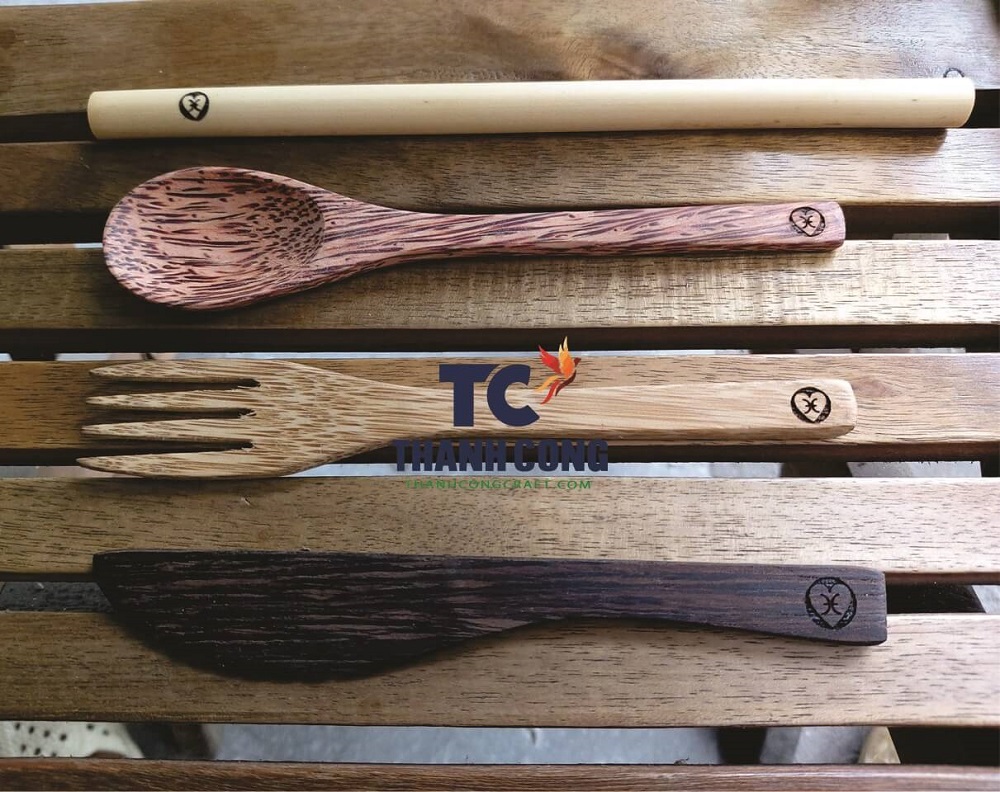
Coconut Shell Spoon also performs well in the gift and corporate merchandise industry. With laser engraving, spoons can display company logos, event names, or cultural messages. This versatility makes them popular for eco-friendly branding campaigns. As corporations move away from plastic promotional items, coconut spoons emerge as a sustainable alternative that aligns with CSR initiatives.
Discover our post: Can coconut handicrafts be handmade at home?
5. Long-Term Trends Driving Coconut Shell Spoon Demand
5.1 Coconut Shell Spoon and Global Sustainability Policies
Coconut Shell Spoon is increasingly supported by international regulations that limit single-use plastics. The EU’s Single-Use Plastics Directive, alongside similar restrictions in Asia and North America, ensures rising demand for natural alternatives. Consequently, retailers and importers who invest early in coconut shell cutlery secure guaranteed growth opportunities. Beyond legislation, this eco-shift reflects consumer expectations, where environmentally responsible products dominate purchasing decisions. For wholesalers, aligning with sustainability frameworks strengthens both credibility and long-term competitiveness.
5.2 Coconut Shell Spoon Growth Through E-Commerce and Niche Markets
Coconut Shell Spoon thrives in the digital era, where platforms such as Amazon, Etsy, and Alibaba amplify its visibility. Online shoppers actively search for eco-friendly keywords, and optimized listings gain instant traction. Moreover, digital storytelling with artisan profiles enhances authenticity, improving conversion rates. At the same time, demand extends into niche markets such as yoga retreats, vegan cafés, and zero-waste stores. These audiences appreciate handcrafted quality and cultural authenticity, fostering strong loyalty. When paired with eco-packaging and carbon-neutral logistics, wholesalers gain a powerful advantage in reaching both mainstream and niche buyers globally.
Reach out to us today to learn more about our products or to place a wholesale order. We look forward to connecting with you!
- Thanh Cong Handicraft Co., Ltd
- Email: [email protected]
- Tel/WhatsApp: +84967485411
Explore our Products Collection for more choices! Contact Us!


