

Artisan vs Ordinary Boxes is not merely a design comparison—it is a strategic business decision for brands operating in premium retail, corporate gifting, and export markets. In today’s competitive environment, packaging no longer protects a product; it defines its perceived value. Consequently, understanding the structural, emotional, and material differences between handcrafted and mass-produced boxes is critical for long-term brand positioning. Furthermore, high-end B2B buyers—especially those in luxury gifting, hospitality, and curated retail—instantly recognize the difference between authentic craftsmanship and industrial imitation. Specifically, they assess weight, texture, edge finishing, and reflective depth within seconds. Therefore, choosing between artisan and ordinary packaging directly influences customer trust and price justification.
Contents
- 1. Material Integrity: Natural Elements vs. Synthetic Imitations
- 2. Structural Artistry: Seamless Hand-Inlays vs. Printed Patterns
- 3. The “Uniqueness” Factor: One-of-a-Kind Soul vs. Digital Precision
- 4. Durability and Lifecycle: Heirlooms vs. Disposable Containers
- 5. Tactile Psychology: The Emotional Weight of Craftsmanship
1. Material Integrity: Natural Elements vs. Synthetic Imitations
When discussing Artisan vs Ordinary Boxes, the first and most visible distinction lies in material integrity. Ordinary boxes typically rely on low-density MDF, laminated paper wraps, plastic overlays, or digitally printed imitation patterns. While these materials reduce cost, they sacrifice authenticity. Consequently, the final product often feels hollow, overly lightweight, and visually flat.
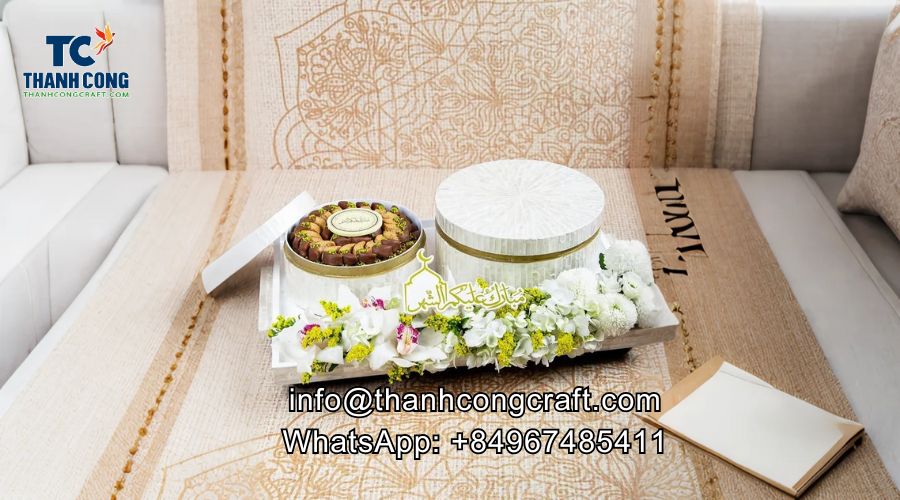
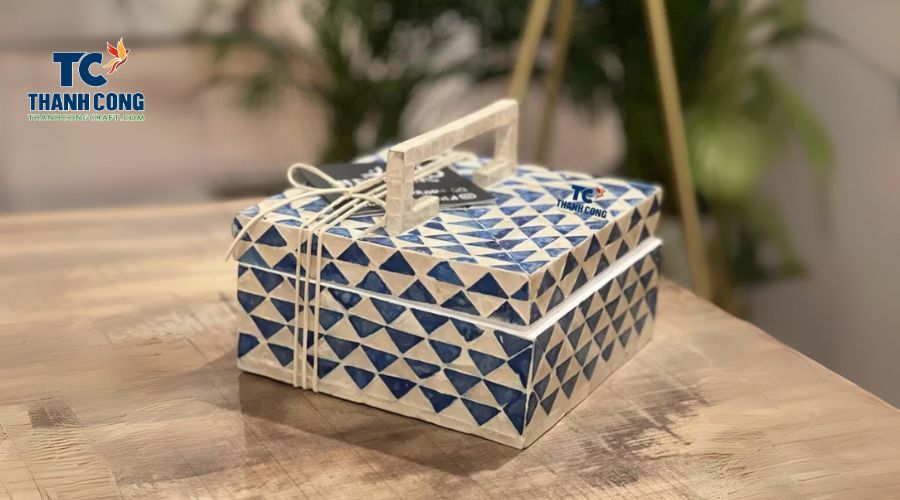
In contrast, artisan boxes from Thanh Cong Craft utilize high-density MDF cores engineered for structural stability, combined with natural decorative elements such as genuine Mother of Pearl. Furthermore, the shell inlay is not a printed effect—it is a real mineral surface meticulously embedded into the core structure. This difference may appear subtle in photos; however, it becomes undeniable when handled physically.
Specifically, premium B2B buyers can “sense” authenticity immediately. Real nacre carries a cool touch and natural weight density that synthetic films cannot replicate. Moreover, professionally sealed MDF structures eliminate internal voids often found in mass-produced packaging, creating a more solid and refined handling experience. This sensory distinction reinforces handcrafted packaging quality and elevates brand credibility in high-end markets.
From a wholesale perspective, material engineering also reduces long-term complaints. Thanh Cong Craft’s QC team conducts moisture-resistance, density, and adhesion tests to ensure that every premium box construction meets export durability standards. Consequently, retailers avoid returns caused by peeling films, swelling panels, or weak bonding—common issues in mass-produced vs handmade boxes.
Read next: What Display Alternatives Do Premium Chocolate Brands Use?
2. Structural Artistry: Seamless Hand-Inlays vs. Printed Patterns
Another decisive factor in Artisan vs Ordinary Boxes lies in construction technique. Ordinary packaging relies heavily on 2D surface printing. Patterns are applied mechanically onto MDF surfaces, creating uniform, flat visuals. While efficient, this method lacks dimensional depth. Consequently, the visual experience remains limited to surface appearance.
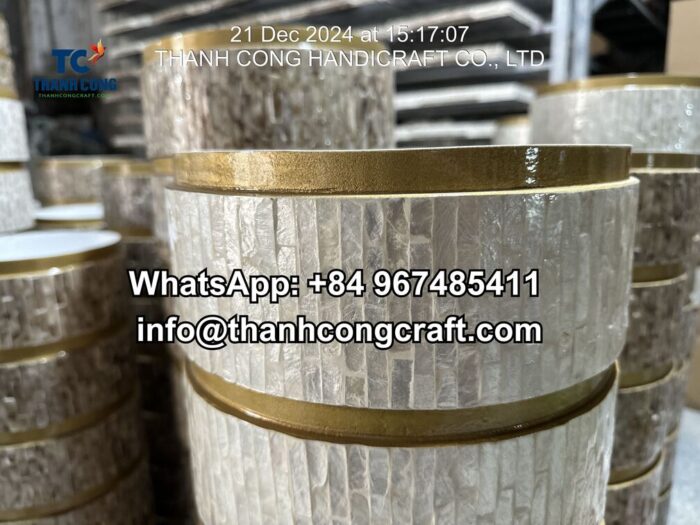
Artisan boxes, however, are constructed through meticulous hand-inlay techniques. Each piece of Mother of Pearl is individually cut, shaped, and embedded into precisely carved recesses within the MDF base. Furthermore, artisans polish the surface repeatedly to achieve seamless integration between shell and substrate.
The result is three-dimensional artistry. Specifically, light reflects differently on each shell fragment due to natural iridescence variations. Therefore, the box does not simply display a pattern—it interacts dynamically with its environment. Industrial printers cannot replicate this depth because nacre refracts light at multiple angles, creating subtle shifts in tone and brilliance.
Thanh Cong Craft’s R&D team continuously refines inlay precision through microscopic alignment testing. Moreover, every artisan box undergoes structural stress inspection to ensure embedded elements remain secure over time. Consequently, retailers investing in custom artisanal boxes gain not only beauty but structural reliability.
3. The “Uniqueness” Factor: One-of-a-Kind Soul vs. Digital Precision
In the broader discussion of Artisan vs Ordinary Boxes, uniqueness becomes a psychological differentiator. Ordinary boxes are manufactured in uniform batches—1,000 identical copies with flawless digital precision. While consistency benefits mass retail, it reduces emotional resonance in luxury contexts.
Conversely, artisan boxes embrace controlled variation. Mother of Pearl fragments display unique iridescent tones depending on their origin and natural composition. Consequently, no two boxes are absolutely identical in light reflection, micro-pattern flow, or tonal depth.
In high-end gifting, uniqueness equals exclusivity. Specifically, luxury gifting standards prioritize individuality over uniformity. A corporate client selecting handcrafted packaging often seeks storytelling value—something that mass-produced vs handmade boxes cannot equally provide.
Thanh Cong Craft’s artisans, many with decades of experience, treat each box as a distinct creation. Furthermore, QC teams document pattern alignment and shell consistency to maintain design integrity while preserving natural variation. As a result, retailers can confidently market these boxes as authentic works of art rather than decorative containers.
See more: What Must Chocolate Brands Consider When Changing Displays?
4. Durability and Lifecycle: Heirlooms vs. Disposable Containers
Durability is perhaps the most underestimated aspect of Artisan vs Ordinary Boxes. Ordinary packaging frequently uses industrial adhesives that degrade under humidity fluctuations. Consequently, edges peel, corners soften, and decorative films detach within months.
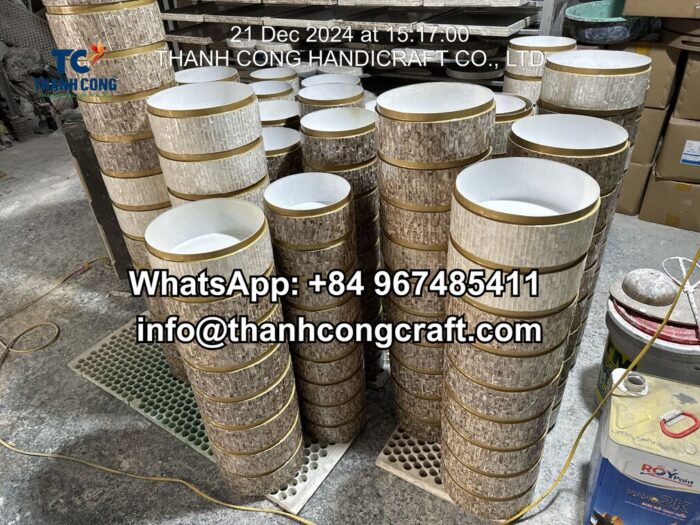
Artisan boxes, by contrast, are engineered for longevity through reinforced MDF structures, calibrated density control, and multi-layer finishing systems. Moreover, Thanh Cong Craft applies layered protective coatings tested under export climate simulations to ensure long-term stability.
This distinction transforms packaging into a long-term asset. Specifically, an artisan shell-inlay box may remain in a household for decades as décor storage or keepsake containment. Therefore, it extends brand exposure far beyond the original purchase moment.
From a B2B perspective, this durability directly impacts brand recall. A disposable container disappears quickly. However, a handcrafted heirloom-quality box continues to represent the brand visually for years. Consequently, investing in premium box construction becomes a strategic marketing decision rather than merely an aesthetic upgrade.
5. Tactile Psychology: The Emotional Weight of Craftsmanship
Beyond visuals and structure, Artisan vs Ordinary Boxes ultimately converges in tactile psychology. The physical sensation of holding a box significantly influences emotional interpretation. Ordinary boxes often feel light and hollow. As a result, recipients subconsciously associate them with temporary or low-value items.
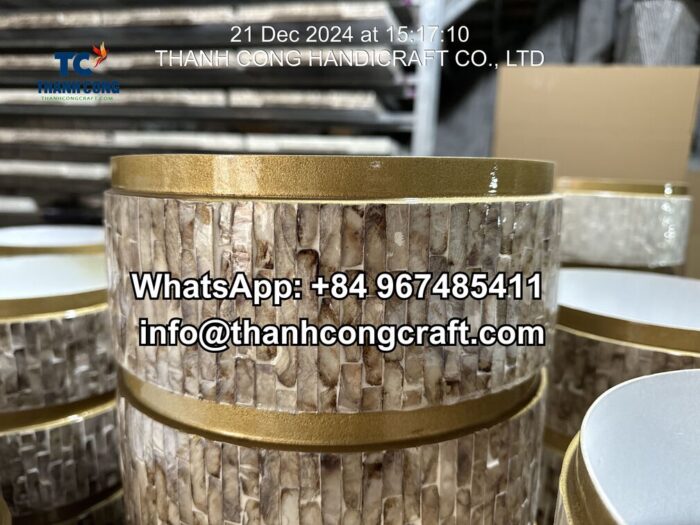
Artisan boxes, however, possess calibrated weight density due to high-density MDF cores and genuine shell inlays. Furthermore, hand-polished surfaces feel smooth yet organic under fingertips. Specifically, the coolness of nacre creates a refined tactile contrast against the sealed MDF surface.
Psychologically, weight communicates respect. Studies in consumer behavior consistently show that heavier objects are perceived as more valuable and important. Consequently, when gifting a product housed in a handcrafted artisan box, the perceived generosity increases proportionally.
Thanh Cong Craft integrates this understanding into product development. Moreover, our R&D team evaluates balance distribution and structural reinforcement to ensure boxes feel stable and premium when lifted. This attention to tactile experience strengthens luxury gifting standards across global markets.
Uncover more: 5 Reasons Why Mother of Pearl Outshines Gold & Glass
Comparative Overview Table
| Criteria | Artisan Boxes | Ordinary Boxes |
|---|---|---|
| Core Material | High-density engineered MDF + genuine shell | Low-density MDF + printed film |
| Craftsmanship | Hand-inlaid elements | Digital surface printing |
| Uniqueness | Natural shell variation | Identical digital copies |
| Durability | Reinforced structure, export-tested | Short-term packaging use |
| Emotional Impact | Dense, refined, prestigious | Light, disposable feel |
Reach out to us today to learn more about our products or to place a wholesale order. We look forward to connecting with you!
- Thanh Cong Handicraft Co., Ltd
- Email: [email protected]
- Tel/WhatsApp: +84967485411
Explore our Products Collection for more choices! Contact Us!


