

Mother of Pearl Tray Supplier selection is one of the most underestimated decisions in luxury homeware sourcing. Many buyers focus heavily on surface aesthetics, sample pricing, or fast lead times, yet overlook the deeper factors that determine whether a supplier can truly support a brand at scale.
In international B2B markets, mother of pearl trays are no longer niche decorative items. They are positioned as premium gifting solutions, hospitality accessories, and statement pieces for curated retail collections. As demand grows, so do risks—ranging from ethical sourcing concerns to quality inconsistency and logistics failures.
This article is designed as a practical framework for buyers who want to move beyond trial-and-error sourcing. By asking the right questions early, you can avoid costly mistakes, protect your brand reputation, and build long-term partnerships with suppliers who understand both craftsmanship and commercial reality.
Contents
- 1. Is the Mother of Pearl Sustainably and Ethically Sourced?
- 2. How Do You Ensure the Durability of the Adhesive and Coating?
- 3. What Are Your Capabilities for Custom Branding and Bespoke Designs?
- 4. What Does Your Quality Control (QC) Process Look Like for Mass Production?
- 5. Can You Provide International Shipping Logistics and Compliance Certifications?
1. Is the Mother of Pearl Sustainably and Ethically Sourced?
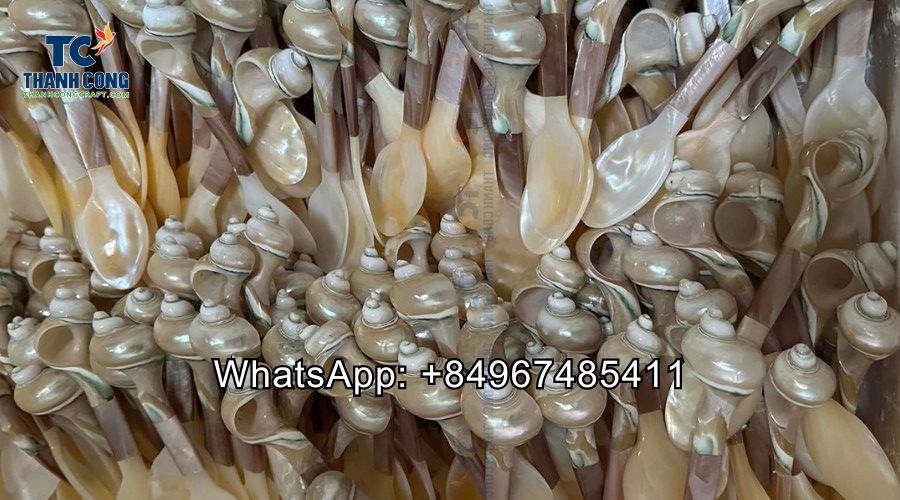
Mother of Pearl Tray Supplier credibility increasingly begins with one core issue: sourcing transparency. In global trade, especially across Europe, North America, and premium Asia-Pacific markets, shell origin is no longer optional information—it is a compliance requirement.
Buyers should ask where the mother of pearl is sourced and under what conditions. Ethical MOP production typically relies on shells collected as by-products of the food industry or sourced from controlled aquaculture farms. This approach ensures marine ecosystems are not damaged by uncontrolled harvesting.
From a sourcing perspective, this matters because regulatory scrutiny continues to increase. Customs authorities, retail partners, and corporate clients increasingly request documentation proving ethical sourcing. A supplier who cannot clearly explain their shell origin may expose buyers to shipment delays, reputational damage, or even import restrictions.
For B2B buyers sourcing luxury homeware, ethical sourcing supports long-term brand positioning. Consumers and corporate clients alike associate sustainability with premium value. When a supplier can articulate their sourcing story, buyers can translate that narrative into marketing, sales conversations, and corporate gifting programs.
Moreover, ethical sourcing aligns with ESG strategies, which are now standard considerations in procurement decisions. Buyers working with hospitality groups, multinational corporations, or government entities often need suppliers who understand these expectations from the outset.
You may also like: Are Mother of Pearl Rattan Trays Eco-Friendly?
2. How Do You Ensure the Durability of the Adhesive and Coating?
Mother of Pearl Tray Supplier evaluation often stops at sample inspection. However, experienced buyers know that the true test of quality happens months after delivery, not on the first day.
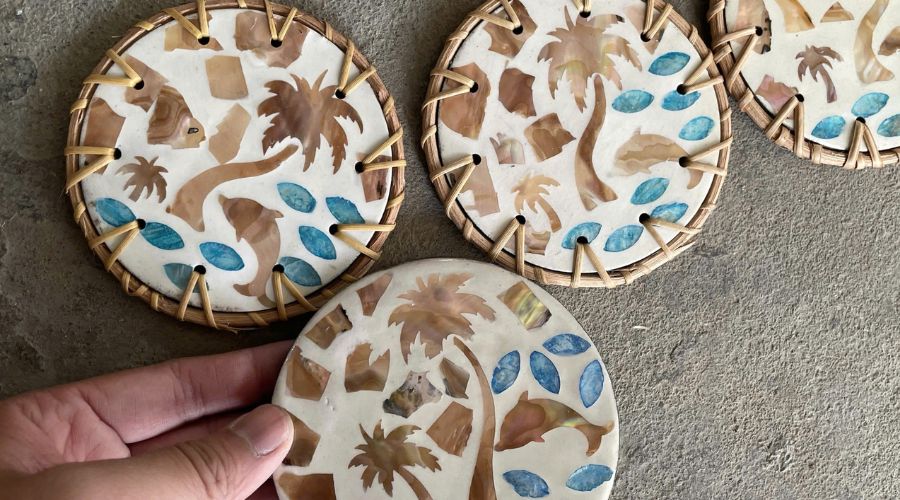
Mother of pearl trays face two common durability issues: shell inlays loosening over time and surface coatings yellowing or cracking. These problems are rarely visible in early samples but emerge through exposure to humidity, temperature changes, and daily handling.
Professional suppliers should clearly explain the adhesive systems they use. High-grade adhesives are formulated to withstand tropical climates, long-distance shipping, and indoor humidity fluctuations. Similarly, lacquer or protective coatings must preserve iridescence without compromising structural integrity.
For wholesale nacre trays, durability failures translate directly into financial loss. Returns, replacements, and customer complaints erode margins quickly. More importantly, they damage trust with retail partners and end clients.
When sourcing at scale, buyers should ask whether durability testing is part of the supplier’s process. Even simple stress tests—exposure to heat, moisture, or prolonged storage—demonstrate a supplier’s commitment to long-term quality rather than short-term aesthetics.
3. What Are Your Capabilities for Custom Branding and Bespoke Designs?
Mother of Pearl Tray Supplier relationships evolve as brands grow. While ready-made designs may suffice at early stages, successful B2B buyers eventually need differentiation.
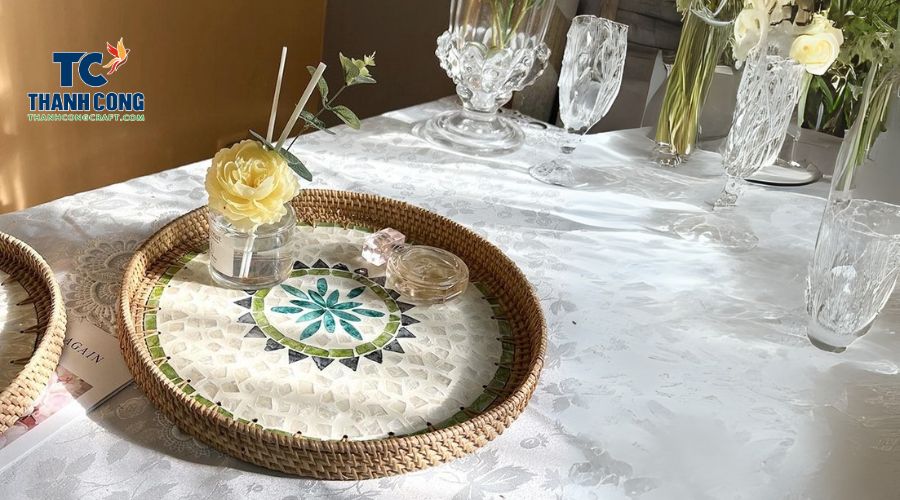
Customization goes beyond surface-level personalization. Buyers should ask whether suppliers can modify dimensions, adjust shell color grading, or integrate branding through shell inlay rather than printed decals. True custom Mother of Pearl manufacturers rely on skilled artisans who understand how nacre behaves under cutting, polishing, and inlay processes.
In competitive markets, bespoke designs create exclusivity. Retailers benefit from collections that cannot be easily replicated, while corporate buyers gain gifting solutions that feel intentional rather than generic.
Customization also supports storytelling. When a tray reflects a brand’s identity through design details, it becomes part of a broader narrative rather than a standalone product. This emotional connection strengthens brand recall and customer loyalty, particularly in luxury segments.
Further reading: Are Mother of Pearl Trays Handmade or Machine-Made?
4. What Does Your Quality Control (QC) Process Look Like for Mass Production?
Mother of Pearl Tray Supplier consistency is the most challenging aspect of working with natural materials. Unlike synthetic surfaces, nacre varies naturally in tone, pattern, and depth.
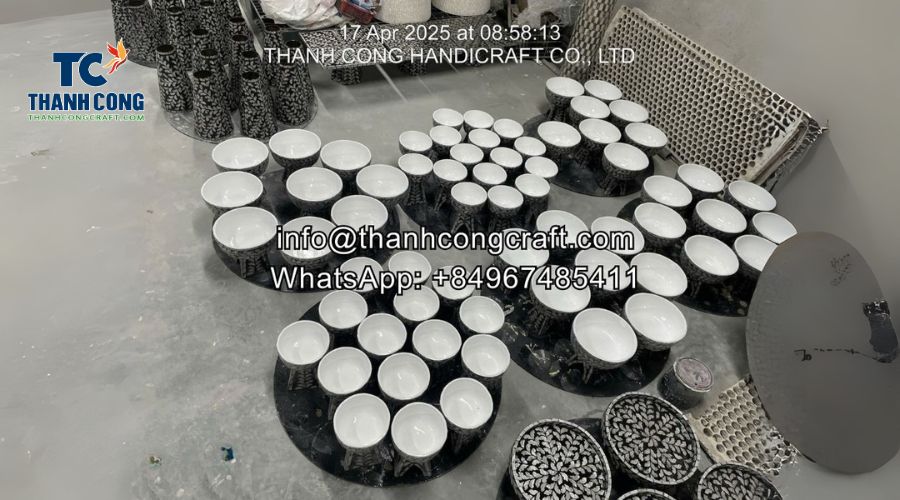
Professional suppliers manage this variation through structured quality control processes. This typically includes material grading before production, visual alignment during assembly, and final inspection against predefined standards.
Buyers should ask how suppliers define Grade A versus Grade B nacre. Grade A materials usually offer more uniform coloration and balanced iridescence, while Grade B may show greater variation. Neither is inherently inferior, but consistency within a batch is critical.
For large orders, this grading ensures that all trays within a shipment present a cohesive visual identity. Without it, buyers risk mismatched products that dilute the premium perception of their brand.
5. Can You Provide International Shipping Logistics and Compliance Certifications?
Mother of Pearl Tray Supplier responsibility extends beyond production. International logistics for handcrafted shell products require experience, precision, and compliance knowledge.
Suppliers should understand how to package trays for long-distance transport, whether by sea or air. Protective layering, moisture control, and shock absorption are essential to prevent damage during transit.
Export-ready suppliers reduce friction for buyers. They understand customs documentation, shipping regulations, and compliance requirements for different markets. This expertise minimizes delays, unexpected fees, and communication breakdowns.
For B2B buyers managing complex supply chains, working with a logistics-aware supplier simplifies operations and supports predictable delivery timelines.
Discover more: What Must Chocolate Brands Consider When Changing Displays?
Reach out to us today to learn more about our products or to place a wholesale order. We look forward to connecting with you!
- Thanh Cong Handicraft Co., Ltd
- Email: [email protected]
- Tel/WhatsApp: +84967485411
Explore our Products Collection for more choices! Contact Us!


