

Luxury chocolate brands often struggle at retail because standard display formats and materials fail to visually express craftsmanship, gifting value, and premium positioning. As a result, high-quality products blend into crowded shelves instead of standing out as distinctive choices.
Contents
- 1. Luxury Chocolate Retail Display Problems: Why Do Premium Brands Struggle To Stand Out?
- 2. Why Standard Packaging And Display Formats Limit Visual Differentiation?
- 3. How Retail Context Reduces The Impact Of Brand Storytelling?
- 4. Why Material Choice Shapes Perceived Luxury More Than Design Alone?
- 5. How Market Expectations Influence Retail Display Effectiveness?
1. Luxury Chocolate Retail Display Problems: Why Do Premium Brands Struggle To Stand Out?
Luxury chocolate retail display problems rarely come from the product itself. In most cases, premium chocolate brands deliver excellent taste, responsible sourcing, and strong brand narratives. However, once those products reach physical retail shelves, many fail to visually separate themselves from mainstream competitors.
In practice, buyers and shoppers encounter rows of similarly sized boxes, comparable color palettes, and familiar paper-based materials. As a result, the shelf communicates uniformity rather than distinction. Even when pricing signals “premium,” the physical presentation does not always reinforce that message.
From an industry perspective, this disconnect creates confusion. Brand owners feel they have invested in quality, yet retail performance does not reflect that effort. Buyers sense that the product deserves more attention, but cannot clearly identify what is missing at first glance.
2. Why Standard Packaging And Display Formats Limit Visual Differentiation?
Luxury chocolate retail display problems often start with overdependence on conventional packaging and display systems. Paper boxes, cardboard risers, and printed shelf trays dominate because they are efficient, scalable, and easy to reproduce across markets.
However, efficiency comes at a cost. When every brand uses similar structures, visual language becomes interchangeable. Shoppers quickly scan shelves and rely on surface-level cues. If materials and forms feel familiar, the product is subconsciously categorized as “more of the same,” regardless of its actual quality.
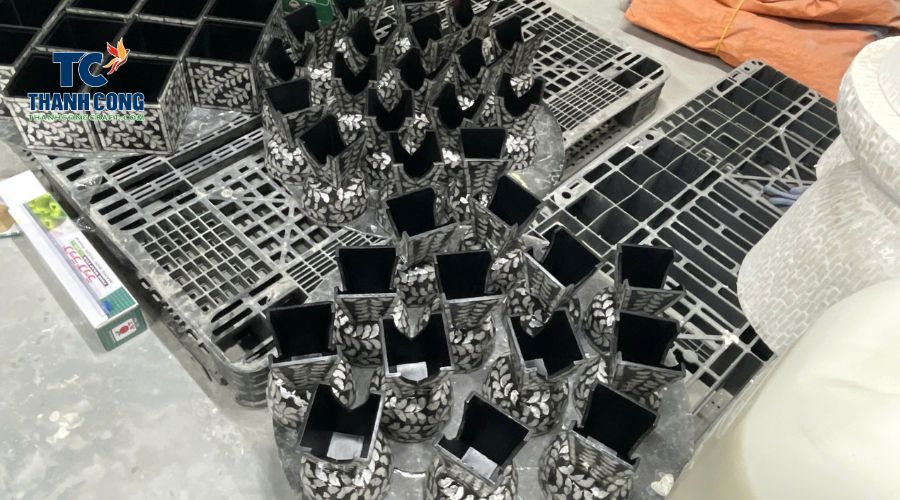
From a manufacturer’s viewpoint, these formats were designed to solve logistical challenges, not emotional ones. They protect products and support stacking, but they do little to express care, craftsmanship, or longevity. Therefore, luxury positioning becomes dependent solely on graphics, which often struggle to carry the full message alone.
In real retail environments, lighting, distance, and shelf congestion further weaken graphic impact. As a result, premium chocolate brands lose opportunities to visually interrupt the shopper’s routine.
Learn more: Why Do Some Materials Feel Premium While Others Don’t?
3. How Retail Context Reduces The Impact Of Brand Storytelling?
Many luxury chocolate brands rely heavily on storytelling. They speak about origin, cacao varieties, ethical sourcing, and artisanal processes. While these narratives are meaningful, retail shelves offer very limited space and time for them to be absorbed.
In practice, shoppers spend only a few seconds deciding where to look. Text-heavy explanations and subtle design cues often go unnoticed. Even premium finishes such as embossing or foil stamping can lose effectiveness under harsh retail lighting or behind reflective packaging.
This is where luxury chocolate retail display problems become structural rather than creative. The issue is not the story, but the medium. Paper and print require attention and reading, while retail behavior favors instant visual and tactile signals.
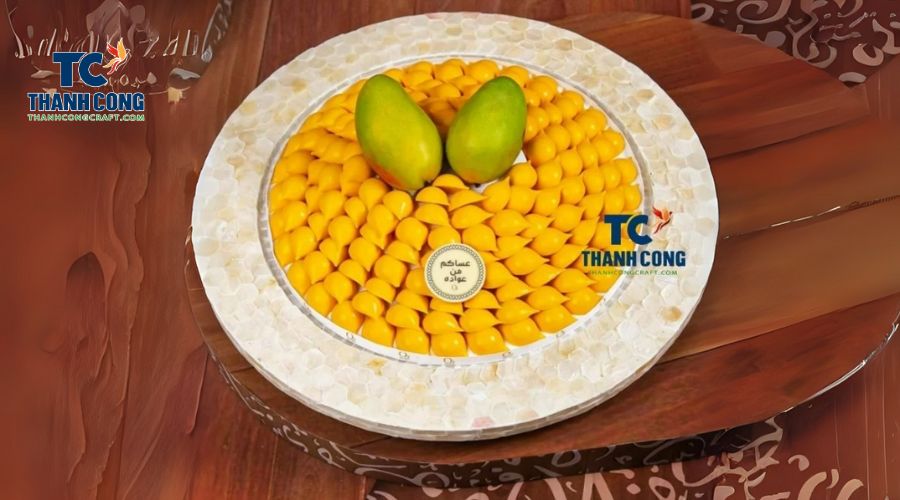
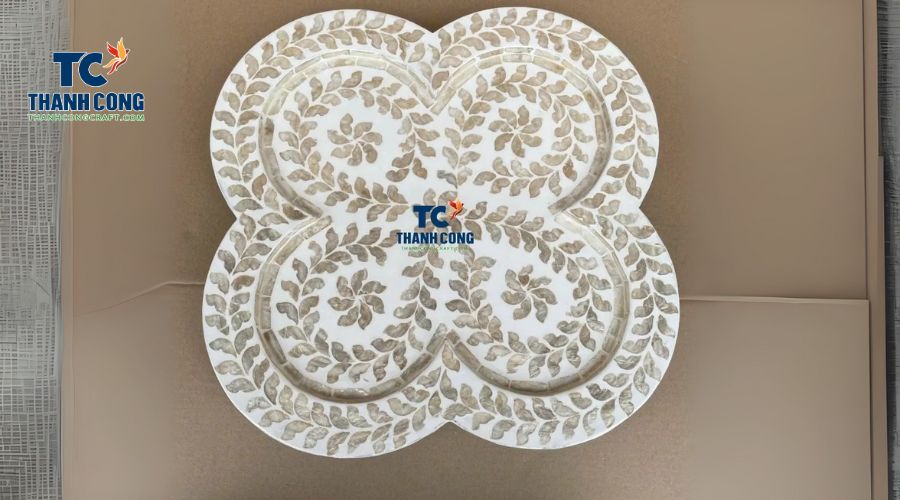
From an insider’s perspective, materials often communicate faster than words. A display surface made from a crafted material, such as wood, stone, or mother of pearl–inspired finishes, signals care and value immediately. These cues do not require explanation, making them more effective in high-traffic retail environments.
4. Why Material Choice Shapes Perceived Luxury More Than Design Alone?
Luxury chocolate retail display problems increasingly point toward material choice as a decisive factor. While design aesthetics matter, materials create emotional responses that graphics alone cannot replicate.
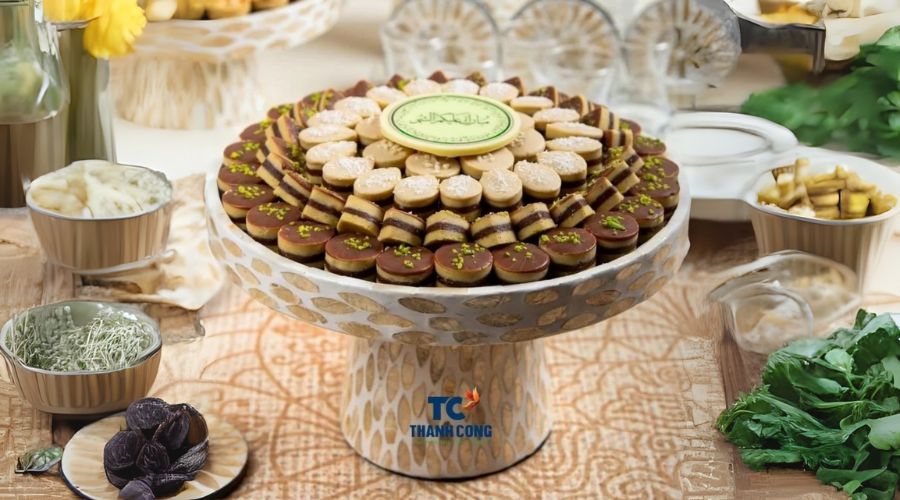
Disposable materials subconsciously suggest temporary value. Even beautifully printed cardboard still communicates short-term use. In contrast, handcrafted decorative or serving products imply durability, reuse, and intention. These qualities align naturally with gifting culture and premium indulgence.
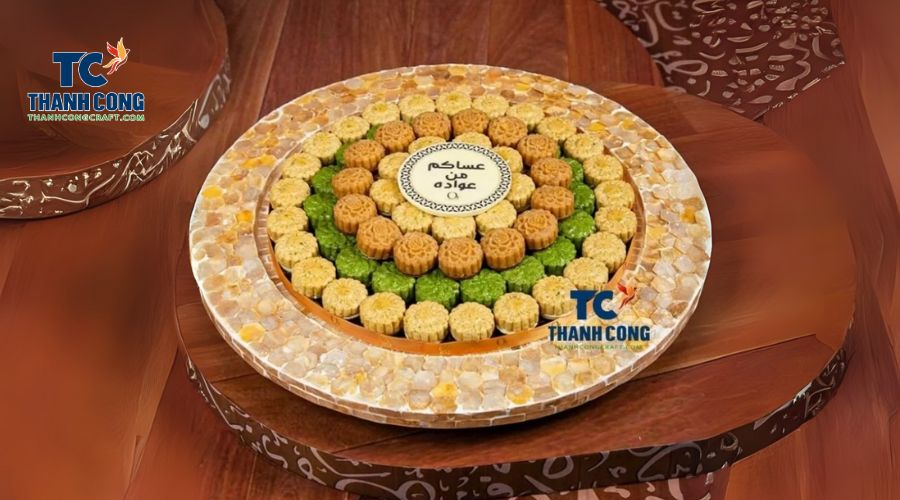
Mother of pearl, for example, has long been associated with refinement, light reflection, and craftsmanship. When used thoughtfully in serving or display contexts, it adds depth without overwhelming the product. Importantly, it enhances perception without relying on branding or text.
From a production standpoint, material-driven displays also change how products are handled. Shoppers tend to slow down, touch surfaces, and spend more time engaging. As a result, the product benefits from extended attention, which directly supports premium positioning.
This shift reflects a broader understanding among experienced buyers: luxury is often felt before it is understood.
View details: What Makes Chocolate Gifts Luxurious in the Middle East?

5. How Market Expectations Influence Retail Display Effectiveness?
Luxury chocolate retail display problems do not appear the same across all markets. Retail behavior, gifting traditions, and cultural expectations shape how displays are perceived and evaluated.
In the US, retail environments prioritize speed and visibility. Displays need to attract attention quickly and communicate value from a distance. Materials that add depth and contrast help break visual monotony in large stores.
In EU markets, buyers often value subtlety and material authenticity. Overly decorative or flashy displays may feel commercial rather than premium. Here, craftsmanship, surface quality, and restrained presentation carry more weight than bold graphics.
In the Middle East, gifting culture plays a central role. Chocolate is frequently purchased as a present rather than a personal treat. Therefore, display elements that resemble serving pieces or decorative objects resonate more strongly, as they naturally extend into the gifting experience.
Understanding these differences helps explain why a single display approach may succeed in one market but underperform in another, even when the product remains unchanged.
Read in detail: Why Chocolate Brands Move Beyond Glass & Paper?
Reach out to us today to learn more about our products or to place a wholesale order. We look forward to connecting with you!
- Thanh Cong Handicraft Co., Ltd
- Email: [email protected]
- Tel/WhatsApp: +84967485411
Explore our Products Collection for more choices! Contact Us!


