

Mother of pearl inlay does not fade in color naturally, but it can crack or appear discolored over time if exposed to unsuitable environmental or usage conditions. The long-term appearance of mother of pearl inlay depends more on substrate stability, finishing systems, and regional usage patterns than on the shell material itself. For B2B buyers, understanding these mechanisms is critical when specifying products for different markets.
Contents
- 1. What Do “Fade, Crack, or Discolor” Actually Mean for Mother of Pearl Inlay?
- 2. How Does Mother of Pearl Inlay Age Compared to Other Inlay Materials?
- 3. Under What Conditions Does Mother of Pearl Inlay Crack Over Time?
- 4. Why Can Mother of Pearl Inlay Appear Discolored Even When the Shell Is Stable?
- 5. How Do Usage Patterns in the US, EU, and Middle East Influence Long-Term Appearance?
1. What Do “Fade, Crack, or Discolor” Actually Mean for Mother of Pearl Inlay?
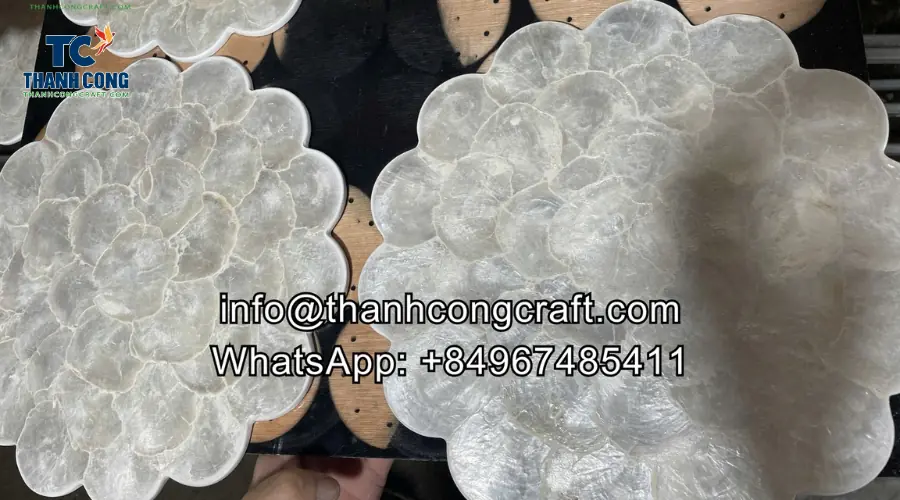
Mother of pearl inlay consists of thin sections of natural nacre embedded into a base material such as wood, MDF, resin, or metal. Nacre forms through layered calcium carbonate crystals bound by organic proteins, which create its natural iridescence. This structure defines how the material behaves over time.
Fading does not occur in the same way it does with dyed or printed surfaces. Mother of pearl contains no pigments, so its color does not bleach or wash out. Cracking refers to physical fractures within the shell or along the bonding edges, usually caused by stress. Discoloration typically affects surface finishes or adhesive layers rather than the nacre itself.
From a production standpoint, these terms describe system-level performance, not shell quality alone. Buyers should assess inlay durability as a combination of material pairing, construction method, and expected usage conditions.
See our article on: Mother of Pearl Trays for Hotels – Why Resorts Prefer Them
2. How Does Mother of Pearl Inlay Age Compared to Other Inlay Materials?
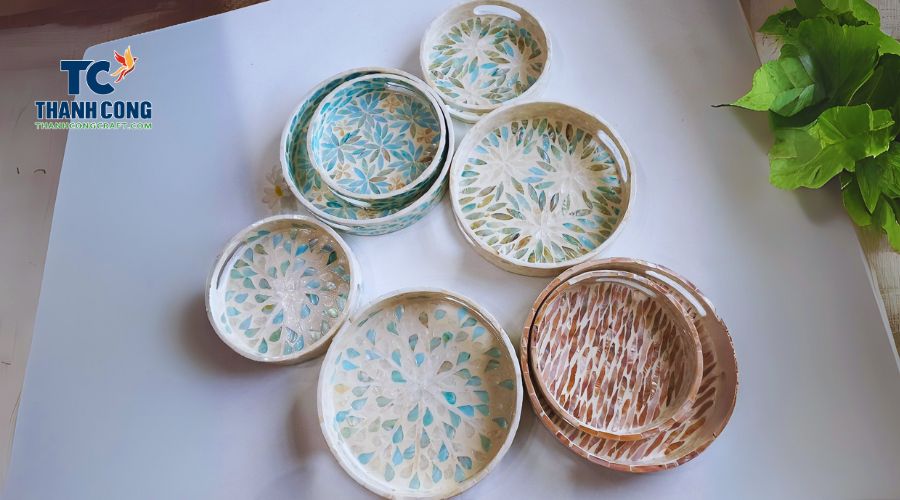
Mother of pearl inlay ages differently from synthetic or metallic decorative materials because its appearance comes from internal nacre layers rather than surface coatings. Light reflects through these layers to create iridescence, which allows genuine shell to maintain visual depth over time. Unlike printed veneers or dyed resins, mother of pearl does not lose color through fading.
In long-term use, mother of pearl retains color stability better than resin-based or printed inlay alternatives. Resin inlays often yellow as pigments degrade, while printed veneers fade or peel. Natural shell remains visually stable as long as its surface stays protected from abrasion and chemical exposure.
However, mother of pearl is more brittle than engineered inlay materials. It resists surface wear but does not flex under stress. When bonded to moving substrates such as wood or MDF, internal tension can develop. Resin and composite inlays absorb movement more easily, while metal inlays resist cracking but may oxidize in humid environments.
| Inlay Material | Color Stability | Structural Flexibility | Common Aging Issue |
|---|---|---|---|
| Mother of Pearl | Very High | Low | Micro-cracks, finish wear |
| Resin Inlay | Medium | High | Yellowing |
| Metal Inlay | High | Medium | Oxidation |
| Printed Veneer | Low | High | Fading, peeling |
This comparison helps B2B buyers evaluate inlay materials based on long-term performance rather than initial appearance alone.
Explore our post: Mother of Pearl Box Import Duty & Insurance in Lebanon
3. Under What Conditions Does Mother of Pearl Inlay Crack Over Time?
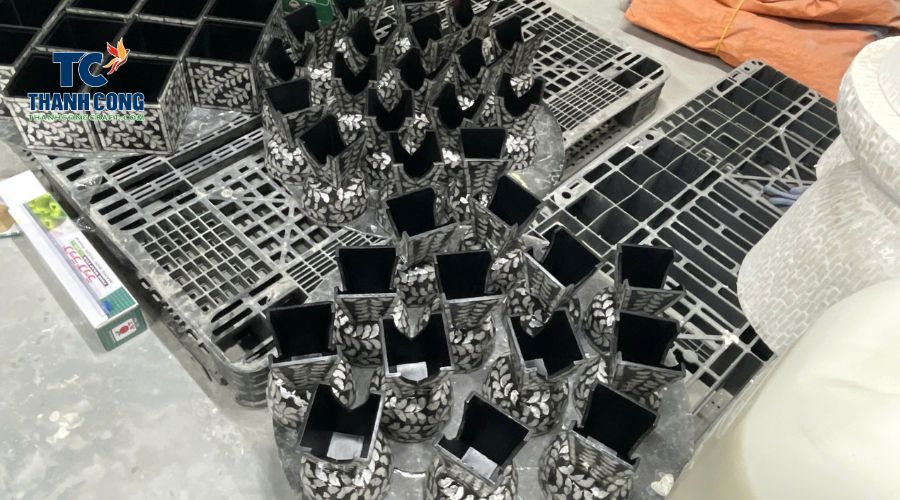
Cracking in mother of pearl inlay results from mechanical stress, not natural aging. The most common trigger is differential movement between the shell and its substrate. Wood-based cores expand and contract with humidity, while nacre remains dimensionally stable.
When substrates move repeatedly, stress accumulates along the adhesive layer. Over time, this stress may produce hairline cracks or edge lifting, especially in thin inlay patterns. Rapid temperature changes further increase this risk by accelerating substrate movement.
From export manufacturing experience, cracking issues almost always trace back to unstable base materials, insufficient acclimation, or rigid adhesives. Proper material pairing and controlled production environments significantly reduce long-term failure.
4. Why Can Mother of Pearl Inlay Appear Discolored Even When the Shell Is Stable?
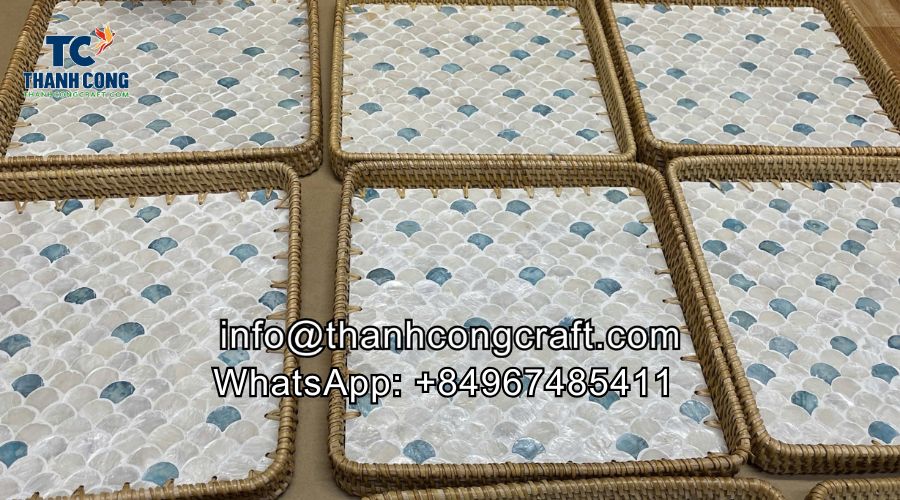
Discoloration usually originates from finishes rather than the shell itself. Natural mother of pearl resists chemical change under indoor conditions. However, surface coatings may react to humidity, cleaning agents, or prolonged UV exposure.
Low-quality lacquers can yellow over time, especially in warm or humid climates. Moisture penetration may also affect adhesive layers beneath the inlay, creating cloudy or darkened zones that appear as discoloration. These visual changes often develop gradually and become noticeable only after extended use.
In production, finishing systems play a critical role in appearance retention. Buyers should treat coating specifications as a functional requirement, not a purely cosmetic choice.
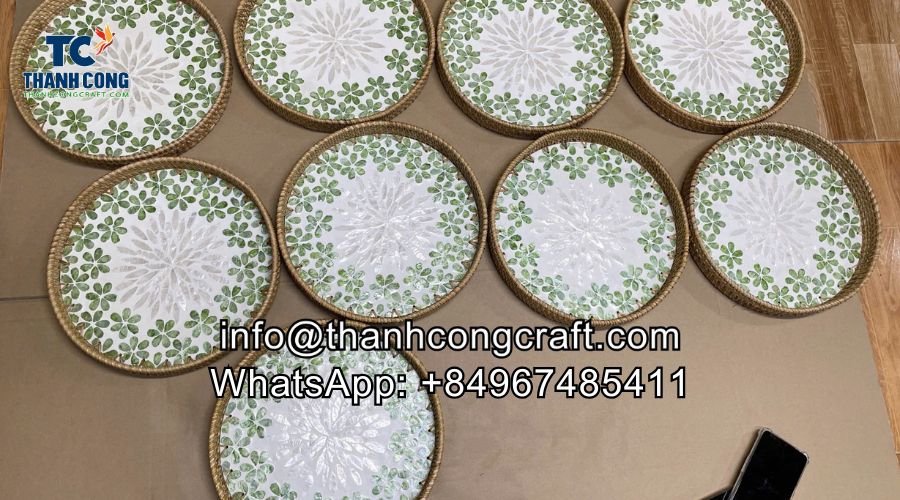
5. How Do Usage Patterns in the US, EU, and Middle East Influence Long-Term Appearance?
Usage habits strongly influence how mother of pearl inlay ages across markets. In the United States, inlaid products often receive frequent handling and casual daily use. Issues typically arise when decorative surfaces are treated as heavy-use or heat-resistant areas.
In the European Union, especially Western Europe, buyers tend to follow care guidance more strictly. Controlled indoor climates and formal usage reduce stress on inlay systems. As a result, products show fewer cracking or discoloration complaints over time.
In the Middle East, high ambient humidity combined with continuous air-conditioning creates repeated expansion cycles in substrates. Mother of pearl inlay remains suitable for luxury décor, but manufacturers often reinforce sealing and recommend stable indoor placement. These regional differences explain why uniform durability claims rarely perform well across markets.
See our article on: Mother of Pearl Stools – Import from Vietnam Buyer’s Guide
Reach out to us today to learn more about our products or to place a wholesale order. We look forward to connecting with you!
- Thanh Cong Handicraft Co., Ltd
- Email: [email protected]
- Tel/WhatsApp: +84967485411
Explore our Products Collection for more choices! Contact Us!


