

Vietnam handicraft company partners are currently the most sought-after allies for global retailers looking to dominate the sustainable home decor market in 2026. As a veteran with over 20 years in the export industry, I have navigated the complex transition from traditional village workshops to high-tech, compliant manufacturing facilities.
Sourcing from Vietnam is no longer just about finding the lowest price; it is about finding a strategic partner that understands international compliance, innovative R&D, and the soul of artisan craftsmanship. Consequently, choosing the right manufacturer is the single most important decision for your brand’s longevity and reputation.
In this comprehensive guide, we will analyze the technical infrastructure that a modern vietnam handicraft company must possess to compete globally. Specifically, we will look into the R&D processes for natural fibers, the rigorous quality control (QC) protocols required for moisture stability, and the logistical advantages of direct-from-source procurement.
Moreover, I will share the “unspoken” standards that professional buyers use to audit factories before placing large-scale wholesale orders.
Contents
- 1. The evolution of a modern Vietnam handicraft company
- 2. R&D: The heart of innovative craftsmanship
- 3. Technical Comparison: Factory Direct vs. Trading Agents
- 4. QC Protocols: Why “Good Enough” Isn’t Enough
- 5. Solving the “Mass vs. Artisan” Dilemma
- 6. Logistics and Global Export Compliance in 2026
- 7. The Artisan Heritage: Why Vietnam Wins
- 8. Strategic Sourcing: 3 Tips for Professional Buyers
- 9. Conclusion: Partnering for a Sustainable Future
1. The evolution of a modern Vietnam handicraft company
The landscape of the Vietnamese handicraft sector has shifted dramatically. Twenty years ago, a vietnam handicraft company was often just a middleman between local artisans and foreign buyers.
Today, industry leaders like Thanhcongcraft have integrated vertically, controlling everything from raw material harvesting in provinces like Ben Tre and Chuong My to final export logistics. This shift was necessitated by the increasing demand for “ethical sourcing” and “traceability” from consumers in the EU and US markets.
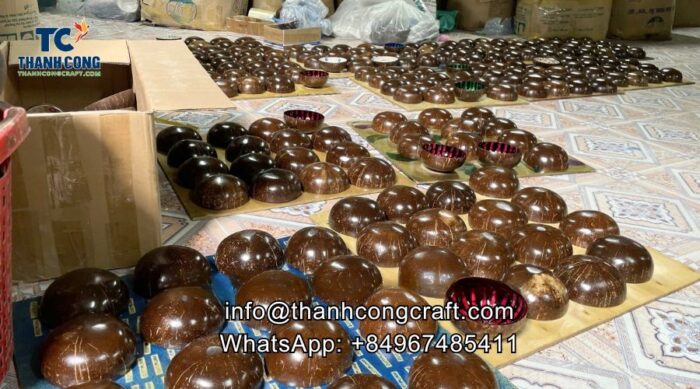
Furthermore, a top-tier vietnam handicraft company now utilizes advanced R&D to enhance the durability of natural materials. Specifically, materials like seagrass, rattan, and coconut shells are no longer just “raw”; they undergo specialized treatments to prevent mold and pests while remaining 100% chemical-free. Consequently, buyers are now receiving products that possess both the warmth of handmade art and the reliability of industrial standards.
2. R&D: The heart of innovative craftsmanship
Innovation is what separates a world-class vietnam handicraft company from a standard workshop. Specifically, our R&D team at Thanhcongcraft focuses on “Material Life-cycle Engineering.”
This involves testing how natural fibers react to different humidity levels across the globe. For example, a seagrass basket destined for the dry heat of Arizona requires a different moisture-retention treatment than one heading to the humid coast of Florida.
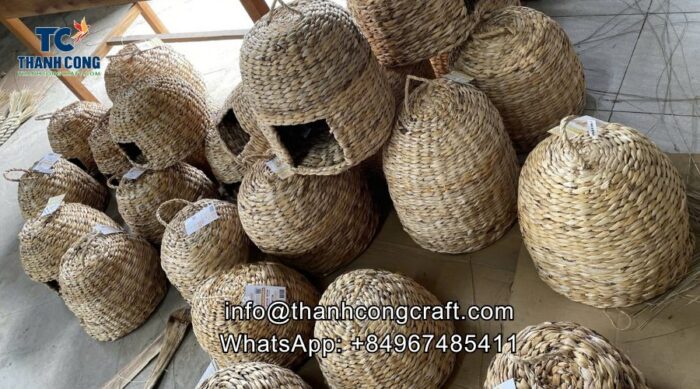
Moreover, our R&D isn’t just about durability; it’s about aesthetic evolution. Specifically, we collaborate with international designers to merge traditional weaving techniques with contemporary color palettes.
By using natural dyes derived from plants and minerals, we ensure that every product remains “Plastic-Free” and safe for the end-user. In addition, our research into “hybrid materials”—such as combining ceramic with rattan or wood with lacquer—has allowed us to offer unique collections that are exclusive to our partners.
3. Technical Comparison: Factory Direct vs. Trading Agents
When looking for a vietnam handicraft company, many buyers struggle to choose between a direct manufacturer and a trading company. To help you decide, I have compiled a technical comparison based on two decades of market observation.
Table: Direct Manufacturer vs. Trading Agent Performance
| Criteria | Direct Vietnam Handicraft Company | Trading / Sourcing Agent |
| Pricing Control | High (Direct production costs) | Low (Added commission margins) |
| R&D Capability | In-house prototyping & material testing | Dependent on third-party factories |
| QC Oversight | On-site, real-time inspections | Periodic visits, less control |
| Customization | Deep (Direct access to artisans) | Surface-level (Limited by factory stock) |
| Compliance | Direct responsibility for certifications | Relies on factory documentation |
| Transparency | Full visibility into supply chain | Often hides the source factory |
Consequently, if you are looking to scale a brand that requires custom designs and strict quality standards, partnering directly with a vietnam handicraft company like Thanhcongcraft is the superior choice. Specifically, the ability to communicate directly with the production manager reduces the “lost in translation” errors that frequently plague high-volume orders.
4. QC Protocols: Why “Good Enough” Isn’t Enough
Quality Control (QC) is where a professional vietnam handicraft company earns its reputation. In the handicraft world, perfection is impossible because natural materials are inherently irregular. However, “Controlled Irregularity” is our goal. Specifically, our QC process at Thanhcongcraft involves a three-stage filter.
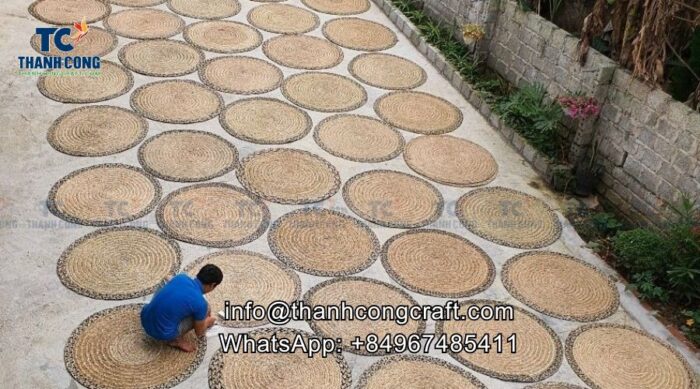
- Stage 1 occurs at the material level. We inspect the seagrass or rattan for color consistency and fiber strength before weaving begins.
- Stage 2 is the “Mid-Production Audit,” where we check the dimensions and structural integrity of the frames.
- Stage 3 is the “Final Moisture and Aesthetic Check.” Specifically, because Vietnam is a tropical country, we must ensure every item is kiln-dried to a moisture content of 12% to 14%. Consequently, this prevents the growth of mold during the long transit in a shipping container. If a vietnam handicraft company skips this step, the buyer risks a 100% loss upon arrival at the destination port.
5. Solving the “Mass vs. Artisan” Dilemma
A common concern for wholesale buyers is whether a vietnam handicraft company can handle mass volume without losing the “artisan touch.” Specifically, our solution at Thanhcongcraft is a decentralized production model managed by a centralized quality hub. We work with specialized artisan villages where every family has a specific expertise, such as weaving or wood carving.
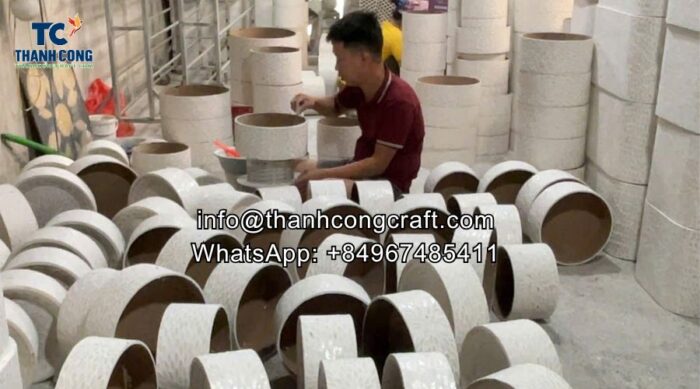
Moreover, by distributing the weaving to specialized villages, we support the local economy while maintaining a massive production capacity. In addition, our central factory serves as the “Hub” where all products are gathered for final finishing, QC, and standardized packaging.
Specifically, this hybrid model allows us to deliver 10,000 units that all meet the same high-quality threshold while still being 100% handmade. Consequently, as a buyer, you get the best of both worlds: artisan soul and industrial reliability.
6. Logistics and Global Export Compliance in 2026
In the current global trade environment, a vietnam handicraft company must be an expert in more than just weaving; it must be an expert in paperwork. Specifically, with the introduction of new environmental regulations in the EU and North America, such as the EUDR (EU Deforestation Regulation), transparency is mandatory.
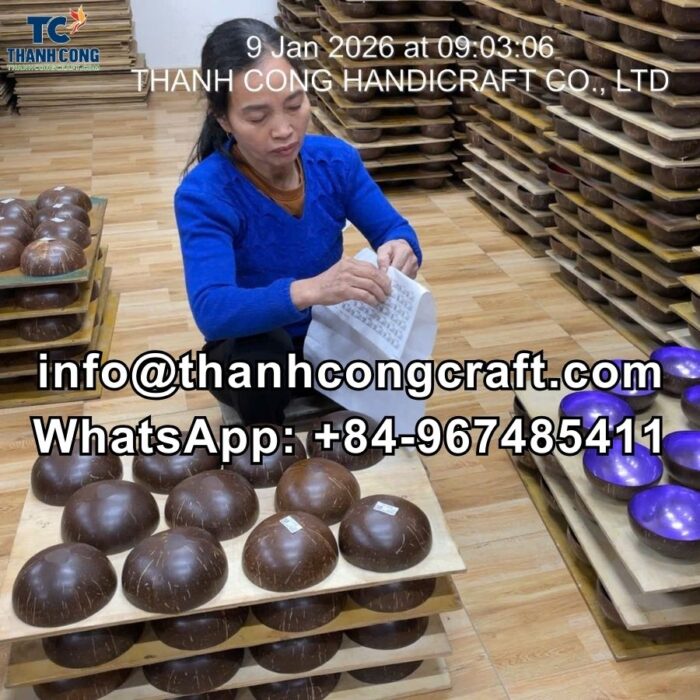
Specifically, at Thanhcongcraft, we provide full documentation for the origin of our materials. Furthermore, we assist our clients with “Phytosanitary Certificates” and “Certificates of Origin” (Form E, Form D, etc.) to ensure they take advantage of free trade agreements. Moreover, we have optimized our packaging to be entirely “Plastic-Free,” using recycled paper and starch-based adhesives.
Consequently, when you receive a shipment from our vietnam handicraft company, it is ready for immediate retail placement in eco-conscious markets. In addition, our logistics team manages the “Container Stuffing” process meticulously to maximize space and reduce shipping costs per unit.
7. The Artisan Heritage: Why Vietnam Wins
Specifically, why should a buyer choose a vietnam handicraft company over competitors in other Southeast Asian nations? The answer lies in the diversity of materials and the depth of history. Vietnam possesses over 2,000 years of handicraft tradition, with over 1,000 specialized “craft villages.”
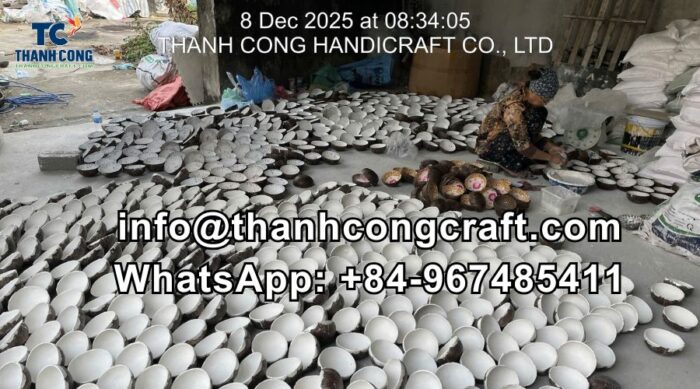
Specifically, the Vietnamese artisan is known for “Kien Nhan” (Patience) and “Kheo Leo” (Dexterity). Furthermore, the sheer variety of materials available—from lacquerware and coconut shells to seagrass, water hyacinth, and bamboo—is unmatched. Specifically, a single vietnam handicraft company can often supply a diverse range of categories, allowing a retailer to source an entire home collection from a single point of origin. Consequently, this streamlines the supply chain and ensures a cohesive aesthetic across different product lines.
8. Strategic Sourcing: 3 Tips for Professional Buyers
If you are currently auditing a vietnam handicraft company, I recommend focusing on these three technical indicators:
-
Material Sourcing Transparency: Ask specifically where the raw materials are harvested. A reliable company will be able to tell you the province and the season of harvest.
-
Moisture Control Equipment: Ask for photos of their drying kilns and moisture meters. If they rely solely on sun-drying, the risk of mold in export is extremely high.
-
Prototyping Speed: A professional vietnam handicraft company should be able to turn a 2D sketch into a 3D physical sample within 7 to 10 days. This indicates a strong R&D team and direct control over the artisans.
Moreover, don’t be afraid to ask about their Social Responsibility (CSR) policies. Specifically, in 2026, consumers want to know that the hands that made their decor were treated fairly. Specifically, Thanhcongcraft prides itself on fair wages and safe working conditions, which in turn leads to higher quality products and lower artisan turnover.
9. Conclusion: Partnering for a Sustainable Future
In summary, choosing a vietnam handicraft company is a decision that extends far beyond a single purchase order. It is about aligning with a partner that values R&D, respects artisan heritage, and enforces the strictest QC standards. Specifically, at Thanhcongcraft, we combine our 20 years of experience with a forward-looking approach to sustainability and design.
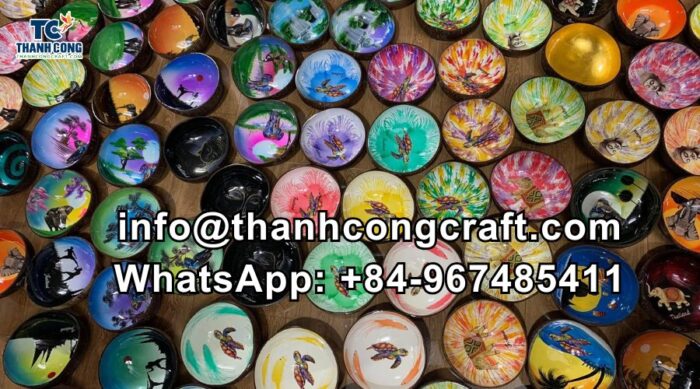
Consequently, as the world moves toward a circular economy, the demand for natural, handmade products will only continue to rise. Specifically, by partnering with a verified vietnam handicraft company, you are securing a supply chain that is both ethically sound and commercially robust.
Furthermore, we invite you to visit our facilities in Vietnam to see the magic of our artisans firsthand. In addition, our team is always ready to provide digital mockups and material samples to help you launch your next collection. Specifically, let us work together to bring the timeless beauty of Vietnamese handicrafts to homes around the world, ensuring a plastic-free and beautiful future for all.
Reach out to us today to learn more about our products or to place a wholesale order. We look forward to connecting with you!
- Thanh Cong Handicraft Co., Ltd
- Email: [email protected]
- Tel/WhatsApp: +84967485411
Explore our Products Collection for more choices! Contact Us!


