

Round rattan tray manufacturing, specifically when integrated with the meticulous art of mother of pearl inlay, represents a pinnacle of Vietnamese artisanal expertise. As a consultant with over two decades in the handicraft export sector, I have witnessed how the transition from a simple woven vessel to a sophisticated mosaic piece requires a precise sequence of technical stages.
Specifically, creating a piece that balances the flexible nature of rattan with the rigid elegance of seashell involves a specialized “bottom-up” assembly logic. Consequently, to produce a tray that meets international standards, artisans must complete the intricate mosaic work before the final weaving and sealing. Moreover, this synergy is what ensures the final product remains durable and visually stunning in diverse global climates.
In this detailed technical guide, we will walk through the professional 5-step process of bringing an inlaid round rattan tray to life. We will analyze everything from the stabilization of forest fibers to the final protective lacquering that covers the entire piece. Specifically, this guide serves as a bridge for buyers to understand the true labor and engineering behind những sustainable masterpieces.
1. Step 1: Selection and Stabilization of Raw Materials
The foundation of a premium round rattan tray begins long before the assembly starts. Specifically, we source “Song” rattan stalks from the tropical forests of Central Vietnam, selecting only those at least 5 years old for maximum fiber density.
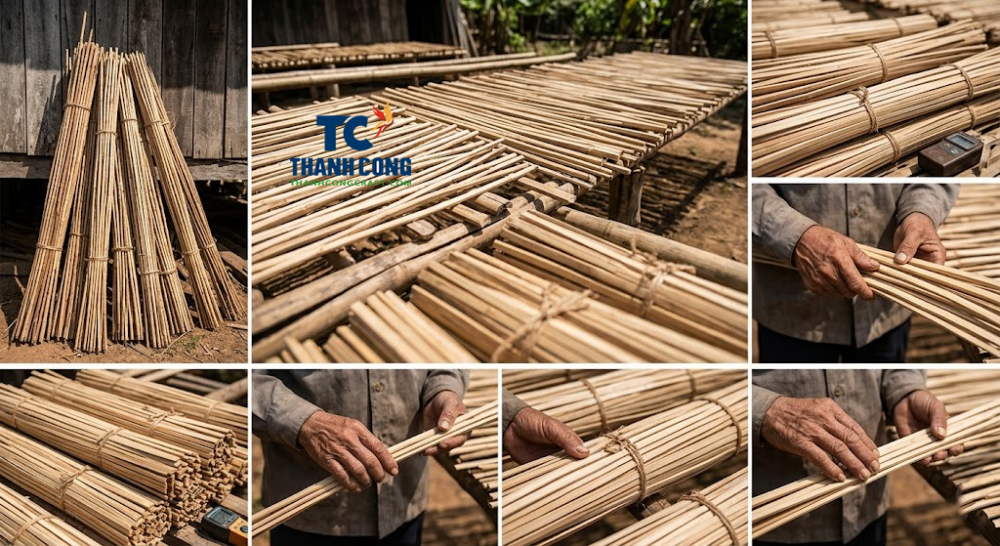
Consequently, the raw material must undergo a traditional stabilization process. Specifically, the stalks are heat-treated and sun-dried until the moisture content reaches a stable 10% to 12%. Furthermore, the mother of pearl shells are cleaned, flattened, and sliced into thin wafers. Specifically, this initial stage is crucial because any latent moisture in the materials can cause the tray to warp or the inlay to crack later. In addition, a seasoned artisan can feel the “tension” in the fiber, choosing only the most resilient strips for the final framework.
2. Step 2: Designing and Hand-Inlaying the Base
The true artistry begins with the preparation of the tray’s base. Specifically, for a round rattan tray, a thin, eco-friendly wooden disc acts as the canvas. Unlike standard weaving, the “Khảm” (inlay) specialists work on this flat surface before any rattan is attached.
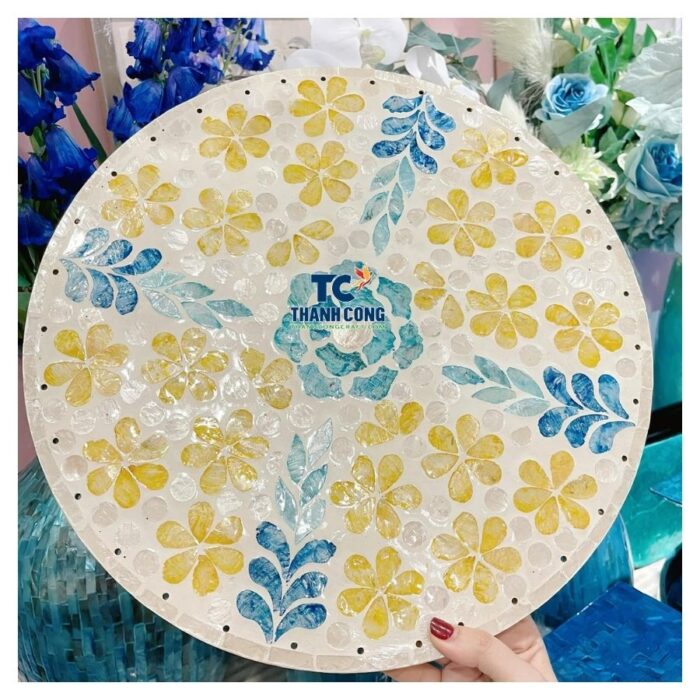
Furthermore, the artisan begins the painstakingly slow process of “sticking” the shell fragments. Specifically, using a high-strength adhesive, each piece is placed one by one according to a scale template. This stage requires immense concentration and a steady hand to ensure the pattern is perfectly centered.
Moreover, the artisan must ensure that the edges of the shell pieces are perfectly flush. Specifically, this “flat-first” approach allows for much higher precision in the mosaic design, as there are no woven walls to obstruct the artisan’s tools.
3. Step 3: Primary Lacquering and Surface Refining
Specifically, once the inlay is complete, the base undergoes an initial professional clear-coating process. Consequently, this lacquer acts as an invisible shield, protecting the shells during the subsequent assembly stages.
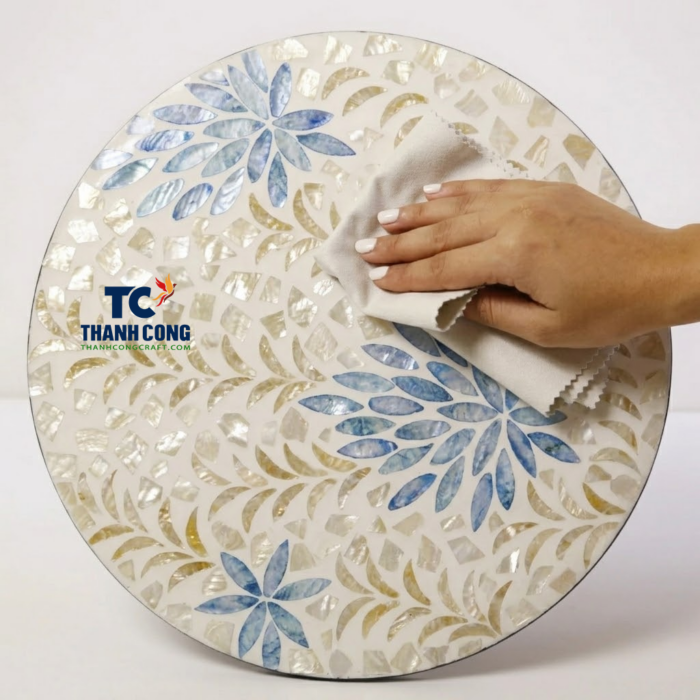
Specifically, the artisan applies thin layers of high-grade clear coat over the mother of pearl. Furthermore, between each spray, the base is placed in a controlled drying room to ensure absolute adhesion. Moreover, once the final layer has fully cured, the hand-polishing process begins. Specifically, the artisan uses ultra-fine wet-sanding paper to gently smooth the surface. Specifically, the goal is to create a glass-smooth finish that enhances the iridescence of the shells before the base is moved to the weaving department to become a round rattan tray.
4. Step 4: Weaving and Assembling the Rattan Framework (Xiên Mây)
Once the lacquered base is ready, it is time for the assembly—a process often referred to in Vietnamese workshops as “xiên mây.” Specifically, the artisan begins to build the walls of the round rattan tray trực tiếp onto the finished base.
Consequently, the horizontal rattan weavers are tightly wound around vertical stakes that have been secured to the perimeter of the base. Specifically, a “closed-loop” technique is employed for the rim to ensure no visible joints or rough ends. Furthermore, the artisan must be extremely careful not to scratch the polished lacquer surface while weaving. Moreover, the tension must be perfectly consistent across the entire diameter. Specifically, this sequence ensures that the rattan walls fit snugly against the finished inlay, creating a seamless transition between the organic fiber and the shimmering center.
5. Step 5: Final All-Over Lacquer Finishing
Specifically, the final step in crafting a round rattan tray is the comprehensive application of a high-grade clear coat over the entire product. Consequently, we opt for a professional spray finish that covers both the rattan weave and the mother of pearl center simultaneously.
Specifically, this final lacquering provides a uniform luster and creates a powerful moisture barrier for the entire tray. Furthermore, it penetrates the rattan fibers, giving them a rich, golden hue while ensuring the mother of pearl remains brilliantly reflective. Moreover, the tray is placed in a temperature-controlled room for a final 24-hour cure. Specifically, this ensures the coating has fully integrated with both the wood and fiber before the tray is cleared for export. This all-over finish is what gives the round rattan tray its premium, durable quality that can withstand various international climates.
6. Technical Comparison: Why the “Inlay-First” Method Wins
To help professional buyers understand our process, we compare the “Inlay-First” (Factory Standard) method with the “Weave-First” (Common Alternative) method.
Table: Comparison of Manufacturing Sequences
| Criteria | Inlay-First (Thanhcongcraft Method) | Weave-First (Common Alternative) |
| Mosaic Precision | Very High (No obstructions) | Lower (Woven walls limit access) |
| Surface Quality | Glass-smooth (Easy to sand/polish) | Potential for unevenness near edges |
| Coating Uniformity | High (All-over final lacquer) | Often inconsistent or patchy |
| Rattan Cleanliness | Perfectly integrated finish | Rattan often gets stained by messy inlay work |
| Structural Integrity | Rattan is woven to fit the base | Base is forced into a woven frame |
7. Overcoming Production Challenges: The “Breathing” Material
Specifically, the biggest challenge in crafting an inlaid round rattan tray is the “movement” of natural materials. Rattan expands and contracts with humidity, whereas the lacquered shell surface is more static. Consequently, if the materials are not balanced, the surface could crack or delaminate.
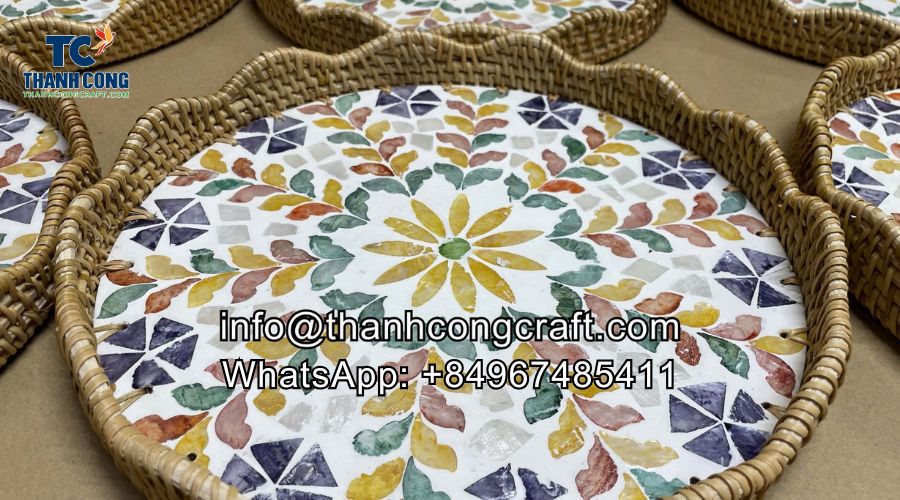
Specifically, we solve this by using high-quality coatings that retain a degree of flexibility. Furthermore, the stabilization process in Step 1 is the most effective preventative measure. Moreover, we ensure the lacquer is applied in micro-layers. Specifically, this technical nuance is what distinguishes a professional-grade tray from an amateur imitation. In addition, we use UV-resistant coatings to ensure the round rattan tray does not turn yellow when exposed to sunlight in a client’s home.
8. Logistics and Sustainable Export Packaging
Specifically, sau khi chiếc round rattan tray passes the final quality check, it must be prepared for global transit. Rattan is sensitive to the micro-climates inside shipping containers. Consequently, we use moisture-absorbing silica poles and acid-free paper wrapping.
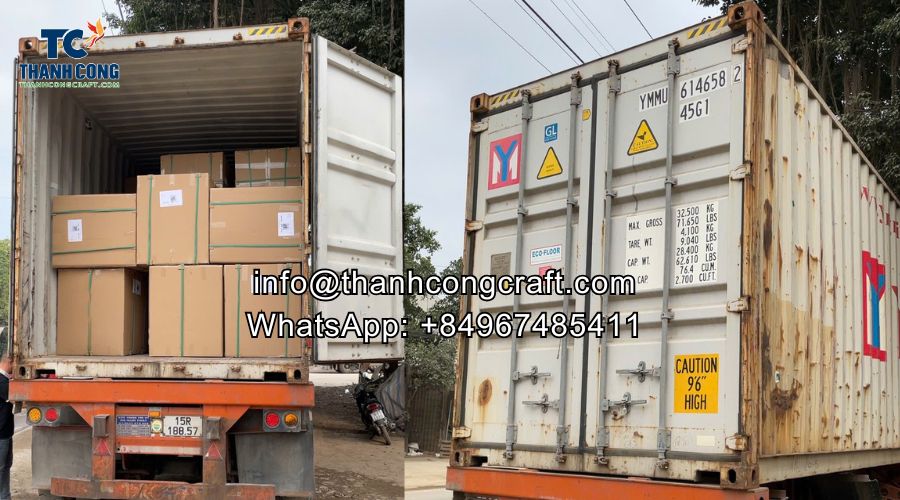
Furthermore, we utilize honeycomb paper as a plastic-free alternative to bubble wrap. Moreover, each tray is separated by a soft divider to prevent the polished surface from scratching. Specifically, our logistics team optimizes the “nesting” of the trays to reduce the carbon footprint per unit shipped. In addition, we provide a “Care Guide” in multiple languages to ensure the end-user knows how to maintain the beauty of their round rattan tray for years to come.
9. Conclusion: A Legacy of Handcrafted Beauty
In summary, the journey of a round rattan tray from the forest floor to a home is one of immense skill and patience. Specifically, by following these 5 professional steps—and ensuring the inlay is perfected before the weaving begins—we create a sustainable masterpiece. Consequently, when you choose a handcrafted tray, you are not just buying a product; you are supporting a 2,000-year-old heritage of Vietnamese craftsmanship.
Specifically, at Thanhcongcraft, chúng tôi tin rằng the soul of the artisan is what makes our products stand out in a world of mass production. Furthermore, our commitment to natural materials ensures that your round rattan tray is as safe as it is beautiful. Moreover, we invite you to explore our full collection and see how these traditional techniques are being adapted for the modern, eco-conscious home. Specifically, let us continue to celebrate the perfect harmony between the rattan vine and the iridescent treasures of the sea.
Reach out to us today to learn more about our products or to place a wholesale order. We look forward to connecting with you!
- Thanh Cong Handicraft Co., Ltd
- Email: [email protected]
- Tel/WhatsApp: +84967485411
Explore our Products Collection for more choices! Contact Us!


